
HoneyBee & Co. - Lifestyle & Pairing
Acacia Honey and Blue Cheese: The Pairing Worth Knowing
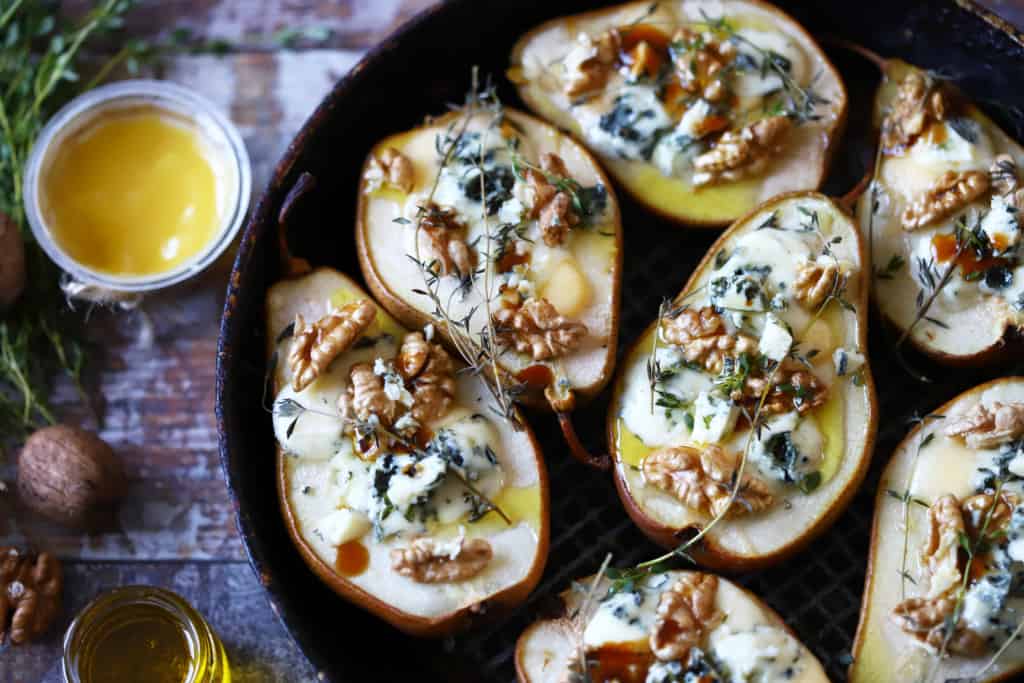
Most cheese-pairing guides will tell you that bold cheese needs bold honey. They are half right. Heather honey works with blue cheese: its smoky resin runs alongside the funk of an aged Stilton and amplifies it. But Acacia honey works too, and it works differently. Where Heather meets blue cheese on equal terms, Acacia provides the contrast that makes the cheese louder. The classical Italian pairing of Acacia honey with gorgonzola is built on this principle. Below: the showcase pairing, a Riesling to drink with it, and four blue cheeses that earn the same treatment.
Why Acacia and Not Heather
Acacia honey is the lightest, cleanest honey we produce. Its delicate floral profile and high fructose ratio give it three properties that matter at the cheese board: it stays liquid even at room temperature, it carries a clean sweetness without competing aromatic notes, and it has the acidity to cut through fat. Blue cheese is fat, salt, and umami at maximum intensity. Pair it with Heather honey and you get harmony: two bold flavours running together. Pair it with Acacia honey and you get contrast: the sweet floral note throws the funk and the salt of the blue cheese into sharp relief. Both work. The Italian tradition has favoured the Acacia approach for over a century, particularly with gorgonzola. The British tradition leans towards Heather with Stilton. Either is right; the question is which kind of pairing you want.
The Williams Pear and Gorgonzola Tradition
The Italian board of pere williams, gorgonzola dolce, noci and acacia honey is one of the oldest documented honey-cheese pairings in European cuisine. Pere williams (Bartlett pears, in American English) ripen in late summer and early autumn, their flesh fragrant and softly sweet with a faint vanilla edge. Gorgonzola dolce, the younger and creamier of the two main gorgonzolas, is mild compared to a mature Stilton but still carries the characteristic blue-veined funk. Walnuts add tannic bitterness and crunch. Acacia honey ties the whole composition together: its floral sweetness amplifies the pear, mellows the gorgonzola, and softens the tannin of the walnut. The pairing has been served at Italian aperitivi since at least the late nineteenth century. Pair it with a young off-dry Riesling, and you have what is widely considered one of the finest single-plate aperitifs in European food culture.
Acacia Honey and Blue Cheese: The Pairing Worth Knowing
Ingredienti
- 200g gorgonzola dolce (or substitute Stilton, Roquefort, or a creamy blue of choice)
- 2 ripe Williams pears (Bartlett), cored and sliced into thick wedges
- 100g shelled walnut halves
- 4 to 6 tablespoons raw HoneyBee & Co. Acacia honey, for drizzling
- 1 small handful baby rocket leaves (optional)
- Cracked black pepper, to taste
- 1 bottle young off-dry Riesling, chilled (Kabinett or Spätlese, German preferred)
- Walnut bread or sourdough crackers, to serve
Metodo
- Remove the gorgonzola from the fridge at least 30 minutes before serving. Blue cheese must be at room temperature for the flavours to develop properly. Cold gorgonzola tastes flat.
- Toast the walnuts. Place in a dry pan over medium heat for 3 to 4 minutes, shaking occasionally, until fragrant and lightly coloured. Remove and cool.
- Slice the pears just before serving (cut pears brown quickly). Use ripe but firm pears. If a pear is too soft, it will collapse on the board; too firm, and it will fight the cheese for texture.
- Arrange on a wooden board: a wedge of gorgonzola in the centre, pear slices fanned out around it, walnuts scattered on top. Add a small handful of rocket if using, for colour and a peppery counterpoint.
- Drizzle the raw Acacia honey generously over the cheese, the pears, and the walnuts. Do not be precious about quantities. Acacia is meant to pool slightly on the board.
- Crack black pepper over the top.
- Pour the chilled Riesling. Serve immediately, with walnut bread or sourdough crackers on the side.
Five teas and what they want
Young Riesling (off-dry)
The classic match for Acacia honey and gorgonzola. A young German Riesling at Kabinett or Spätlese level brings stone-fruit acidity and a touch of residual sweetness that complements the honey without competing. Look for a 2023 or 2024 vintage from the Mosel or Rheingau.
Sauternes
The traditional French pairing for Roquefort and honey. Botrytis-affected Sémillon brings honeyed apricot notes that echo the Acacia and stand up to the salt of the cheese. A half-bottle of Château Doisy-Daëne or Château Suduiraut goes a long way.
Tokaji Aszú
The Hungarian sweet wine that British noblemen called the King of Wines. The 5 puttonyos level matches the intensity of Stilton without overwhelming it; the 3 puttonyos works for gorgonzola. Acacia honey is the bridge that makes either pairing land.
Vintage Port
The British classic with Stilton, with Acacia honey added. The fortified wine and the honey both carry sweetness, but Acacia's floral lightness keeps the pairing from becoming heavy. Best with a 10-year-old Tawny rather than a Vintage.
Le cose vale la pena di conoscere
Choose your gorgonzola carefully
Gorgonzola comes in two main styles: dolce (sweet, young, creamy) and piccante (sharp, aged, firmer). Dolce is the right choice for an Acacia honey pairing because the mild blue character lets the honey come through. Piccante competes with the honey and can flatten it. If gorgonzola is unavailable, the closest substitutes are a mild Stilton (younger, around 8 weeks aged) or a French Bleu d'Auvergne.
On Williams pears versus other varieties
Williams (Bartlett) pears are the traditional choice because they ripen with a fragrant, slightly vanilla-edged sweetness that complements the honey. If unavailable, use Conference pears for a firmer, slightly more astringent pairing, or Comice for a sweeter, juicier one. Avoid Bosc, where the texture is too dry and the flavour too neutral for this composition.
Why a young Riesling and not an old one
Aged Riesling develops petrol and kerosene notes that fight the floral sweetness of Acacia honey. A young Riesling (3 to 5 years old, or younger) keeps the bright stone-fruit and citrus notes that complement the honey. Look for vintages around the current year and the previous two; for the 2026 reader, that means 2023 to 2025 vintages.
Domande frequenti
What is the best honey for blue cheese?
It depends on whether you want harmony or contrast. For harmony (cheese and honey working together): use Heather honey, especially with Stilton and aged blues. The smoky resin of Heather amplifies the funk of mature blue cheese. For contrast (cheese and honey playing off each other): use Acacia honey, especially with younger blues like gorgonzola dolce. The clean floral sweetness throws the salt and funk of the cheese into sharp relief. The Italian aperitivo tradition favours Acacia; the British cheese-board tradition favours Heather. Both are correct.
Why are Williams pears (Bartlett) the traditional pairing?
Williams pears (called Bartlett in the United States) have a softer, more aromatic flesh than other pear varieties, with a faint vanilla note that complements Acacia honey. They ripen at the right time of year for a late-summer or early-autumn cheese course, and their flavour is gentle enough not to compete with the gorgonzola. Conference pears are a viable substitute (firmer, more astringent), Comice for sweeter and juicier, but Williams remains the first choice.
What wine should I serve with gorgonzola, Acacia honey, pear and walnuts?
A young off-dry Riesling is the canonical pairing: Kabinett or Spätlese level, German preferred (Mosel or Rheingau). The stone-fruit acidity and slight residual sweetness sit alongside the honey without competing. For French alternatives, Sauternes works (heavier and sweeter); for Hungarian, Tokaji Aszú at 3 puttonyos. For port lovers, a 10-year Tawny pairs surprisingly well with the addition of honey to a Stilton board.
Can I use crystallised Acacia honey for cheese boards?
Acacia honey rarely crystallises because of its high fructose content. If yours has crystallised (which suggests it is genuinely raw), warm the closed jar in a bowl of water no hotter than 40°C for 15 to 20 minutes before serving. Never microwave or boil. The smooth, liquid texture is essential for cheese-board presentation.
Is gorgonzola the only blue cheese that works with Acacia honey?
No. Acacia honey works with all blue cheeses, and the contrast principle applies in each case: Stilton becomes more interesting with the floral counterpoint, Roquefort gets its salt softened, Cabrales becomes accessible to those who find it too aggressive. Gorgonzola dolce is the most natural fit because it is the mildest, but the technique scales up to bolder blues.
How much honey should I drizzle on the cheese?
Generous but visible. Aim for around 1 tablespoon of Acacia honey per 50g of blue cheese. The honey should pool slightly around the cheese and be visible on each bite. If your guests find themselves reaching for the jar to add more, that is acceptable. Acacia is a generous honey by nature.
Can I prepare this board ahead of time?
Partially. Toast the walnuts up to 24 hours ahead and store airtight. Bring the cheese out of the fridge 30 to 45 minutes before serving. Slice the pears at the last minute (they brown within 15 minutes of cutting). Drizzle the honey just before serving. The composition is at its best within ten minutes of assembly.
Provato?
Registratevi e raccontateci com'è andata.