

Bees are the most important group of animal pollinators on Earth. Between 24,705 and 26,164 species are estimated to exist worldwide — a figure 18 to 25 percent higher than previously recognised — spanning seven families, every continent except Antarctica, and every terrestrial habitat from Arctic tundra to tropical rainforest. This complete reference covers their anatomy, biology, colony structure, communication, life cycle, role in global food security, the threats they now face, and what science says about saving them.
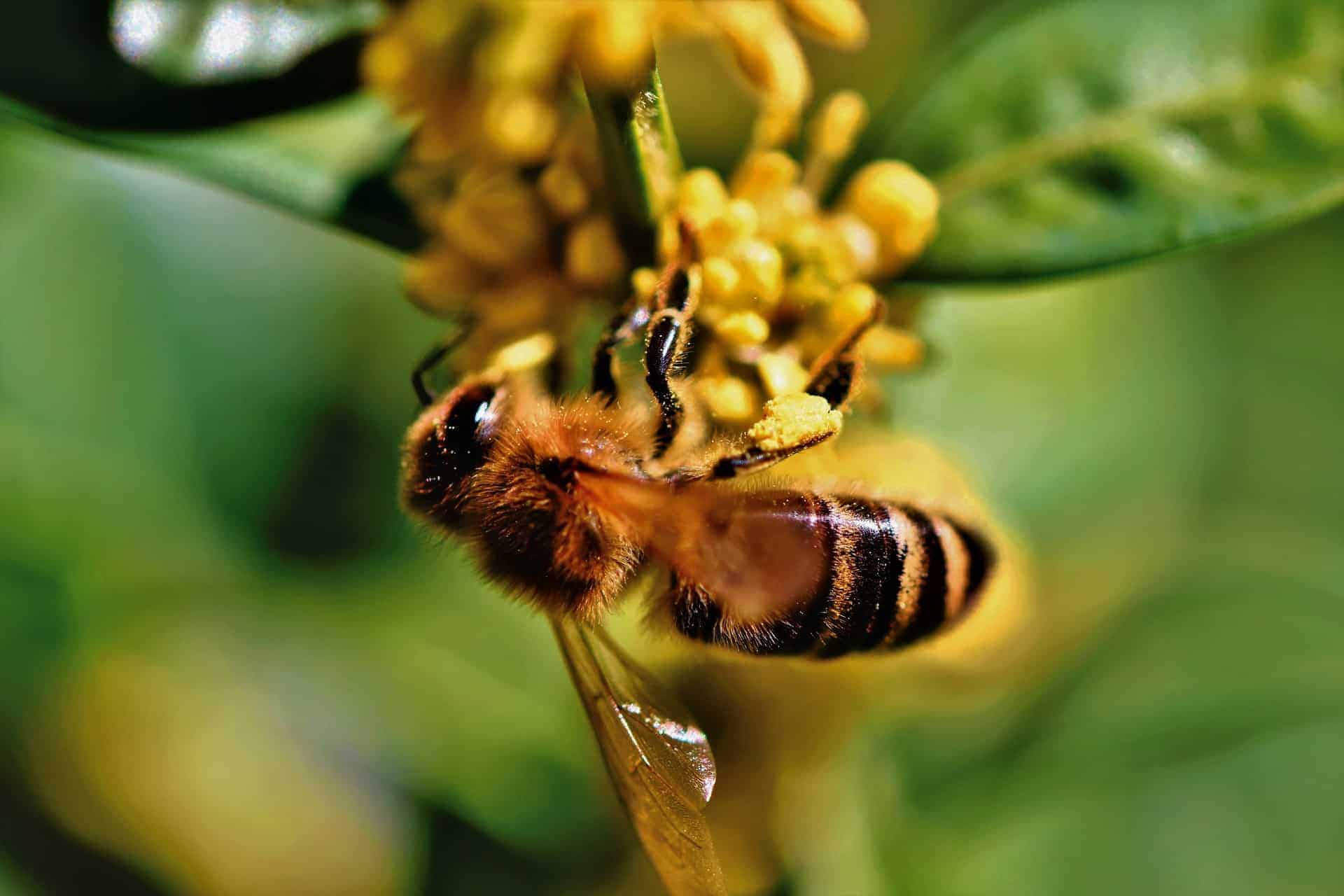 Western honey bee (Apis mellifera) foraging. Photography: honeybeeandco.uk
What Are Bees? Taxonomy and Global Diversity
Bees belong to the order Hymenoptera, the same order as wasps and ants, and to the superfamily Apoidea within that order. They diverged from predatory wasp ancestors around 130 million years ago, coinciding with the rise of flowering plants. The defining evolutionary shift was dietary: bees switched from hunting insects to collecting pollen, which is richer in protein and more reliable to source.
All bees are classified within the clade Anthophila, which sits inside Apoidea alongside the sphecoid wasps. Seven families contain all known bee species: Apidae (the largest, including honey bees, bumblebees, stingless bees and carpenter bees), Halictidae (sweat bees), Colletidae (plasterer bees), Megachilidae (mason and leafcutter bees), Andrenidae (mining bees), Melittidae e Stenotritidae.
A landmark study published in Nature Communications in February 2026, led by Dr James Dorey of the University of Wollongong, provided the first statistically derived global estimate of bee species richness. At current rates of approximately 117 new species described per year, filling that gap would take 32 to 45 years. The authors highlighted particularly high undescribed biodiversity in Asia, Africa and the Americas.
Species Diversity by Continent
Bee diversity is not evenly distributed. The Americas, and particularly the United States, contain the highest concentrations of described species. However, the 2026 global estimate suggests that Africa and Asia hold substantially more undescribed species than previously thought.
The United States is home to more bee species than any other country, with over 4,000 described native species according to the US Geological Survey. This includes the rusty patched bumblebee (Bombus affinis), added to the Endangered Species List in 2017, and Franklin's bumblebee (Bombus franklini), which has not been reliably sighted since 2006.
By contrast, Great Britain has approximately 275 bee species: 1 honey bee species, 24 bumblebee species (7 of which are rare or scarce), and around 250 solitary bee species.
Social vs Solitary: The Two Great Strategies
Contrary to popular image, the vast majority of bee species are solitary. Around 85 percent of bees do not live in colonies. Each solitary female builds her own nest, provisions it with pollen and nectar for her larvae, and never meets her offspring. Only around 15 percent of species are social to any degree, and full eusociality, with a reproductive queen, sterile workers and overlapping generations, evolved multiple times independently across bee families.
Parasitic bees, known as cleptoparasites, lay their eggs in other bees' nests rather than building their own. Many Nomada species (nomad bees) do exactly this.
Anatomy of a Honey Bee
The western honey bee (Apis mellifera) body is divided into three main tagmata: the head, the thorax, and the abdomen. All bees share this basic insect body plan, though size, colouration and specific structures vary enormously across species. The smallest bee in the world, Perdita minima of the American Southwest, measures just 2mm. The largest, Wallace's giant bee (Megachile pluto), reaches 39mm.
Compound Eyes (x2)
Each contains thousands of individual lenses (ommatidia). Bees see ultraviolet light invisible to humans, helping them locate nectar guides on flowers. They cannot see red.
Simple Eyes / Ocelli (x3)
Three simple eyes on top of the head detect light intensity and help the bee maintain stability during flight, particularly in low-light conditions.
Antennae (x2)
12 segments in workers; 13 in drones. Used for smell, touch, taste, heat detection and measuring humidity. The Johnston's organ detects airflow and wing vibration.
Proboscis (tongue)
Elongated, hair-fringed tube for lapping nectar. Worker honey bees have a proboscis of approximately 6.3-6.6mm. Longer tongues are better suited to tubular flowers.
Wings (x4 total)
Two pairs, connected by hooks during flight. Beat 200-230 times per second. Move in a figure-eight pattern rather than back-and-forth, generating the lift needed to carry loads up to 60% of body weight.
Pollen Baskets (corbiculae)
Concave surfaces on the hind tibia fringed with stiff hairs. Unique to bees. A single forager can carry up to 35mg of pollen in its corbiculae, roughly half its own body weight.
Honey Stomach (crop)
A specialised second stomach that holds nectar during transport. Holds up to 40mg of nectar. Contains invertase and glucose oxidase enzymes which begin converting nectar to honey during the return flight.
Wax Glands (x4 pairs)
Located on the underside of the abdomen in worker bees. Secrete liquid wax which hardens into scales on contact with air. Bees must consume 6-8kg of honey to produce 1kg of beeswax.
Stinger
Present in workers and the queen; absent in drones. The worker stinger has a barb that anchors in mammal skin, causing the stinger and venom sac to tear from the bee's body. The bee dies as a result. Queen stingers are smooth and can be used repeatedly.
Branched Body Hairs
The defining feature of all bees: their body hairs are branched or feathery (plumose), unlike the simple hairs of wasps. This helps trap and carry pollen far more efficiently.
For decades, scientists claimed bumblebee flight was "aerodynamically impossible" according to classical fixed-wing theory. Researchers now understand that bees generate vortices at the leading edge of their wings, creating a low-pressure zone that provides lift. This dynamic stall mechanism allows them to carry loads that would be impossible for fixed-wing aircraft of equivalent size.
A honey bee in flight travels at approximately 25 km/h without a load and around 18-20 km/h when fully laden with pollen or nectar. It can range up to 8 km from the hive, though most foraging takes place within a 3 km radius.
Colony Structure: Queen, Workers and Drones
A honey bee colony is one of the most complex societies in the animal kingdom. In peak summer, a single hive contains between 50,000 and 80,000 individuals functioning as a superorganism, with labour divided not merely by role but by age. No individual bee survives alone for long; the colony, not the individual, is the true biological unit.
The Queen
A queen bee begins life as an ordinary fertilised egg. The colony's decision to raise a queen is made by the workers, who select several young larvae and feed them exclusively on royal jelly, a protein-rich secretion from the hypopharyngeal glands of young nurse bees. Royal jelly triggers different gene expression pathways, causing the larva to develop larger ovaries, a longer abdomen and greater longevity.
A healthy queen lives three to five years, compared to six weeks for a summer worker. She releases a complex mixture of pheromones, collectively called queen substance, which suppresses ovary development in all workers, inhibits rearing of new queens and communicates her presence throughout the colony. When queen substance levels drop, workers begin raising supersedure queens.
Workers and the Age Polyethism System
Worker bees perform different jobs based on their age, a principle called age polyethism. This allows the colony to optimise task allocation without any central command. A worker bee cycles through the following roles in sequence:
| Age (days) | Ruolo | Key activity |
|---|---|---|
| 1-3 | Cell cleaner | Cleans and polishes brood cells; first warm-up of the hive interior |
| 3-11 | Nurse bee | Feeds larvae with secreted brood food; tends the queen; hypopharyngeal glands active |
| 12-17 | Wax maker / builder | Wax glands peak; constructs honeycomb; receives and processes nectar from foragers |
| 18-21 | Guard bee | Stands at the hive entrance; inspects arrivals by chemical signature; repels intruders |
| 21+ | Forager | Collects nectar, pollen, propolis and water; performs waggle dance on return; flies up to 8km from hive |
Droni
Drones are male bees, produced from unfertilised eggs via parthenogenesis (haplodiploidy), meaning they have only one set of chromosomes. They perform no foraging, nursing or wax production. Their single biological purpose is to mate with a virgin queen during a nuptial flight. After mating, a drone dies immediately. Drones that do not mate are expelled from the hive by workers at the end of summer and die from cold and starvation within days.
In bees, sex is determined not by sex chromosomes but by ploidy level. Fertilised eggs (diploid, two chromosome sets) become females (workers or queens). Unfertilised eggs (haploid, one chromosome set) become males (drones). This system, called haplodiploidy, means that drones have no father and cannot have sons, but they do have grandfathers and can have grandsons. A queen stores sperm from multiple drones in her spermatheca and can choose whether to fertilise each egg individually.
The Waggle Dance: One of Nature's Most Complex Languages
The honey bee waggle dance is one of the most remarkable forms of animal communication ever discovered. Described in detail by Nobel Prize-winning zoologist Karl von Frisch in 1967, it is a symbolic language that encodes the direction, distance and quality of a food source in a single choreographed movement, performed in complete darkness on the vertical surface of a comb.
How the Dance Works
A returning forager runs in a straight line while waggling her abdomen, then circles back alternately left and right to repeat the run. Three variables carry the message:
Direction: The angle of the waggle run relative to vertical equals the angle between the food source and the sun, measured from the hive.
Distance: The duration of each waggle run communicates distance. Approximately 75 milliseconds of waggling indicates 100 metres; 1 second indicates around 1 kilometre.
Quality: The number of circuits and the energy of the dance communicates the richness of the source. Better sources produce longer, more vigorous dances that attract more recruits.
Karl von Frisch shared the Nobel Prize in Physiology or Medicine for decoding the waggle dance, alongside Konrad Lorenz and Nikolaas Tinbergen.
Bees mentally account for the movement of the sun across the sky. A bee dancing inside a dark hive automatically adjusts the angle of her waggle run as the sun moves, so that recruits leaving later still find the correct location.
Researchers have since discovered that bees perform a simpler version of the waggle dance called the round dance to indicate sources within 50 metres, and a transitional sickle dance for intermediate distances. The waggle dance is unique to the genus Apis among all insect groups. Stingless bees (Meliponini) use acoustic signals, scent trails and small deposits of resin to communicate food locations.
Life Cycle: From Egg to Adult
All bees undergo complete metamorphosis (holometabolism), passing through four distinct stages: egg, larva, pupa and adult. The duration of each stage and the total development time varies significantly between castes within honey bee colonies and between different bee species globally.
Egg
3 days1.6mm cylindrical egg, placed upright. Falls horizontal by day 3. Fertilised eggs become females; unfertilised become drones.
Larva
5-6 daysLegless, white, C-shaped grub. Fed by nurse bees. Increases body weight 1,500-fold. Cell capped with wax on day 8-9.
Pupa
7-14 daysComplete transformation. Wings, legs, compound eyes and internal organs develop. Body darkens toward emergence.
Adult
chews out of cellChews through the wax cap. Begins immediately as nurse bee. Lifespan: 6 weeks (summer worker) to 5 months (winter bee) to 5 years (queen).
Development Time by Caste
| Casta | Egg | Larva | Pupa | Totale | Adult lifespan |
|---|---|---|---|---|---|
| Regina | 3 days | 5 days | 8 days | 16 days | 3-5 years |
| Worker | 3 days | 6 days | 12 days | 21 days | 6 weeks (summer) / 4-5 months (winter) |
| Drone | 3 days | 6.5 days | 14.5 days | 24 days | 4-8 weeks (expelled in autumn) |
Source: Virginia Tech Extension, Honey Bee Biology and Beekeeping, Prof. Rick Fell.
From Our Apiary
Miele di acacia grezzo
The honey produced by these extraordinary colonies. Slow-crystallising, light-coloured and delicate. From six generations of Transylvanian beekeeping. From £8.79/month on subscription.
Explore Acacia HoneyPollination and Global Food Security
Pollination by bees underpins approximately one-third of global human food production. Of the 100 crop varieties that supply 90 percent of the world's food, 71 are pollinated by bees, according to the United Nations Environment Programme. Without them, vast categories of food, from almonds and apples to coffee and cacao, would face severe production shortfalls or complete collapse.
Source: IPBES Global Assessment, 2016; FAO State of the World's Biodiversity for Food and Agriculture, 2019
Crops Most Dependent on Bee Pollination
Source: Klein et al. (2007), Proceedings of the Royal Society B: "Importance of pollinators in changing landscapes for world crops." PMC via NCBI.
Bee pollination does not merely increase yield. A peer-reviewed study published in PLOS ONE demonstrated that strawberries pollinated by bees were heavier, had fewer malformations and reached higher commercial grades than wind- or self-pollinated fruit. They were also firmer, extending commercially important shelf life by a measurable margin and reducing waste. The study calculated that bee pollination accounted for approximately 0.32 billion euros of the 1.44 billion euros in bee-pollination value to the EU strawberry market alone.
Almonds are the most bee-dependent major crop on Earth. California produces around 80 percent of the global almond supply. Every February, an estimated 1.8 million honey bee colonies, representing roughly 70 percent of all commercially managed US colonies, are trucked into the San Joaquin Valley for the three-week almond pollination window. No bees; no almonds. This annual migration is the largest pollination event on the planet, and it is also the context in which the catastrophic 2025 US colony collapse first became apparent.
How Bees Make Honey
Honey is not simply collected nectar. It is a transformed substance, enzymatically processed, chemically concentrated and naturally preserved by a colony working collectively over several days. A single 280g jar of honey represents the combined lifetimes of roughly 22 forager bees and the nectar of approximately 1 million individual flower visits.
Nectar collection
A forager bee visits 50-100 flowers per flight and carries up to 40mg of nectar in her honey stomach. During transport, invertase enzymes begin breaking sucrose into glucose and fructose. A single forager makes approximately 10 collecting trips per day and covers up to 2-3 km from the hive in most conditions.
Nectar handoff and initial processing
On return to the hive, the forager passes nectar mouth-to-mouth to a house bee, a process called trophallaxis. This continues between multiple bees for up to 20 minutes, during which more invertase and glucose oxidase are added. Glucose oxidase will later produce gluconic acid and hydrogen peroxide, both of which contribute to honey's antimicrobial properties.
Evaporation and concentration
Nectar arrives at roughly 80 percent water content. Bees must reduce this to below 18-20 percent for honey to be stable. Workers spread the nectar in thin layers across uncapped cells and fan it vigorously with their wings, creating airflow that accelerates evaporation. This process takes several days and requires substantial colony-wide effort.
Capping with beeswax
Once the moisture content drops below approximately 18-20 percent, the honey is stable: too concentrated for microbial growth. Workers cap each cell with a thin layer of white wax. The wax starts white and darkens as bees walk across it. Capped honey is the finished product.
Harvesting (beekeeping)
Responsible beekeepers harvest only surplus honey, leaving sufficient stores for the colony to overwinter, typically 18-25kg per colony in a British climate. Frames are removed, the wax capping is cut or scratched away, and honey is extracted by centrifugal force. Raw honey is then filtered to remove debris and bottled without heat treatment, preserving enzymes, pollen, propolis traces and aromatic compounds.

Sei generazioni di patrimonio apistico
HoneyBee and Co. was founded on a family tradition of Transylvanian beekeeping stretching back six generations. The honey we bring to Britain is produced in the pristine, wildflower-rich forests and meadows of Romania, where bees forage across landscapes untouched by intensive agriculture. Our raw British honey reflects everything this article describes: the biology, the labour and the ecological relationship between bee and flower that makes genuine raw honey unlike anything else.
The Crisis: Threats Facing Bees Worldwide
Bee populations globally are in measurable decline. A 2021 study in One Earth, drawing on Global Biodiversity Information Facility data, found that the number of bee species being observed or collected has been declining since the 1990s across all continents where sufficient data exists. In the United States, commercial beekeepers reported the highest annual colony losses ever recorded for the 2024-2025 season.
USDA Alert — 2025
60%+ of US colonies lost
Between summer 2024 and spring 2025, 1.7 million commercial honey bee colonies were lost across the United States, representing more than 60 percent of commercial colonies. USDA ARS scientists identified amitraz-resistant Varroa destructor mites as the primary driver, compounded by the viruses those mites carry.
Source: USDA ARS press release, June 2, 2025. Manuscript under peer review. Published via USDA.gov.Parasitic mite that feeds on bee organs and transmits viruses including Deformed Wing Virus and Acute Bee Paralysis Virus. Now developing resistance to the primary treatment (amitraz) in US colonies. Present in every major beekeeping region except Australia.
62% Average commercial colony loss, US 2024-25 (Project Apis M.)Conversion of flower-rich grassland, hedgerows and meadows to intensive monoculture agriculture removes the forage bees need across entire landscapes. The UK has lost 97 percent of its wildflower meadows since the 1930s (Natural England).
97% UK wildflower meadows lost since 1930s (Natural England)Neonicotinoids impair bee navigation, memory and reproduction at sub-lethal doses. Multiple peer-reviewed studies link them to reduced colony growth and forager mortality. The EU banned three neonicotinoids (imidacloprid, clothianidin, thiamethoxam) for outdoor use in 2018.
EU 2018 Outdoor neonicotinoid ban across EU member statesWarming temperatures disrupt the synchrony between bee emergence and flower bloom (phenological mismatch). Extended warm autumns cause bees to exhaust winter stores early. Research from Cornell (2024) found that warmer, longer fall seasons significantly increase winter colony losses.
2-3x Colony loss risk increase in warmer autumn seasons (ScienceDaily, 2024)American Foulbrood (Paenibacillus larvae), European Foulbrood (Melissococcus plutonius), Nosema fungal infections and Chalkbrood all threaten colony health. Many pathogens spread via shared equipment and migratory beekeeping practices.
The Asian hornet (Vespa velutina) reached Great Britain in 2023 and is now established. It predates honey bees at hive entrances, forcing colonies into defensive postures that drastically reduce foraging. The small hive beetle is an additional threat in warmer regions.
2023 Asian hornet (Vespa velutina) confirmed established in Great BritainThe interconnection between bee health and human nutrition is not abstract. The nutritional profile of raw honey — its enzymes, antioxidants and bioactive compounds — exists precisely because bees process nectar in this extraordinarily complex way. Supporting genuine raw honey from responsible beekeepers is one direct way consumers participate in the ecology these statistics describe.
Conservation: What the Science Recommends
Bee conservation requires action at multiple scales simultaneously, from government agricultural policy to individual garden choices. The scientific consensus, expressed across IPBES reports, FAO policy papers and peer-reviewed ecology literature, identifies a consistent set of high-impact interventions.
Plant for diversity, not just quantity
Research shows bees need a succession of flowering plants from early spring (crocus, willow) through late autumn (ivy, Michaelmas daisy). Single-species plantings benefit only certain bee types. Native plant species generally provide more accessible pollen and nectar than many ornamental cultivars with modified flowers.
Leave nesting habitat undisturbed
70 percent of British solitary bee species nest in bare soil. Heavily mulched or turfed gardens remove nesting sites. Leaving south-facing bare patches, hollow stems and log piles significantly increases solitary bee populations. Mason bee boxes work if sited correctly, facing south-east, 1-2 metres above ground.
Eliminate or reduce pesticide use
The Soil Association and BBKA both advise avoiding all neonicotinoid products in gardens. Even approved insecticides can harm bees at sub-lethal doses. If treatment is necessary, apply in the evening when bees are not foraging, and avoid application to open flowers.
Support landscape-scale conservation
Individual gardens matter, but the IUCN and BBKA both note that landscape-scale habitat connectivity is the critical factor. Support land management schemes such as England's Countryside Stewardship programme, which pays farmers to establish wildflower margins and maintain hedgerows.
Buy raw honey from responsible beekeepers
Traceable raw honey from traditional beekeepers who do not over-harvest, use ethical winter feeding practices and maintain natural hive environments supports sustainable apiculture. SALSA-certified British suppliers operate under verifiable food safety and welfare standards. Learn about our honey sourcing.
Monitor and report sightings
The UK's BeeWalk survey (Bumblebee Conservation Trust) and iNaturalist globally depend on citizen science observations to track population trends. Submitting bee sightings directly feeds the data that informs conservation policy at a national and European level.
British Bees: A Field Reference
Great Britain is home to 275 bee species, including 1 managed honey bee species, 24 bumblebee species and approximately 250 solitary species. The UK's moderate oceanic climate, diverse agricultural landscapes and long botanical tradition mean that British bees are among the best-studied in the world, with occurrence records stretching back to Victorian museum collections.
| Species | Type | Flight season | Status | Key note |
|---|---|---|---|---|
| Apis mellifera Western honey bee |
Social / managed | Mar-Oct | LC | The managed honey bee. Native to Africa and Middle East; naturalised globally for millennia. |
| Bombus terrestris Buff-tailed bumblebee |
Social / wild | Jan-Dec (queens active almost year-round in south) | LC | Most abundant UK bumblebee. Large colonies; important crop pollinator. |
| Bombus pascuorum Common carder bee |
Social / wild | Apr-Oct | LC | Ginger-brown; nests in surface grass. Long tongue: specialist at tubular flowers. |
| Bombus lapidarius Red-tailed bumblebee |
Social / wild | Mar-Oct | LC | Black body, red tail. Highly visible; nests in old rodent burrows. |
| Bombus humilis Brown-banded carder bee |
Social / wild | May-Sep | Declining | Lost over 60% of UK range since the 1960s. Depends on flower-rich grassland. |
| Bombus distinguendus Great yellow bumblebee |
Social / wild | Jun-Aug | Raro | Now restricted to North Scotland and Orkney. Requires unimproved machair grassland. |
| Bombus subterraneus Short-haired bumblebee |
Social / wild | Jun-Aug | UK Extinct | Last seen 1988 in UK. Reintroduction project ongoing using Swedish queens at RSPB Dungeness. |
| Osmia bicornis Red mason bee |
Solitary | Apr-Jun | LC | Important early-season pollinator. Nests in hollow stems and mason bee boxes. Female has horns on face. |
| Megachile centuncularis Patchwork leafcutter bee |
Solitary | Jun-Aug | LC | Cuts neat semi-circles from rose and other leaves to line nest cells. Carries pollen on abdomen, not legs. |
| Andrena fulva Tawny mining bee |
Solitary | Mar-Jun | LC | Common garden bee. Nests in short grass lawns. Females bright orange-red; males smaller and browner. |
| Halictus rubicundus Orange-legged furrow bee |
Primitively eusocial | Apr-Sep | LC | Interesting intermediate case: solitary in cooler northern UK; forms small social colonies in warmer south. |
Status codes: LC = Least Concern (IUCN or UK BAP); Declining = measured range or abundance contraction documented; Rare = restricted UK range; UK Extinct = no longer present in Great Britain as a self-sustaining wild population.
Fonte: Bees, Wasps and Ants Recording Society (BWARS); IUCN Red List; Natural England Species Recovery Programme data.
Vespa velutina nigrithorax, the yellow-legged Asian hornet, was first confirmed in Britain in 2016 and became established in 2023. It predates honey bees by hawking at hive entrances, forcing colonies into prolonged defensive clustering that dramatically reduces foraging. The hornet has spread extensively across continental Europe since arriving in France in 2004.
The UK National Bee Unit operates a public sighting reporting scheme. If you see a large hornet with a dark body, yellow-orange face and yellow leg tips, report it immediately to the Great Britain Non-Native Species Secretariat at alertnonnative.ceh.ac.uk. Do not disturb nests.
Raw Honey From Six Generations of Beekeeping
Every jar directly supports the bee population and traditional beekeeping practices described in this article. Featured in Vogue's Summer Hot List across three consecutive editions.
Main Shop — Single Jars
Subscriptions — Save 20% and Never Run Out
Bundles — Free Delivery Always
View All Honey Bundles and Gift Sets — Free UK Delivery IncludedFrequently Asked Questions About Bees
How many bee species are there in the world?
The most current scientific estimate, published in Nature Communications in February 2026 by Dr James Dorey and colleagues at the University of Wollongong, puts the global total at between 24,705 and 26,164 species. This is 18 to 25 percent higher than previously recognised, as thousands of species are estimated to remain scientifically undescribed, particularly in Asia, Africa and the Americas. Approximately 20,000 species have been formally described to date.
What is the difference between a honey bee and a bumblebee?
Both are social bees in the family Apidae, but they differ significantly in colony structure and life cycle. Honey bees (genus Apis) maintain perennial colonies of up to 80,000 individuals that survive for years, produce large honey stores and live in wax combs. Bumblebees (genus Bombus) form annual colonies of 50-400 individuals, produce only small honey stores sufficient for the colony's daily use, and nest in the ground or in existing cavities. Bumblebees are rounder, hairier and typically larger than honey bees, and are better adapted to cold climates and low-light foraging.
Why are bees important to human food production?
Bees are the primary pollinators of approximately 75 percent of the flowering plant species humans depend on for food. Of the 100 crops that provide 90 percent of the world's food supply, 71 are pollinated by bees. The annual economic value of this pollination service is estimated at between $235 billion and $577 billion globally (IPBES, 2016). Without bees, production of almonds, apples, blueberries, cucumbers, avocados, coffee and many other crops would collapse or be severely reduced in yield and quality.
How does a bee make honey?
A forager bee collects nectar from flowers and stores it in a specialised honey stomach, where enzymes begin converting sucrose to glucose and fructose. On return to the hive, she passes the nectar to house bees through trophallaxis (mouth-to-mouth transfer), during which further enzymes including glucose oxidase are added. The bees then spread the nectar across uncapped cells and fan it with their wings to evaporate moisture from roughly 80 percent down to below 18-20 percent water content. Once this threshold is reached, the honey is stable and is sealed with a thin wax cap. The entire process takes several days and involves the coordinated effort of hundreds of bees per batch.
What is the waggle dance and what does it communicate?
The waggle dance is a figure-eight movement performed by honey bee foragers on the vertical surface of the comb inside a dark hive. First decoded by Karl von Frisch (Nobel Prize, 1973), it communicates the location of a food source using three variables: the angle of the central waggle run relative to vertical indicates the direction of the food source relative to the sun; the duration of each waggle run encodes distance (roughly 75 milliseconds per 100 metres); and the energy and repetition of the dance indicates the quality of the source. Bees also adjust the dance angle over time to account for the sun's movement across the sky.
Perché le popolazioni di api sono in calo?
Multiple intersecting stressors are driving global bee decline. Varroa destructor mites, which feed on bee organs and transmit viruses including Deformed Wing Virus, are considered the primary threat to managed honey bee colonies, particularly now that Varroa in US colonies is showing widespread resistance to the main miticide treatment (amitraz). Habitat loss, particularly the destruction of 97 percent of UK wildflower meadows since the 1930s, removes the diverse forage bees require. Neonicotinoid pesticides impair navigation, memory and reproduction. Climate change disrupts the timing of bee emergence and flower bloom. In the United States, commercial beekeepers lost more than 60 percent of colonies between summer 2024 and spring 2025, the most severe recorded loss event in modern apiculture history.
Are most bees solitary or social?
Approximately 85 percent of all bee species are solitary. Each solitary female builds her own nest, collects her own pollen and nectar, and lays her eggs without assistance from other bees. She never meets her own offspring. Solitary bees include mason bees, leafcutter bees, mining bees and sweat bees. Only around 15 percent of bee species are social to any degree, and full eusociality, with a reproductive queen and sterile workers, evolved multiple times independently across bee families. Social species include honey bees, bumblebees and stingless bees.
How long does a bee live?
Lifespan varies dramatically by caste and season. A summer worker honey bee lives approximately six weeks, with most of that time spent foraging, which physically wears out the bee's wings and flight muscles. A winter worker, produced in autumn with extra fat reserves, lives four to five months because she spends most of her life in the cluster rather than flying. A honey bee queen can live three to five years. Bumblebee queens live up to one year; bumblebee workers live only four to six weeks. Most solitary bee species live just six to eight weeks as adults, though they may overwinter as pupae or adults depending on the species.
Continue reading
Sources and References
- Dorey, J.B. et al. (2026). "Estimating global bee species richness and taxonomic gaps." Nature Communications. Published 24 February 2026. doi:10.1038/s41467-026-69029-4
- Zattara, E.E. and Aizen, M.A. (2021). "Worldwide occurrence records reflect a global decline in bee species richness." One Earth, 4(1), 114-123. ScienceDirect
- Klein, A.M. et al. (2007). "Importance of pollinators in changing landscapes for world crops." Proceedings of the Royal Society B: Biological Sciences, 274(1608), 303-313. PMC via NCBI.
- IPBES (2016). The Assessment Report of the Intergovernmental Science-Policy Platform on Biodiversity and Ecosystem Services on Pollinators, Pollination and Food Production. Potts, S.G. et al. (eds). Secretariat of the IPBES, Bonn, Germany.
- Kucharski, R. et al. (2008). "Nutritional Control of Reproductive Status in Honeybees via DNA Methylation." Science, 319(5871), 1827-1830.
- Von Frisch, K. (1967). The Dance Language and Orientation of Bees. Harvard University Press, Cambridge, MA. (Nobel Prize awarded 1973.)
- Fell, R.D. Honey Bee Biology: The Basis of Beekeeping. Virginia Tech Extension / Carroll County Beekeepers. Virginia Cooperative Extension Service.
- USDA ARS (2025). "USDA Researchers Find Viruses from Miticide-Resistant Parasitic Mites are Cause of Recent Honey Bee Colony Collapses." Press release, 2 June 2025. USDA.gov
- Lamas, Z.S. et al. (2025). "Viruses and vectors tied to honey bee colony losses." Pre-print, biorxiv. Under peer review at time of publication.
- Klatt, B.K. et al. (2014). "Bee pollination improves crop quality, shelf life and commercial value." PLOS ONE, 9(5), e97611. PMC3866401
- Ascher, J.S. and Pickering, J. (2024). Discover Life bee species guide and world checklist (Hymenoptera: Apoidea: Anthophila). DiscoverLife.org
- BWARS — Bees, Wasps and Ants Recording Society. UK Bee Species Checklist and Conservation Status Data. bwars.com
- Natural England (2014). England's Wildflower Meadows: Area, Distribution and Trends. Natural England Evidence Review, NEER009.
- Britannica (2025). "Honeybee." Encyclopaedia Britannica. Reviewed and updated May 2025. britannica.com
- Honey Bee Research Centre (HBRC). "Honey Bee Anatomy." hbrc.ca
- Stokstad, E. (2025). "Bee colony collapse threatens U.S. food supply." Food Tank, August 2025. Reporting on USDA ARS findings.
- BBKA — British Beekeepers Association. Honey bee facts and bee health data. bbka.org.uk