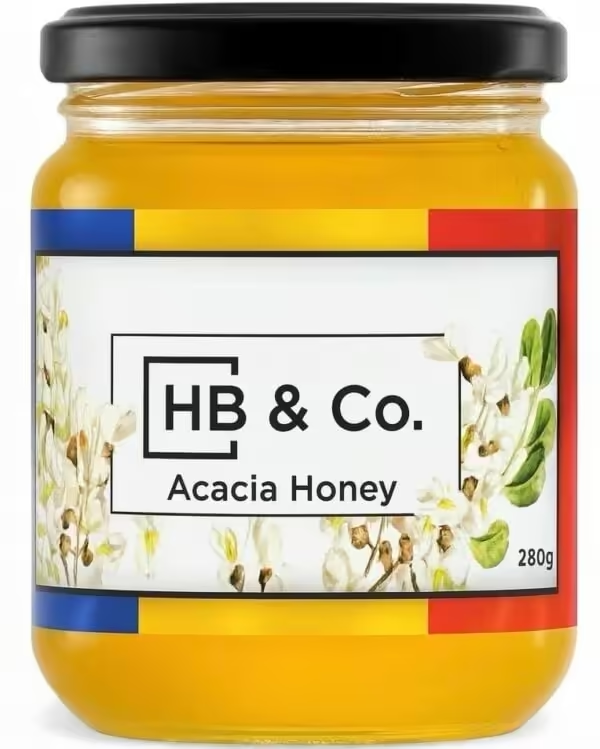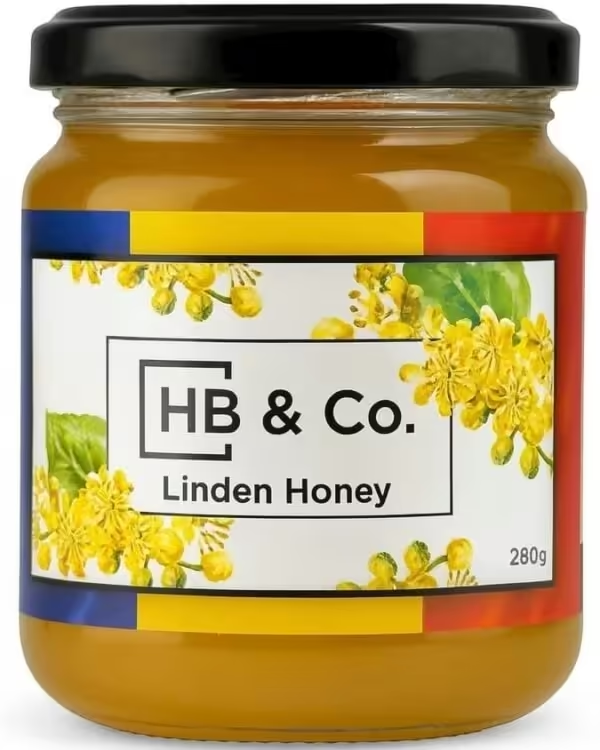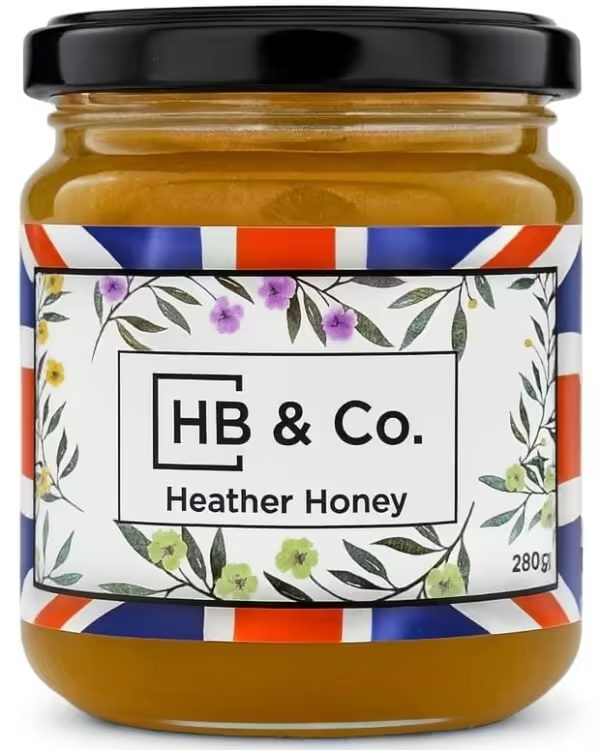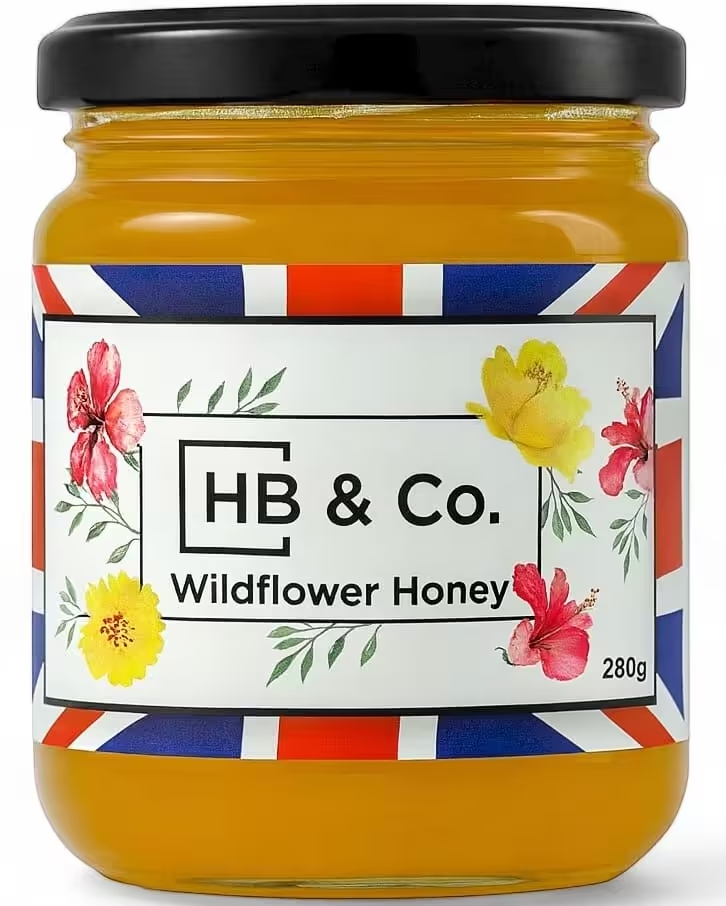
Raw · Transylvanian · Monofloral
Miele di girasole
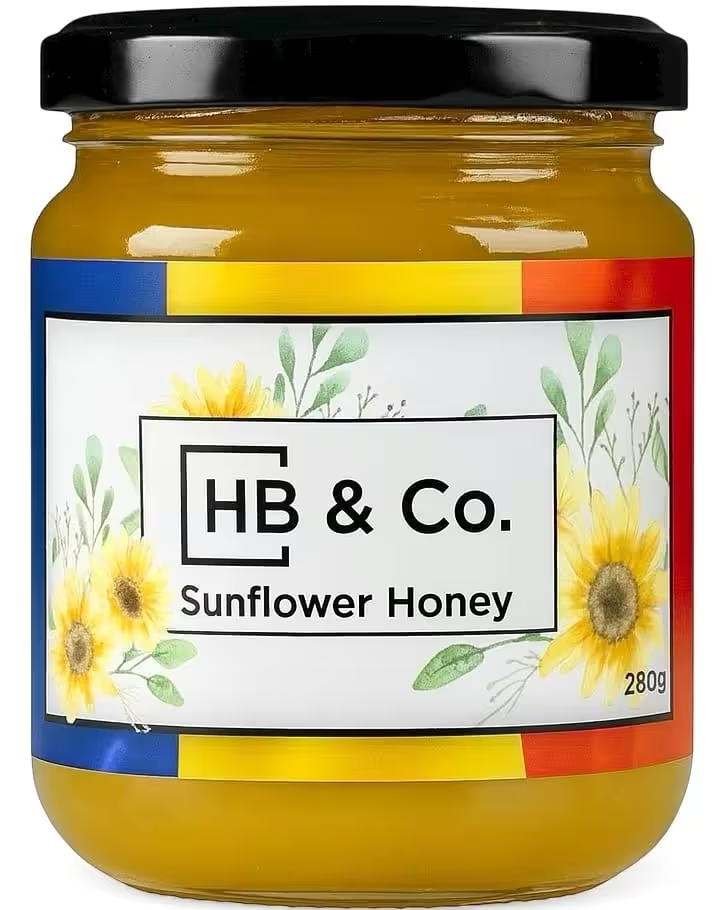
Raw, unpasteurised Sunflower Honey from our family apiaries in Transylvania. Bright gold, boldly sweet, with warm butterscotch depth and a fine, fondant-like crystallised texture. The most energising honey in the range. Sunshine concentrated into a jar.
Note di degustazione
The Boldest, Most Distinctive Honey We Make
Sunflower honey divides opinion in the best way. Its flavour is unmistakably assertive: warm, golden, with a buttery sweetness and butterscotch depth that no other honey in our range can match. It crystallises quickly into a fine, fondant-like texture that spreads beautifully and holds its colour year-round. If acacia is a whisper, sunflower honey is a declaration.
Il sapore
Warm, boldly sweet with a distinctive butterscotch depth, light floral notes, and a clean, satisfying finish
Aroma
Intense, warm, and golden. Sunflower fields in late summer, slightly nutty with a faint vanilla undertone
Struttura
Rapidly crystallises into a fine, smooth, fondant-like texture. Spreads cleanly. Does not drip or flow at room temperature
Colore
Bright, deep gold to warm amber. One of the most vivid-coloured honeys we produce. Holds its colour after crystallisation
Why does sunflower honey crystallise so quickly?
High Glucose. Fast Crystals. It Is What Sunflower Honey Does.
Sunflower honey has one of the highest glucose concentrations of any honey variety, approximately 45% glucose versus 40% fructose. Glucose crystallises readily; fructose does not. The result is that raw sunflower honey almost always crystallises within weeks of extraction, sometimes within days in cool conditions. This is not a flaw. It is the defining characteristic of sunflower honey and a reliable indicator of authenticity. If someone sells you "sunflower honey" that stays liquid for months, the glucose content has been altered or it has been heavily heat-treated. Ours does not stay liquid. It crystallises exactly as sunflower honey should. To return it to a more liquid state, place the closed jar in warm water no hotter than 40°C for 15 to 20 minutes. Read more about Perché il miele grezzo cristallizza and what it means for quality.
The Species Behind the Jar
Helianthus Annuus: Why Sunflower Honey Is Uniquely Composed
Helianthus annuus, the common sunflower, is not just one of the most recognisable plants on earth. It is also one of the most prolific honey plants. A single sunflower head contains hundreds of individual disc florets, each producing nectar. When sunflowers bloom across fields in late summer, the resulting honey flow is substantial, intense, and compositionally unlike almost anything else bees can collect.
The glucose-fructose balance
Sunflower honey contains approximately 45% glucose and 40% fructose, a ratio that is unusually glucose-heavy compared to most honey varieties. This high glucose concentration is the direct cause of the rapid, fine crystallisation that defines sunflower honey. It is also why sunflower honey tastes richer and more assertively sweet than lighter, high-fructose varieties like acacia.
Lecithin: the compound unique to sunflower honey
Sunflower honey is one of the only honey varieties known to contain lecithin, a naturally occurring phospholipid found in sunflower seeds and transferred into the nectar in trace amounts. Lecithin is associated with cell membrane health and cardiovascular support in nutritional research. Its presence in sunflower honey is rare among honey varieties and is one of the reasons sunflower honey has a distinct nutritional profile.
Why Transylvania produces exceptional sunflower honey
The Transylvanian climate, with its hot dry summers, clear skies, and minimal industrial pollution, produces nectar of exceptional concentration. Our family apiaries are positioned near sunflower cultivation areas and move hives to track the bloom. The resulting honey is monofloral, deeply flavoured, and compositionally distinct from generic bulk sunflower honey from commercial agricultural regions.
Origine e terroir
Transylvanian Sunflower Fields. Six Generations of the Same Landscape.
Our Sunflower Honey is harvested from the late summer bloom across Transylvania, where sunflower cultivation has been part of the agricultural landscape for generations. The fields surrounding our family apiaries in the Carpathian foothills produce nectar during a concentrated four to six week window in July and August, when temperatures are high, humidity is low, and the sunflower plants are producing nectar at their peak intensity.
Unlike Polish or Ukrainian bulk sunflower honey, which is often sourced from industrial-scale agricultural operations and sold anonymised through commodity trading chains, ours traces to a single family's apiaries. We know the fields, the beekeeper, and the extraction process. Cold-extracted, never blended, never heated. Read more about our heritage in our Vogue features story or visit our Pagina di approfondimento.
July
4-6 week harvest window
6
Generations of family beekeeping
45%
Glucose, highest in our range
Crudo
Never heated, never pasteurised
Acquista di più, risparmia di più
Stock Up or Taste the Transylvanian Range
Risparmiate 5% e ottenete la consegna gratuita nel Regno Unito su ogni confezione multibarattolo.
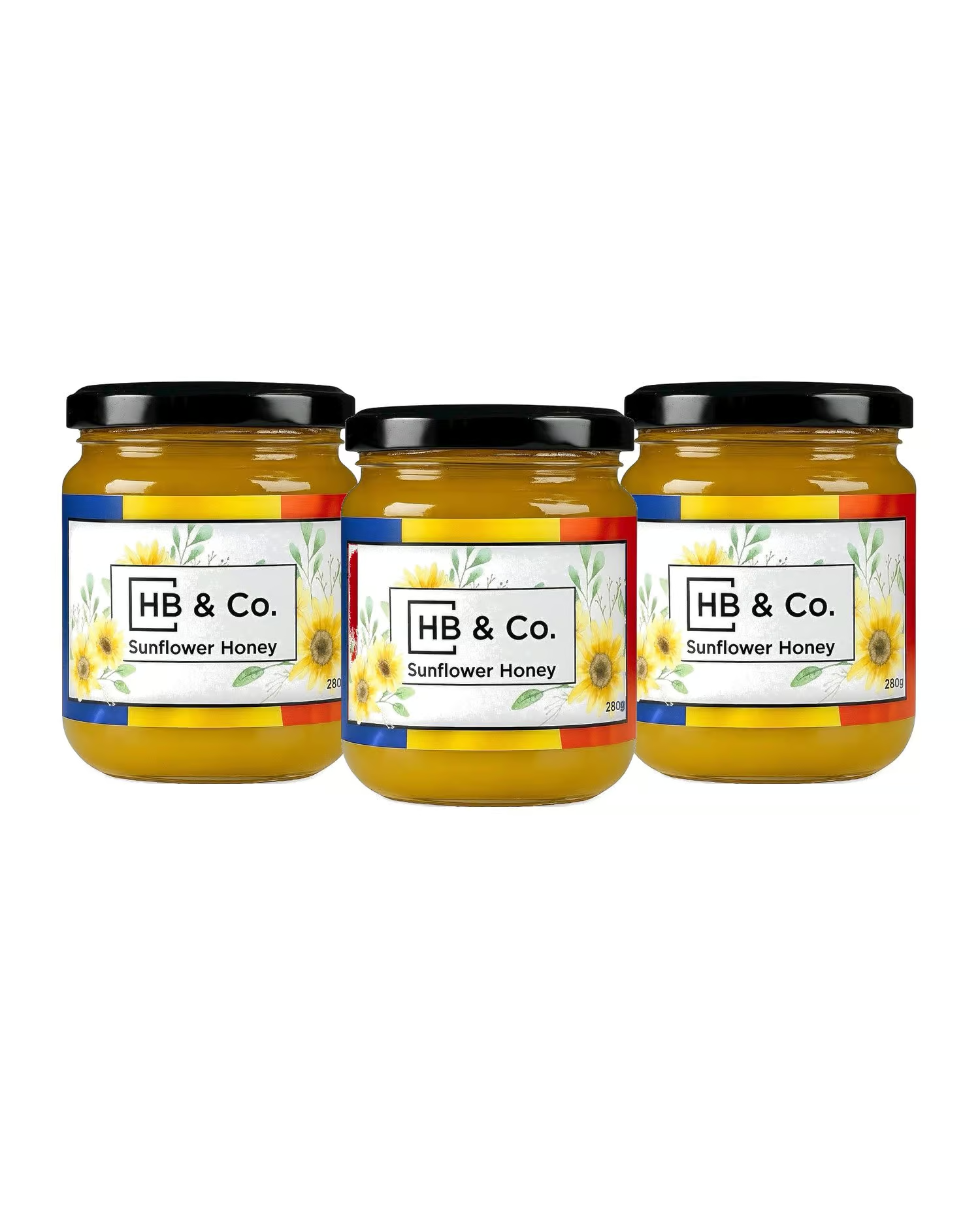
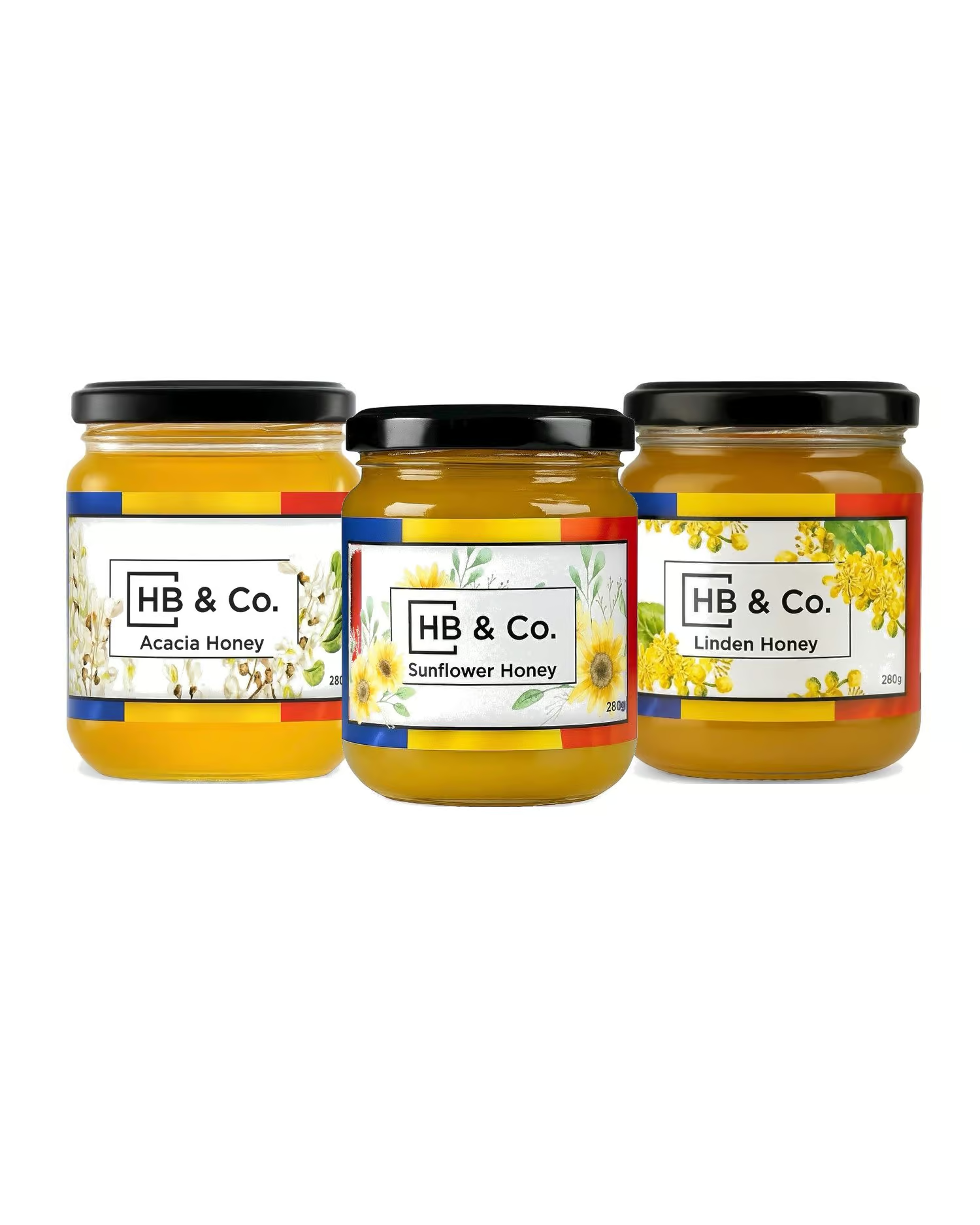
Looking for a gift? Sfoglia tutti i 20 set regalo di miele →
Why Sunflower Honey
Three Things That Make Sunflower Honey Different from Everything Else
The Most Energising Honey
The high glucose content of sunflower honey makes it one of the most rapidly available natural energy sources among honey varieties. Glucose absorbs directly into the bloodstream without requiring conversion, making sunflower honey a traditional choice before or after physical activity. It is not a sports supplement, but it is a genuinely different energy source to lighter, higher-fructose honeys like acacia.
Lecithin Content Unique to This Variety
Sunflower honey is one of the only honey varieties known to contain lecithin, a phospholipid found in sunflower seeds and transferred into the nectar. Most honey varieties do not contain lecithin at all. Its presence in sunflower honey gives it a distinct nutritional profile that goes beyond the standard honey composition of sugars, enzymes, and pollen. Read about the benefits and uses of sunflower honey.
Transylvanian Single-Origin
Most sunflower honey sold in the UK is commodity honey from Eastern European industrial agriculture, sourced through trading companies with no named origin. Ours traces to a single family's apiaries in Transylvania, where our beekeeping heritage runs six generations deep. Same landscape, same bees, same standards we apply to every honey in the range. Compare our story with our British range.
Proprietà naturali
Le proprietà naturali del miele di girasole grezzo
Raw sunflower honey retains its full natural composition because it is never heated above hive temperature. These properties are absent in pasteurised honey regardless of variety.
High-Glucose Natural Energy
The high glucose concentration of sunflower honey (approximately 45%) means the body can absorb it rapidly without conversion. Traditional beekeeping communities across the Balkans have long used sunflower honey as a daily tonic and energy source. The NHS recognises honey as a natural food with a different nutritional profile to refined sugar. NHS
Antioxidant Flavonoids
Raw sunflower honey contains naturally occurring flavonoids and phenolic compounds, including kaempferol and quercetin, associated with antioxidant activity in nutritional research. The flavonoid profile varies by floral source. Sunflower honey's composition has been studied specifically for its antioxidant and anti-inflammatory characteristics. NCBI ↗
Lecithin
Sunflower honey is one of very few honey varieties to contain lecithin, a naturally occurring phospholipid. Lecithin plays a structural role in cell membranes throughout the body and has been studied for cardiovascular and liver health applications. Its presence in sunflower honey in trace quantities distinguishes this variety nutritionally from most other monofloral honeys.
Attività antibatterica
Like all raw honey, sunflower honey contains glucose oxidase, the enzyme that produces hydrogen peroxide on contact with moisture, giving raw honey its natural antibacterial properties. This enzyme is destroyed by pasteurisation. Our sunflower honey is never heated above hive temperature, preserving this activity intact. Traditional use includes sore throat relief and wound support.
The information above is for educational purposes only and does not constitute medical advice. Raw honey is not recommended for children under 12 months. Consult your GP before making dietary changes if you have a medical condition or are pregnant.
Come usarlo
Six Ways to Use Transylvanian Sunflower Honey
Sunflower honey's bold flavour and naturally set texture make it the most versatile honey in our range for cooked and baked applications. See our honey recipe collection.
Panificazione
Sunflower honey's bold, warm flavour stands up to baking in a way that milder honeys cannot. Use it in honey cakes, gingerbread, flapjacks, and biscotti where you want the honey to be the dominant flavour note, not just background sweetness. It produces a deeper golden-brown colour in baked goods than lighter honeys.
Best for: honey cake, gingerbread, flapjacksGlazing Roasts and Meats
The high glucose content means sunflower honey caramelises intensely at roasting temperatures, producing a deep, lacquered glaze with exceptional colour. Excellent on pork belly, lamb, duck, and root vegetables. Mix with grain mustard and rosemary for a classic honey-mustard baste that works across almost any protein.
Best for: pork belly, roast lamb, carrotsOn Toast and Bread
Crystallised sunflower honey has a fondant-like texture that spreads cleanly from the jar without the drip of runny honey. The bold, warm flavour stands alongside strong-flavoured breads like rye, sourdough, and dark wholemeal. A morning ritual that genuinely delivers something different to milder honey varieties.
Best with: rye bread, sourdough, dark toastIn Porridge and Yoghurt
A spoonful of sunflower honey in hot porridge delivers a distinctly sweeter, more assertive note than wildflower or acacia. It pairs well with warming spices like cinnamon and cardamom, and holds its own against full-fat Greek yoghurt where lighter honeys can get lost. Try it with walnuts and a pinch of sea salt.
Best with: porridge, Greek yoghurt, walnutsIn Condimenti per insalata
Warm slightly to loosen, then whisk with apple cider vinegar, Dijon mustard, and olive oil for a honey-mustard vinaigrette with real character. Sunflower honey's intensity means a smaller quantity goes further than milder honeys, and the flavour holds through acidic dressings without disappearing.
Best for: grain salads, roasted veg, bitter leavesAs a Natural Energy Boost
A traditional use across the Balkans: a small spoonful of sunflower honey on an empty stomach in the morning, or dissolved in warm water before exercise. The high glucose content provides rapid, natural energy. No processing, no additives, just concentrated sunflower nectar doing what it does naturally.
Traditional use: morning tonic, pre-exerciseRecensioni dei clienti
4.9★ Rated by 53 Customers
Across all honeys in our range on Google.
Read all reviews on Google →"The sunflower honey is absolutely stunning. Bold and rich, completely different to anything I have found in a shop. It crystallised perfectly fine and the texture is smooth and spreadable. Will order again."
Verified customer — Google Review
"I use this for baking and the colour and flavour it gives to honey cakes is remarkable. Nothing like the pale supermarket honeys. It is genuinely the best honey I have used in recipes."
Verified customer — Google Review
"I was slightly sceptical about Transylvanian sunflower honey but this is exceptional. You can taste the difference in origin. It has a depth and warmth that store-bought sunflower honey simply does not."
Verified customer — Google Review
Founder & Heritage
From Our Family's Fields in Transylvania

Dragos Nistor, fondatore
Six-Generation Beekeeper · Guest Lecturer, University of Greenwich · LinkedIn Top Voice 2024
"Sunflower honey is what my grandfather kept as the workhorse of our apiary. While acacia was the delicacy and linden was the herbal treasure, sunflower honey was what the family actually ate every day. On bread in the morning, in tea in the evening, stirred into everything in winter. It is the most honest, direct honey we make. Bold, warm, exactly what honey is supposed to be."
Featured in Vogue's Summer Hot List across three consecutive editions in summer 2024. NHS 15% Discount available for all NHS staff. GS1-barcoded for full traceability on every jar.
Domande frequenti
Tutto quello che c'è da sapere sul miele di girasole
Why has my sunflower honey gone solid?+
Because sunflower honey crystallises rapidly, and that is exactly what it is supposed to do. Sunflower honey has an unusually high glucose concentration, approximately 45% of its sugar content. Glucose crystallises readily; fructose does not. The result is that raw sunflower honey almost always crystallises within weeks of extraction, sometimes within days in cool conditions. A solidly set jar of sunflower honey is a sign of authenticity, not a quality problem. To return it to a more flowing consistency, place the closed jar in a bowl of warm water no hotter than 40°C for 15 to 20 minutes. Do not microwave.
What does sunflower honey taste like?+
Warm, boldly sweet, with a characteristic butterscotch depth and warm golden flavour. Less floral than wildflower, less herbal than linden, and less complex than heather, but richer and more assertively sweet than any of them. It is the most intensely flavoured honey in our range in terms of straightforward, concentrated sweetness. Some people detect a faintly nutty or vanilla undertone when it is eaten straight from the jar at room temperature.
Is sunflower honey good for you?+
Raw sunflower honey retains naturally occurring enzymes, antioxidant flavonoids including kaempferol and quercetin, and trace pollen. It is one of the only honey varieties to contain lecithin, a phospholipid associated with cardiovascular and cellular health in nutritional research. Its high glucose content makes it one of the most rapidly absorbed natural energy sources among honey varieties. It is not a medicine and we make no medical claims. It is a natural food that is demonstrably different in composition to refined sugar or processed supermarket honey.
Why is your sunflower honey from Transylvania and not the UK?+
Sunflower honey requires warm, dry growing conditions and substantial sunflower cultivation areas to produce at quality. Transylvania's climate and agricultural landscape are significantly better suited to monofloral sunflower honey production than the UK, where sunflowers are grown in limited quantities and British summers lack the consistent heat required to produce concentrated nectar. Our Transylvanian apiaries have worked these fields for six generations. The heritage and the landscape are the reasons the honey is exceptional. Our British honeys (Wildflower, Heather, Soft Set) come from British suppliers.
How does sunflower honey compare to acacia honey?+
They are near opposites. Acacia is pale, mild, slow to crystallise, delicately floral, and the most versatile honey for everyday use. Sunflower is golden, bold, rapid to crystallise, warmly sweet, and the most assertive honey in terms of flavour. Acacia disappears into whatever you add it to. Sunflower makes itself known. For baking and glazing, sunflower is preferable. For tea and subtle sweetening, acacia is the better choice. Both are from our Transylvanian apiaries.
What is the lecithin in sunflower honey?+
Lecithin is a naturally occurring phospholipid found in sunflower seeds. In sunflower honey, trace amounts of lecithin pass from the plant into the nectar and are preserved in raw, unheated honey. Most honey varieties do not contain lecithin. Lecithin plays a structural role in cell membranes and has been studied for cardiovascular and liver health applications in nutritional science. We make no medical claims, but the presence of lecithin is a genuine compositional distinction that sets sunflower honey apart from other varieties.
When is sunflower honey harvested?+
Sunflowers in our Transylvanian growing areas bloom in late July and through August, with the peak nectar flow typically occurring over a four to six week window. The exact timing varies by year depending on rainfall and temperature. Our beekeepers move hives to track the bloom and harvest when the combs are fully capped and moisture content is optimal, typically between 15 and 19%.
Is this the same honey as in your bundles and subscription?+
Yes. Identical honey, identical jar, identical harvest. A single jar is £10.99. The 3-jar stock-up bundle saves 5% with free UK delivery. The abbonamento saves 20% on every delivery at £8.79/mo and can be paused or cancelled at any time.
How should I store my sunflower honey?+
Room temperature, away from direct sunlight. Do not refrigerate, as cold temperatures will firm the honey further. Keep the lid firmly closed. Because sunflower honey sets at room temperature, there is no concern about it going runny from warmth as long as you keep it away from direct heat sources. Raw honey has an almost indefinite shelf life when stored correctly.
Can children eat sunflower honey?+
Suitable for anyone over 12 months old. As with all raw honey, do not give to infants under one year due to the rare risk of infant botulism. For children over one year, sunflower honey's bold, warm sweetness makes it appealing, and its naturally set texture means it spreads on toast without the mess of runny honey. It is a good baking honey for involving children in the kitchen.