

 English (UK)
  Italiano
  Français
  简体中文
简体中文  한국어
한국어 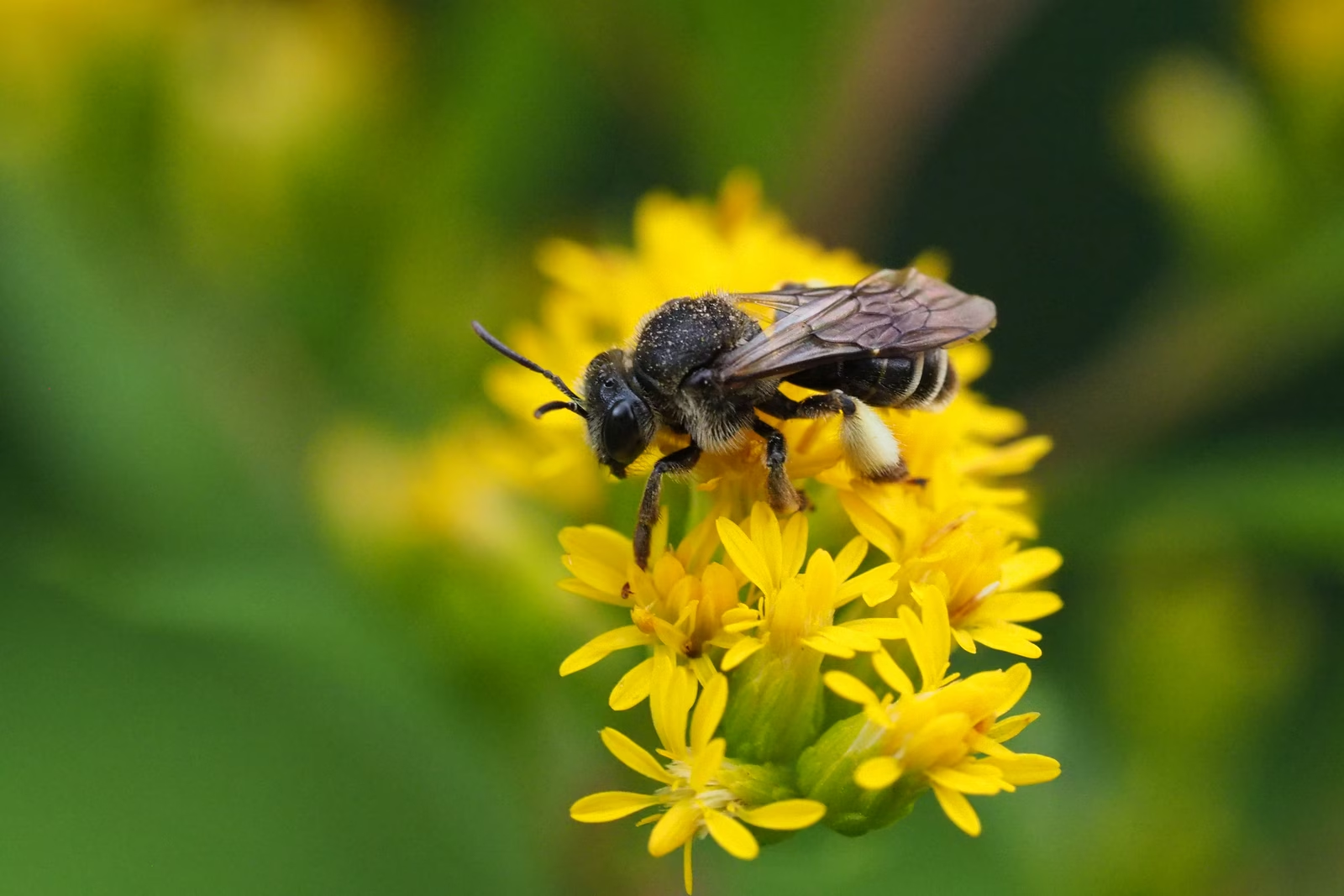
UK Bee Species
Pantaloon Bee (Dasypoda hirtipes)
Dasypoda hirtipes (Fabricius, 1793) · family Melittidae
The pantaloon bee is one of the most striking and easily named of all our wild bees. The female carries extraordinarily long, golden hairs on her hind legs, swollen with pollen until they look exactly like a pair of baggy trousers. It is a summer bee of sandy heaths and coastal dunes in southern Britain, where it digs its nests in open sand and feeds almost entirely on yellow daisies. See where it sits among Britain's bees on the UK Native Bee Species Map, or among the world's bees in the World Bee Atlas.
Quick Facts
| Kingdom | Animalia |
| Phylum | Arthropoda |
| Class | Insecta |
| Order | Hymenoptera |
| Family | Melittidae |
| Genus | Dasypoda |
| Species | Dasypoda hirtipes |
The bee in golden trousers
There is no mistaking a female pantaloon bee. The hind legs carry some of the longest pollen-collecting hairs of any British bee, a dense golden fringe that fills with pale pollen as she forages until the legs look swollen into a pair of fluffy trousers.[1] The rest of her is handsome too: a bright golden-brown thorax and a dark abdomen crossed by neat pale bands. She is a medium to large bee, around 12 to 15 mm long. Males lack the pantaloons, are clad in shaggy golden hair and have longer antennae, and have been likened to tiny lions.[3]
A short-tongued bee of a small family
Despite an old alternative name of hairy-legged mining bee, the pantaloon bee is not one of the true mining bees in the family Andrenidae. It belongs to the Melittidae, a small family of short-tongued bees, and is the only member of its genus, Dasypoda, found in Britain.[1][6] You can see where the Melittidae sit alongside the other bee families in the World Bee Atlas.
A specialist of yellow daisies
The pantaloon bee is a pollen specialist, or oligolege. It gathers pollen almost exclusively from yellow-flowered members of the daisy family, the Asteraceae, such as cat's-ear, hawkbits, hawk's-beards, ragworts, common fleabane and ox-tongues, and it visits thistles and knapweeds too.[1][5] Where it works low flowers such as cat's-ear, which close in the afternoon, foraging is concentrated in the morning.[2] The dry pollen of these daisies is packed straight into the long leg hairs, which is exactly what the pantaloons are for.[1]
The pantaloon bee feeds its young almost entirely on the pollen of yellow daisies, so it cannot survive without open ground rich in cat's-ear, hawkbits and ragworts.[1]
Nests in the sand
The female nests in the ground, choosing flat, bare or sparsely vegetated sandy and other loose soils, including coastal dunes, sandy heaths and even well-trodden sandy paths.[1] She digs a deep burrow, using those same hairy legs to rake the spoil out behind her, which leaves a characteristic fan of loose sand beside each entrance.[2] Many females nest close together, and the aggregations can be large, a haze of bees over the sand that looks alarming but is entirely safe, since the female's sting cannot pierce human skin.[2] The nests attract their own enemies: satellite flies of the genus Miltogramma slip in while the female forages and lay their eggs on her pollen stores.[2]
Where and when you will see it
The pantaloon bee is a bee of southern Britain, still reasonably widespread and locally common on southern coastal dunes but much declined inland.[4] Records are concentrated in south-east England, with a scatter along the Welsh coast and through Norfolk and Dorset, thinning northwards to north Wales, Staffordshire and the Norfolk coast, and it also occurs on the Channel Islands.[1] Adults fly from late June to early September, at the height of summer.[2] It is a local species whose population is considered to be in decline, chiefly through the loss of open sandy ground.[3] Across its wide European range it is assessed as of Least Concern overall.[5]
A high-summer bee, on the wing from late June to early September, when the sandy heaths and dunes of the south are at their warmest and the yellow daisies are in full flower.[2]
A name that means "hairy feet"
Both halves of this bee's scientific name point at the same thing: its legs. Dasypoda comes from the Greek for "shaggy foot", and hirtipes from the Latin for "hairy-footed", so the famous pollen trousers are written into the name twice over.[7] It was first described in 1793 by the Danish entomologist Johan Christian Fabricius, a pupil of Linnaeus, and later placed in the genus Dasypoda.[7] It remains the only Dasypoda in Britain, and one of our few members of the Melittidae, a small and ancient family of short-tongued bees.[1]
Pollen on a tripod, and uninvited guests
The pantaloons are not only for carrying pollen. As the female digs, she uses the same long hind-leg brushes to sweep loose sand back out of the burrow, so the trousers double as a broom.[2] Deep in the nest she shapes her pollen and nectar into a ball and stands it on a little tripod of projections, keeping it clear of the unlined cell walls and away from damp; the larva that hatches on top eats the ball and spins no cocoon.[8] Such rich, undefended larders draw uninvited guests: cleptoparasitic "satellite flies" of the genus Miltogramma dart into the burrow while the female is away foraging and lay their own eggs inside.[2]
How to tell it apart
The female is one of the most distinctive bees in Britain: no other has such enormous golden-orange pollen brushes ballooning from the hind legs, set against a golden-brown thorax and a banded abdomen.[1] Because she is the only Dasypoda here, those pantaloons settle the identification at a glance.[1] Males lack the trousers and are clothed instead in long golden hair, shaggy enough that they have been likened to tiny lions.[3]
Why the pantaloon bee matters
Few wild bees make a better flagship for sandy, open habitats than the pantaloon bee. Because it needs two things at once, bare sandy ground to nest in and a good supply of yellow daisies to feed on, its presence is a sign of healthy dune, heath and brownfield mosaics.[1] Those are among the habitats most easily lost to development, scrub encroachment and the smoothing-over of rough ground.[3] Keeping patches of open, sunny sand and the wildflowers that grow around them is the surest way to hold on to this most charismatic of our summer bees.
Summer flowers feed the pantaloon bee; the same wildflower-rich ground gives our honeybees their nectar. Explore the range in the HoneyBee & Co. shop.
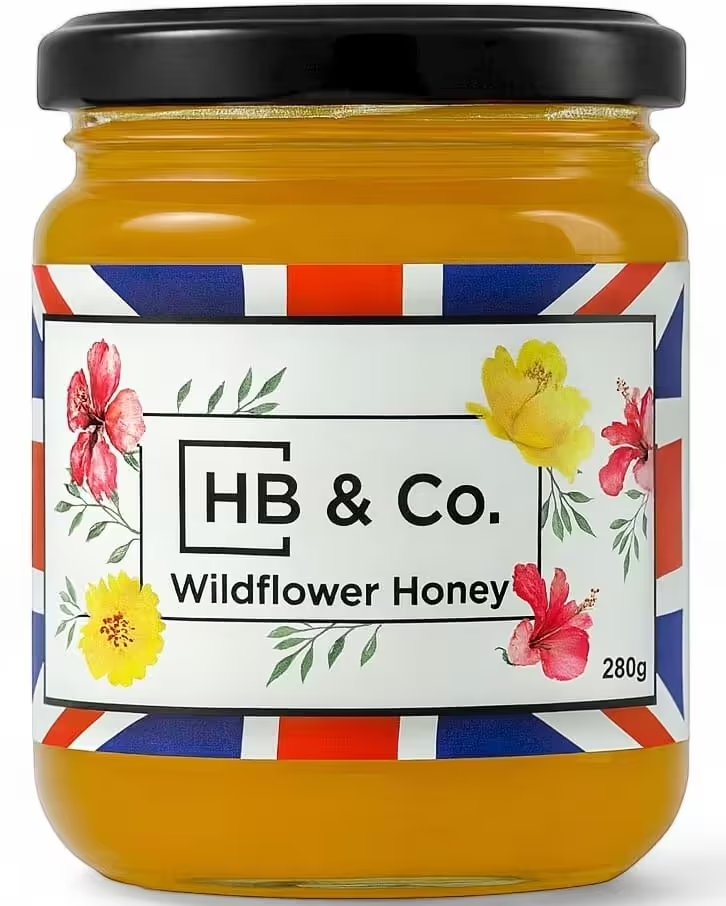
Raw British Wildflower Honey
Honey from Midlands meadows and hedgerows, the high-summer flowers that solitary bees like the pantaloon bee work for pollen and nectar. Raw, unfiltered and full of character. Our British honey supplier holds SALSA Certification. 280g. £10.99.
Shop Wildflower Honey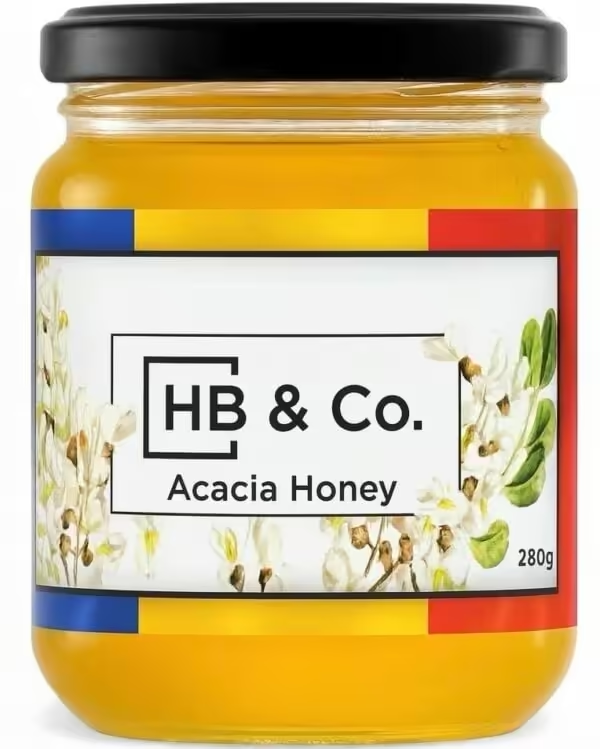
Raw Acacia Honey
Our flagship raw Acacia honey: pale, delicate and slow to crystallise. Drawn from the Nistor family's Transylvanian apiaries. 280g. £10.99.
Shop Acacia
Subscribe & Save 20%
Choose any single honey and save 20% on every delivery, with free UK delivery on every subscription order.
Start a SubscriptionFrequently asked questions
What is a pantaloon bee?
Why is it called the pantaloon bee?
How do I identify Dasypoda hirtipes?
Where do pantaloon bees live?
When are pantaloon bees active?
Do pantaloon bees sting?
What do pantaloon bees feed on?
Does the pantaloon bee make honey?
Related species
Ivy Bee
Colletes hederaeRead more → Ground nesterAshy Mining Bee
Andrena cinerariaRead more → Aggregation nesterYellow-legged Mining Bee
Andrena flavipesRead more →Sources & references
- BWARS (Bees, Wasps & Ants Recording Society). Species account: Dasypoda hirtipes (only British Dasypoda, the female's large hind-leg pollen brushes, nesting aggregations in sandy soil, composite-pollen specialism, distribution). bwars.com.
- Falk, S. Field Guide to the Bees of Great Britain and Ireland, Bloomsbury, and the Steven Falk Flickr collection: Dasypoda hirtipes (identification, fan of sandy spoil, Miltogramma satellite flies, flight late June to early September, inability to sting people).
- Buglife. Pantaloon Bee species page: sandy heath and dune habitat, yellow-composite forage, declining population trend and habitat-loss threat. buglife.org.uk.
- Essex Field Club / Falk, S. (1991). Species account for Dasypoda hirtipes: locally common on southern coastal dunes but significantly declined inland. essexfieldclub.org.uk.
- Michez, D. & Nieto, A. (2014). Dasypoda hirtipes, European Red List of Bees, IUCN: Least Concern, pollen from Asteraceae, nesting in open sandy soil.
- Else, G.R. & Edwards, M. (2018). Handbook of the Bees of the British Isles. Ray Society (taxonomy and placement in the Melittidae).
- Fabricius, J.C. (1793), original description (as Andrena hirtipes); genus Dasypoda Latreille, 1802. Name etymology: Greek dasypoda and Latin hirtipes, both meaning "hairy-footed" (NBN Atlas; species synonymy).
- Vereecken, N.J. et al. (2006) and El Abdouni, I. et al. (2021), summarised by Buzz About Bees: Dasypoda nest biology, including unlined cells, pollen balls raised on a tripod of projections and cocoonless larvae. buzzaboutbees.net.

Dragos Nistor
Founder, HoneyBee & Co. · Guest Lecturer, University of Greenwich
HoneyBee & Co. draws on six generations of family beekeeping heritage, with honey from the Nistor family apiaries and from carefully chosen British producers. Our British honey supplier holds SALSA Certification, and we offer a 15% NHS Discount. Every jar is raw, unfiltered and traceable to the hive.