

 English (UK)
  Italiano
  Français
  简体中文
简体中文  한국어
한국어 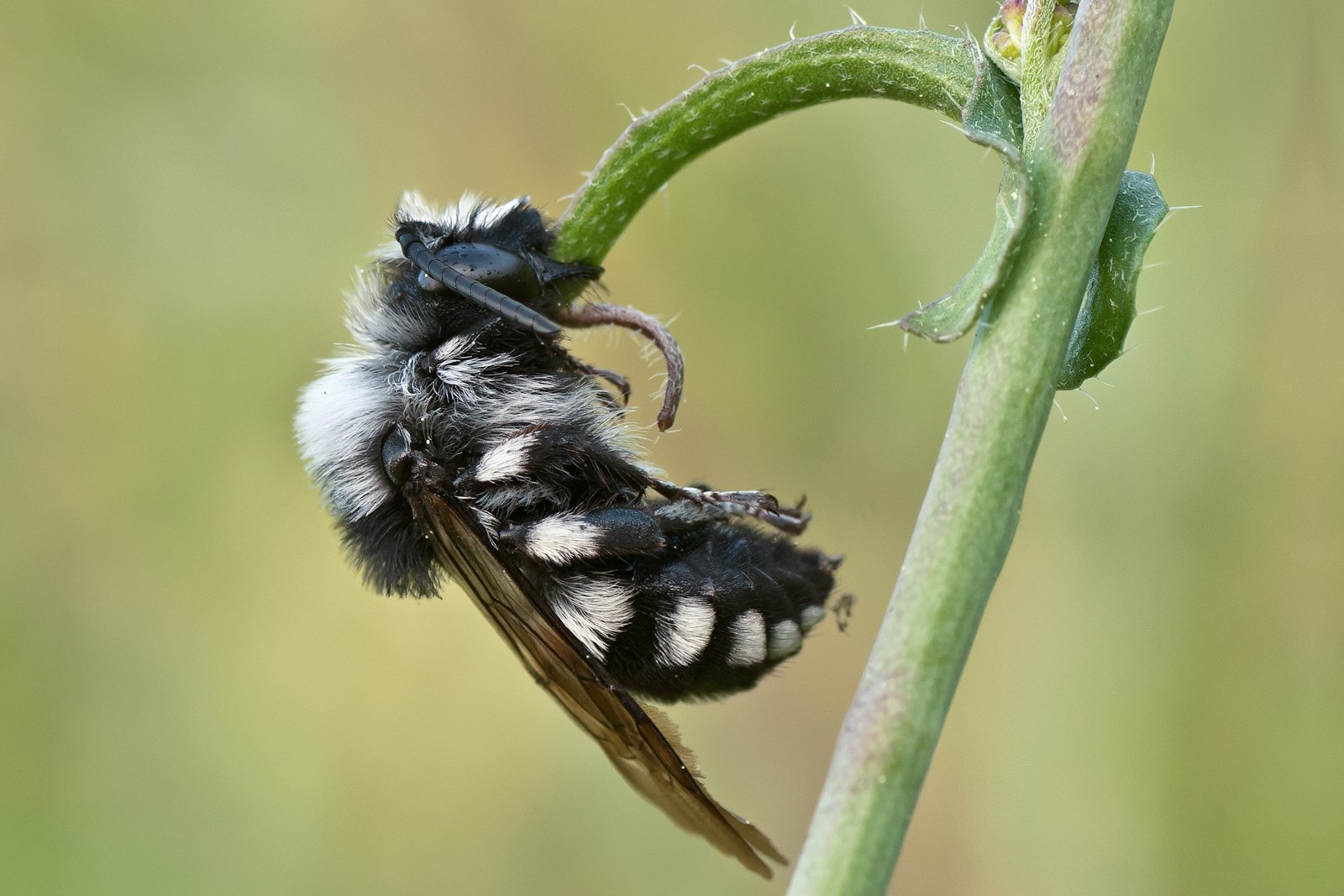
Square-spotted mourning bee, Melecta luctuosa. Lost from Britain for more than a century, it still survives in parts of continental Europe. Photograph by Mathias Krumbholz, CC BY-SA 3.0, via Wikimedia Commons.
UK Bee Species
Square-spotted Mourning Bee Melecta luctuosa
Scopoli, 1770 · tribe Melectini · family Apidae
Also called the six-spotted mourning bee, for the bold pale spots along its abdomen. The name luctuosa means "mournful".
This is an entry for a bee we have lost. The square-spotted mourning bee was never common here, a striking black-and-white cuckoo of southern England, and it has not been reliably seen in Britain since before the First World War. Its story is worth telling because of how it went: not on its own, but dragged down with the bee it depended on.[1]
A cuckoo that vanished with its host
A cuckoo bee cannot outlive its host. The square-spotted mourning bee made its living entirely at the expense of one flower bee, the potter flower bee (Anthophora retusa), laying its eggs in that bee's underground nests.[2] When the potter flower bee collapsed across Britain, its cuckoo had nowhere left to lay, and followed it out. The mourning bee's disappearance is, in effect, a shadow cast by its host's decline.[1]
When a specialist cuckoo loses its single host, extinction can follow closely behind.
How a mourning bee made its living
Mourning bees are cleptoparasites, the "cuckoos" of the bee world, and members of a small group of digger-cuckoo bees that target ground-nesting flower bees.[4] A female does not gather pollen or build a nest of her own. Instead she flies slowly and stealthily around a host's nesting area, waiting. When she finds a sealed host cell, already stocked with pollen and an egg, she breaks in, lays her own egg inside, and reseals the hole behind her.[4] The mourning bee grub then destroys the host's offspring with its large jaws and eats the food store meant for it. It is a hard living, and a precise one, which is exactly why it is so fragile: remove the host, and the whole strategy fails.
The mourning bee you can still see is a different one
Britain still has a mourning bee. If you see a stocky black bee with grey shoulders and white spots hovering around a wall in spring, it is almost certainly the common mourning bee (Melecta albifrons), which is widespread and is the cuckoo of the familiar hairy-footed flower bee.[3] The square-spotted mourning bee was the rarer, more striking cousin.
How the two were told apart
The square-spotted mourning bee earned its name from its white abdominal spots, which were larger and more square or rectangular than the smaller spots of the common mourning bee, making it the more boldly marked insect. Under a lens it also showed a band of white hairs at the tip of the middle shin, often all black in the common species, and a shorter third cell along the wing edge. Bear in mind that entirely black common mourning bees also occur.[3]
Where and when it flew
The square-spotted mourning bee was always a rare bee of southern Britain, with scattered old records from a handful of southern counties before it faded out.[1] It was never recorded from Ireland or the Channel Islands.
Where it survives on the continent it flies in a single generation from late April to June, overwintering as an adult, and visits long, tubular flowers alongside its host: ground-ivy, dandelion, wallflower and their kin.[5] Set its family among the world's cuckoo bees in the World Bee Atlas, or see which bees still hold on across Britain on the UK Native Bee Species Map.
Quick facts
| Kingdom | Animalia |
|---|---|
| Phylum | Arthropoda |
| Class | Insecta |
| Order | Hymenoptera |
| Family | Apidae |
| Tribe | Melectini |
| Genus | Melecta |
| Species | Melecta luctuosa |
The name: a bee in mourning
The English name captures the look of the whole genus: black bodies marked with white or grey, like the black and white of Victorian mourning dress. The species name luctuosa is Latin for "mournful" or "sorrowful", and "square-spotted" singles out the bold, angular white marks that set this one apart from its commoner cousin.[5] It is a fitting name for a bee that Britain now remembers rather than sees.
We cannot bring this one back. We can look after the rest.
The square-spotted mourning bee is beyond saving here, but the flower bees and pollinators still with us are not. Flower-rich, undisturbed ground keeps them going, and honeybees turn the same flowers into raw honey.
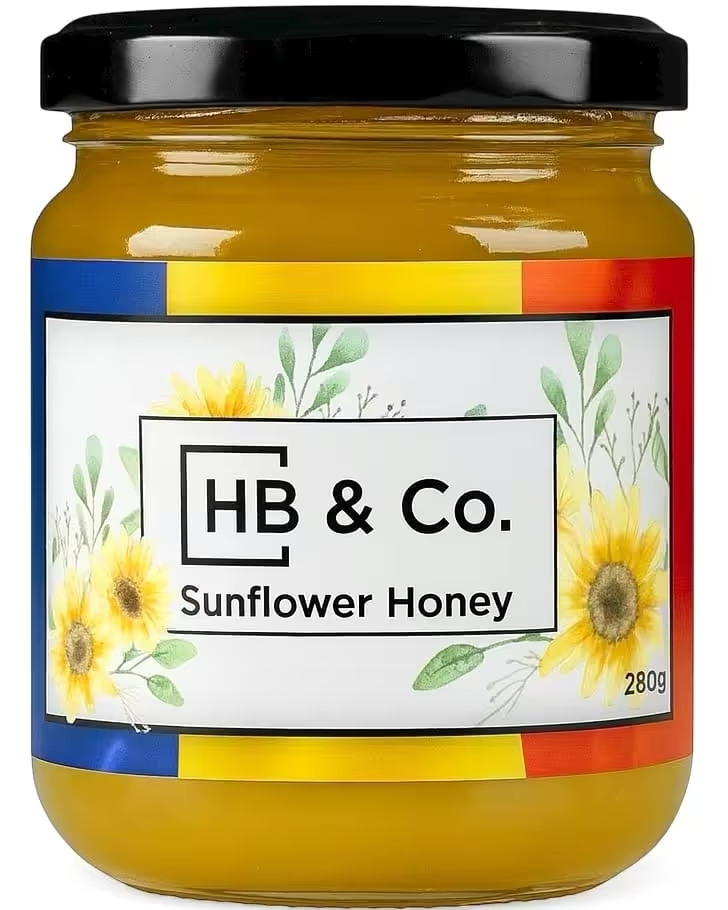
Raw Sunflower Honey
Bright, golden and quick to set, a warm, sunny honey with a gentle character. Raw and unfiltered. 280g, £10.99.
Shop Sunflower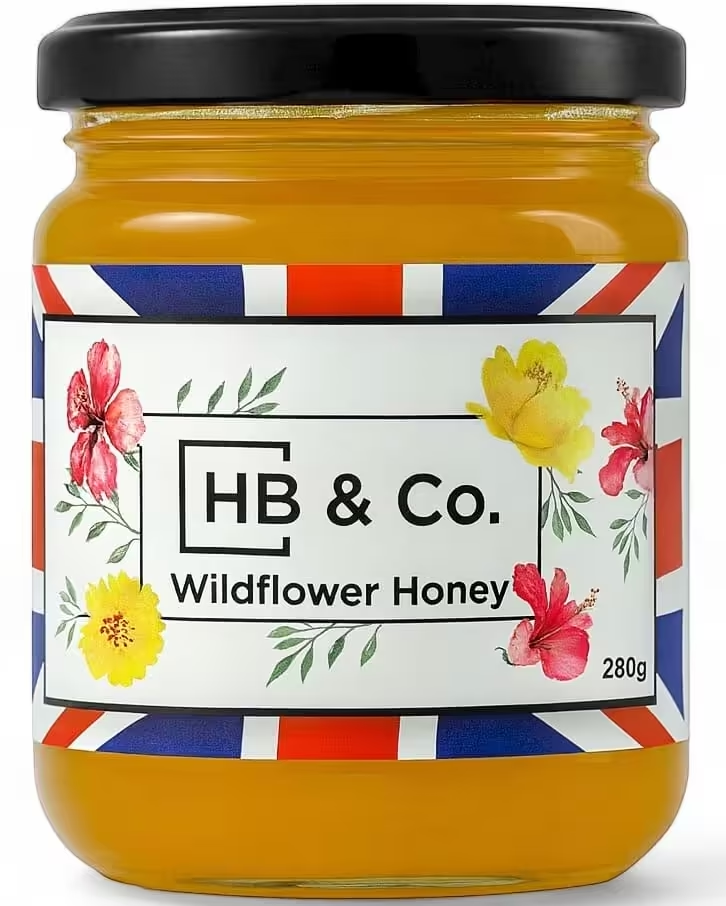
Subscribe and save 20%
Choose any single honey, from British wildflower upward, and save 20% on every delivery, with free UK delivery on every subscription order.
Start a SubscriptionFrequently asked questions
Is the square-spotted mourning bee extinct?
In Britain, yes, it is presumed extinct, with no confirmed record for more than a century. It still survives in parts of continental Europe and North Africa, so it is not globally extinct, only lost from these islands.
Is it the same as the six-spotted mourning bee?
Yes. Melecta luctuosa is called the square-spotted mourning bee in field guides, after its bold, angular white spots. Six-spotted mourning bee is an alternative name for the same species.
When was it last seen in Britain?
The last confirmed British record was in the New Forest, in what was then South Hampshire, in 1912.
Why did it die out here?
Because its host did. As a cuckoo bee, it laid its eggs only in the nests of the potter flower bee (Anthophora retusa). When that flower bee collapsed across Britain, the mourning bee lost the one thing it could not do without.
How was it different from the common mourning bee?
The square-spotted mourning bee was the more boldly marked of the two, with larger, more rectangular white spots, white hairs at the tip of the middle shin, and a shorter cell along the wing edge. The common mourning bee (Melecta albifrons) is the one still found in Britain today.
What is a mourning bee?
A cleptoparasite, or cuckoo bee, that lays its eggs in the nests of ground-nesting flower bees. It builds no nest and gathers no pollen of its own. The name refers to its funereal black-and-white colouring.
Could it ever return to Britain?
Only if its host recovered strongly and the mourning bee recolonised naturally from the continent. It is not impossible, but it would depend first on the fortunes of the potter flower bee, which remains very rare here.
Did it make honey?
No. As a cuckoo bee it made no nest and stored no food. Only the honeybee makes honey in any quantity. You can compare the bee families in the World Bee Atlas.
Related species
Sources and references
- BWARS (Bees, Wasps & Ants Recording Society). Species account: Melecta luctuosa (Apidae): always a rare southern British bee, no confirmed record for at least a century (New Forest, 1912), presumed extinct, and the historic county records. bwars.com.
- BWARS. Species account: Anthophora retusa (the potter flower bee): its severe British decline, and the cleptoparasitic Melecta luctuosa recorded attacking its nests (Saunders 1896; Morice 1901; and later authors). bwars.com.
- Falk, S. Field Guide to the Bees of Great Britain and Ireland, Bloomsbury, and the Steven Falk Flickr collection: separation from M. albifrons by the larger rectangular abdominal spots, white-tipped mid tibiae and shorter third submarginal cell.
- Else, G.R. & Edwards, M. (2018). Handbook of the Bees of the British Isles. Ray Society, and the Steven Falk genus account: the Melectini as digger-cuckoo bees of Anthophora, and the mechanics of cell parasitism.
- Amiet, F., Herrmann, M., Müller, A. & Neumeyer, R. (2007). Apidae 5 (Fauna Helvetica): the continental biology of Melecta luctuosa, its single spring generation, forage on long-corolla flowers, and European range.
- GBIF and the NBN Atlas: current name and authority, Melecta luctuosa (Scopoli, 1770); Scopoli, J.A. (1770), original description. Etymology: Latin luctuosa, "mournful".
HoneyBee & Co. draws on six generations of family beekeeping heritage, with honey from the Nistor family apiaries and from carefully chosen British producers. Our British honey supplier holds SALSA Certification, and we offer a 15% NHS Discount. Every jar is raw, unfiltered and traceable to the hive.