
 English (UK)
  Italiano
  Français
  简体中文
简体中文  한국어
한국어 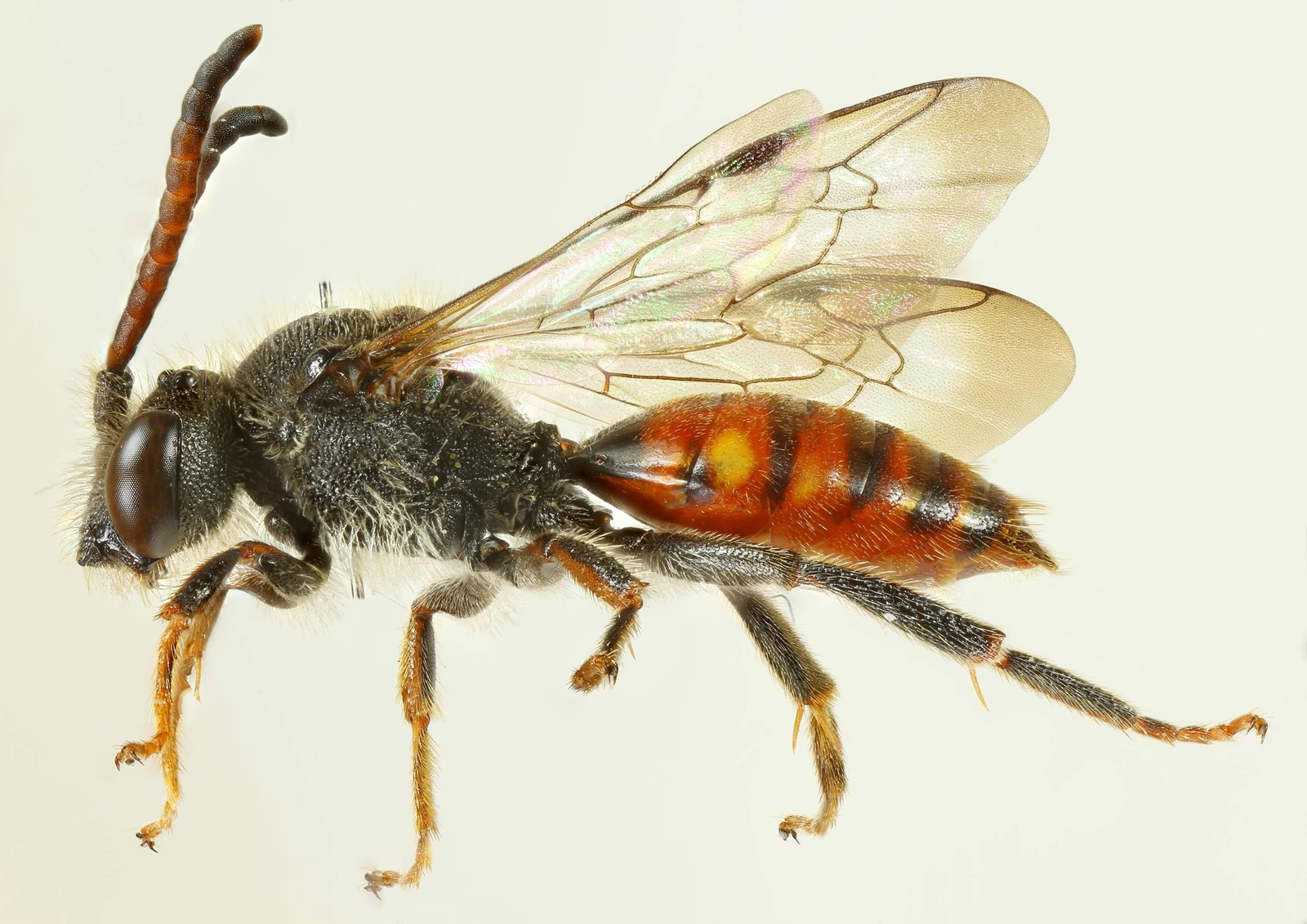
UK Bee Species
Fabricius Nomad Bee (Nomada fabriciana)
Nomada fabriciana (Linnaeus, 1767) · subfamily Nomadinae · family Apidae
Here is a small oddity of scientific naming: this bee was named to honour Johan Christian Fabricius, but not by him. Linnaeus, Fabricius's own teacher, described the species in 1767 and chose the epithet fabriciana as a tribute to his brilliant Danish pupil, then in his twenties and already at work on the vast insect catalogues that would fill his life.[3] Two and a half centuries later, a teacher's small gesture is still spoken aloud every time the bee is recorded.
The bee itself is a rust-orange, wasp-shaped cuckoo, only seven to ten millimetres long, hairless and long-legged: one of the earliest nomads on the wing each spring and one of the commonest in Britain. It builds no nest and gathers no pollen. Instead it slips into the burrow of a mining bee, lays an egg on the cell wall, and leaves its own larva to kill the host young and eat the pollen store left behind. See where it sits among Britain's bees on the UK Native Bee Species Map, or among the world's bees in the World Bee Atlas.
The bee at a glance
Full taxonomy
| Kingdom | Animalia |
| Phylum | Arthropoda |
| Class | Insecta |
| Order | Hymenoptera |
| Family | Apidae |
| Subfamily | Nomadinae |
| Genus | Nomada |
| Species | Nomada fabriciana |
A bee that lives like a wasp
Nomad bees are cuckoo bees, cleptoparasites of the mining bees in the genus Andrena.[4] A female Nomada has none of the pollen-carrying hairs of most other bees; she is hairless, wasp-shaped and shining, with a single job. She finds the burrow of her host species, slips inside while the owner is away, and lays her own egg on the wall of an unsealed cell.[4] The genus name is Greek for "wanderer", after that habit of drifting low over the host's nesting ground rather than digging a home of her own.[7] What happens next is where the wasp-like life gets its edge.
How a nomad takes over a nest
The four steps of cleptoparasitism, from break-in to inheritance
One host above all others
Every nomad is tied closely to its host, and this one is no exception. Its main host across Britain and Europe is Gwynne's mining bee, Andrena bicolor, and where that small brown bee is common the Fabricius nomad is common too.[5] A handful of other mining bees are used more occasionally: hawthorn (A. chrysosceles), yellow-legged (A. flavipes), buffish (A. nigroaenea) and short-winged (A. angustior).[5]
One of the odder consequences is the huge size range of adults in a single population. It is thought to track the size of the pollen cell the larva grew up inside: a cell stocked for a small host produces a small nomad, one stocked for a large host a large one.[5]
Two waves a year
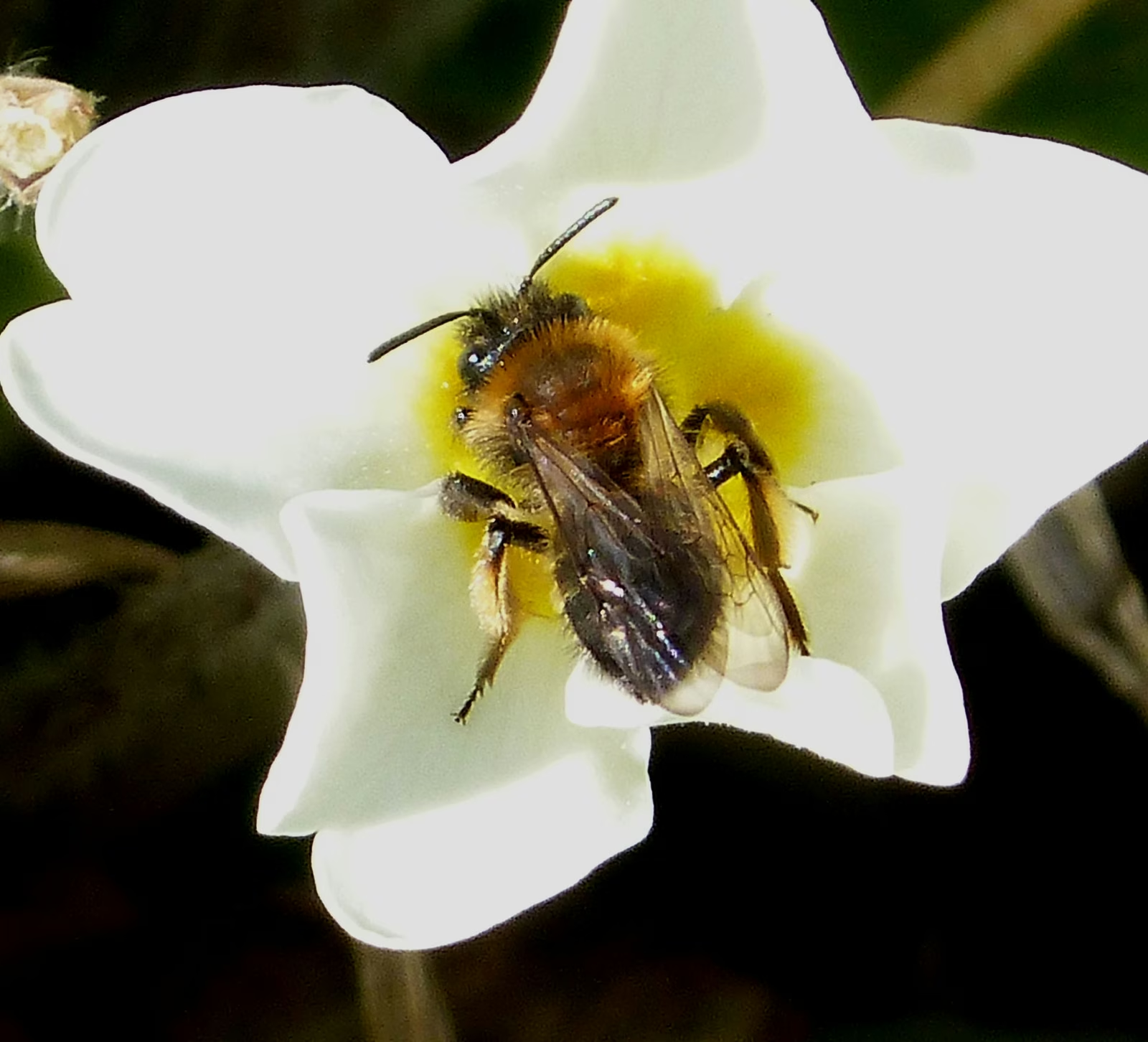
In Britain the Fabricius nomad bee is bivoltine, running two generations a year to track its equally bivoltine host.[6] Adults visit dandelions, buttercups and umbellifers for their own nectar, but never carry pollen home. Look for them not on flowers so much as on the ground, patrolling patches of bare, warm soil where the host's burrows are hidden.[1]
Where and when you will see it
The Fabricius nomad bee is widespread through England and Wales, especially in the south, and thins out further north with only sporadic records from Scotland and Ireland.[1] It turns up almost anywhere its host does, so nesting aggregations of Gwynne's mining bee on garden lawns, brownfield land, disturbed soil, chalk downland and open woodland are all good places to look.[1] It is also present across much of Europe from Ireland to Turkey, and across the Palaearctic further east.[6]
Telling it apart from other nomads
Britain has more than thirty species of Nomada, and many look alike; a firm identification is often a hand-lens job.[2] The Fabricius nomad has three features that, taken together, no other British nomad shows:
- Banded antennae. Reddish, with a distinct black band on the middle segments, giving a striped look in the field.
- Two-toothed mandibles. Bidentate jaws, visible under a lens.
- Black labrum. The small plate above the mouth is black, not pale.
The abdomen is mainly reddish, sometimes with narrow paler bands at the segment edges. A larger, chunkier nomad with all-yellow legs is more likely to be Gooden's nomad bee or Marsham's nomad bee.[2]
Why a cuckoo bee is good news
Cuckoo bees can look, at first, like a drag on pollination: they gather no pollen, build no nests, and their presence means fewer host cells survive. In practice the story runs the other way. A cuckoo is only ever as abundant as its host, so a healthy nomad population is a signal that the mining-bee community beneath it is thriving.[7] A lawn that supports a red-and-black nomad also supports the small brown mining bee it depends on, and the wider web of ground-nesting bees around them, which is why ecologists have proposed cuckoo bees as useful indicator species for the health of a whole bee community.[8] See how the pieces of that web fit together in The Plate Without Bees.
Raw Sunflower Honey
Warm, golden and quick to set, drawn from the wide sunflower fields of Transylvania: a honey that happens to carry the same rusty-gold as a nomad's abdomen. Raw, unfiltered and traceable. 280g. £10.99.
Shop Sunflower Honey
Raw Acacia Honey
Our flagship raw Acacia: pale, delicate and slow to crystallise. From the Nistor family's Transylvanian apiaries. 280g. £10.99.
Shop Acacia
Subscribe & Save 20%
Choose any single honey and save 20% on every delivery. Free UK delivery on any order of 3 or more jars. Browse the full shop.
Start a SubscriptionFrequently asked questions
What is the Fabricius nomad bee?
Why is it called the Fabricius nomad bee?
Is it really a bee, or is it a wasp?
What is a cuckoo bee?
When are Fabricius nomad bees active?
What is the main host of the Fabricius nomad bee?
Do Fabricius nomad bees sting?
Does the Fabricius nomad bee make honey?
Related species
Gooden's Nomad Bee
Nomada goodenianaRead more → Fellow NomadaMarsham's Nomad Bee
Nomada marshamellaRead more → Fellow NomadaPainted Nomad Bee
Nomada fucataRead more →Sources & references
- BWARS (Bees, Wasps & Ants Recording Society). Species account: Nomada fabriciana (Linnaeus, 1767): identification by reddish banded antennae, bidentate mandibles and black labrum, main host Andrena bicolor, wide English and Welsh distribution. bwars.com.
- Falk, S. Field Guide to the Bees of Great Britain and Ireland, Bloomsbury, and the Steven Falk Flickr collection: separation from other British Nomada by antennal banding and mandible shape.
- Linnaeus, C. (1767), Systema Naturae, 12th edition, original description. Etymology: the specific epithet fabriciana honours Johan Christian Fabricius (1745 to 1808), Danish entomologist and Linnaeus's pupil; Nomada from Greek for "wanderer" (NBN Atlas; GBIF).
- Rozen Jr, J.G. (1991). Evolution of cleptoparasitism in bees, with implications for their biology. American Museum Novitates (nomad-bee larval mandibles, egg placement in host cells, killing of host young). Also Odanaka et al. (2022) for phylogenetic host relations of Nomadinae.
- Falk, S. & Lewington, R. (2019). Field Guide to the Bees of Great Britain and Ireland (revised edition): main host Andrena bicolor, additional hosts A. chrysosceles, A. flavipes, A. angustior and A. nigroaenea, size variation with host.
- Crowley, L.M. et al. (2023). The genome sequence of Fabricius' Nomad Bee, Nomada fabriciana (Linnaeus, 1767). Wellcome Open Research 8:504 (Palaearctic distribution, UK status, bivoltinism, family placement).
- Else, G.R. & Edwards, M. (2018). Handbook of the Bees of the British Isles. Ray Society (Nomadinae biology, cleptoparasitism and the relationship between host abundance and cuckoo abundance).
- Sheffield, C.S., Pindar, A., Packer, L. & Kevan, P.G. (2013). The potential of cleptoparasitic bees as indicator taxa for assessing bee communities. Apidologie 44: 501 to 510.
Dragos Nistor
Founder, HoneyBee & Co. · Guest Lecturer, University of Greenwich
HoneyBee & Co. draws on six generations of family beekeeping heritage, with honey from the Nistor family apiaries and from carefully chosen British producers. Our British honey supplier holds SALSA Certification, and we offer a 15% NHS Discount. Every jar is raw, unfiltered and traceable to the hive.