

 English (UK)
  Italiano
  Français
  简体中文
简体中文  한국어
한국어 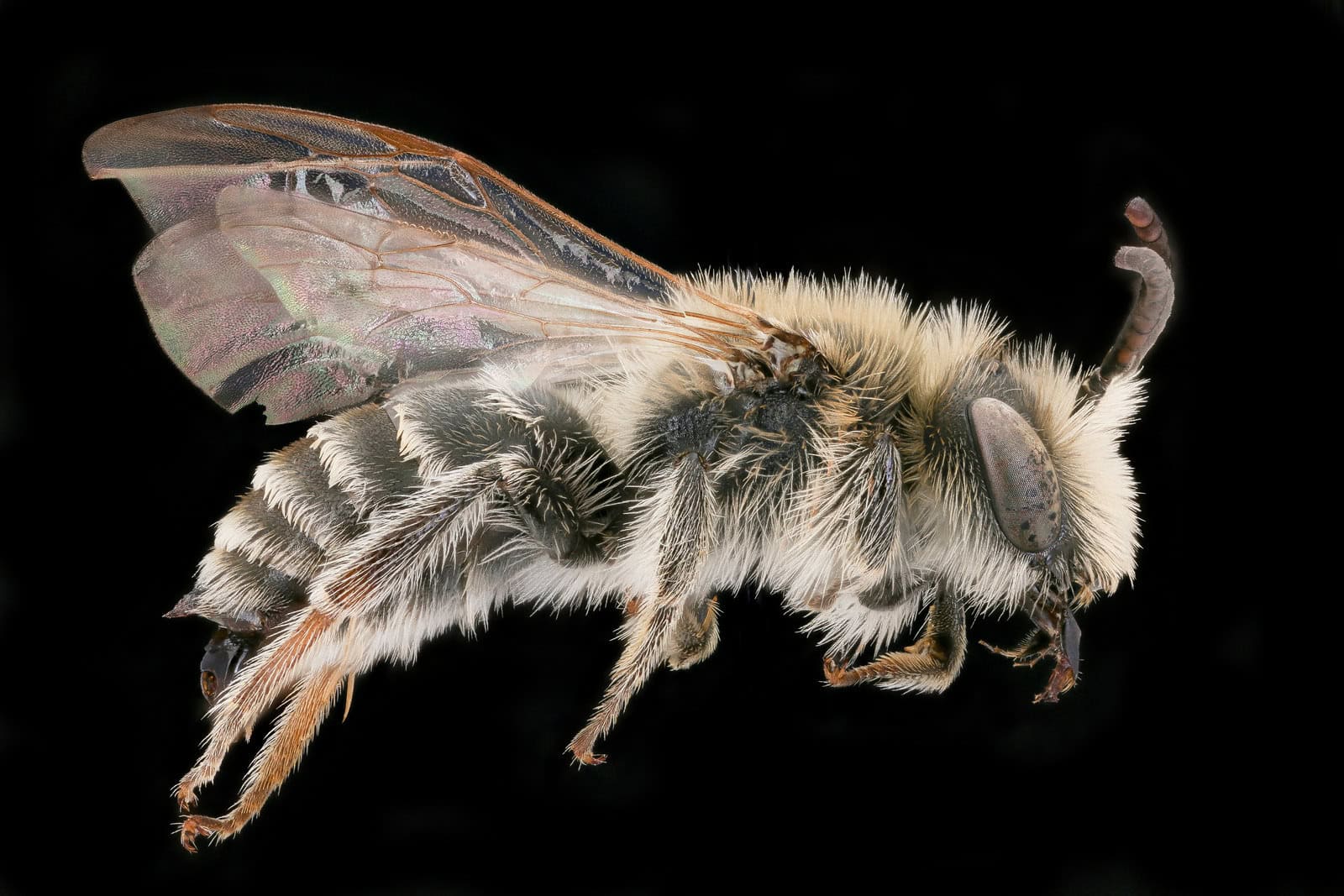
Andrena ovatula, a determined specimen photographed in side view. USGS Bee Inventory and Monitoring Lab, public domain, via Wikimedia Commons.
UK Bee Species
Small Gorse Mining Bee (Andrena ovatula)
Andrena ovatula (Kirby, 1802) · family Andrenidae · also called the common yellow-legged mining bee
This is a bee of gorse, clover and dry sandy ground, running two generations a year that feed on quite different flowers. It is also one of the hardest bees in Britain to name with confidence, sitting in a group of four near-identical species, and in one respect it is barely known at all: its nests have never been found in the British Isles.[1] See where it fits among Britain's bees on the UK Native Bee Species Map, or among the world's bees in the World Bee Atlas.
Quick facts
| Rank | Classification |
|---|---|
| Kingdom | Animalia |
| Phylum | Arthropoda |
| Class | Insecta |
| Order | Hymenoptera |
| Family | Andrenidae |
| Genus | Andrena, subgenus Taeniandrena |
| Species | Andrena ovatula |
Why this page uses a museum specimen
Every other bee in this encyclopedia is shown alive, on a flower or a leaf. This one is a pinned specimen on a black background, and the reason is worth explaining, because it tells you more about the species than a prettier picture would.
When we went looking for a photograph, the best candidate on the usual archive was a fine image of a brown bee on vetch. Its own description read: Andrena labialis or Taeniandrena (ovatula, lathyri, wilkella, etc). The photographer, who knew exactly what he was doing, could get it no closer than "one of these five".
That is the normal outcome for this group. So we used a specimen determined by a bee laboratory instead, and accepted a less charming hero in exchange for certainty about what you are looking at. Any page that shows you a confident field photograph of Andrena ovatula is worth a second thought.
The identification problem, honestly
Taeniandrena is a subgenus of four British species, and this one is a very close relative of Andrena wilkella, easily confused with it and especially so in the field.[1]
The character that works
In both sexes, the pale hair band on the third abdominal segment is complete on this species, where on A. wilkella it is interrupted in the middle.[1] That is the single most useful difference and the one to look for first.
The supporting characters
The apical fringe at the tip of the female's abdomen is brown-haired here and orange-haired on A. wilkella, and the hairs around the basitibial plate at the base of the hind tibia are dark rather than orange.[3] Males have complete hair fringes on the hind margins of both the third and fourth segments, where wilkella males have only the fourth, and the antennal segments are relatively shorter and less elongate.[2]
The name confusion, cleared up. This bee is also called the common yellow-legged mining bee, which is one word away from the yellow-legged mining bee, Andrena flavipes. They are different species in different subgenera with different habits. Several medium-sized mining bees share yellow hind tibiae, which is exactly why that feature makes a poor name and a worse identification.[3] We have led with the gorse name here for that reason.
Two generations, two menus
Most British mining bees fly once a year. This one generally goes twice, and the two broods do not eat the same thing.[1]
The spring brood, out from late March, takes pollen largely from common gorse.[2] That is why gorse-rich heaths and coastal commons matter so much to it: in April there is little else offering pollen in quantity on that kind of ground. The summer brood, flying from June into mid September, switches to vetches, bird's-foot-trefoils, clovers and the later-flowering gorses.[2] Across Europe the species is recorded taking pollen from the pea, daisy and cabbage families, so the bee itself is a generalist even though each brood has a clear favourite.[1]
The flight pattern is not settled
Two generations is the usual description, but the literature has doubted it for a century. Writing in 1949, Chambers recorded that in Bedfordshire the first brood sometimes fails entirely. Writing thirty years earlier, Perkins was unsure whether a separate single-generation race appears between the two broods of the commoner form.[1]
Neither question appears to have been resolved since. For a bee that is locally common on southern heaths, that is a remarkable gap, and it is compounded by the other one: nobody has found its nests in Britain or Ireland at all.[1] Elsewhere it is recorded nesting singly or in dispersed aggregations.[2]
Where it lives
It prefers gravelly or dry sandy soils: heaths inland, and on the coast dunes, landslips and cliffs.[1] That is a sharper preference than its sibling shows, and it explains the distribution, which is locally common in southern coastal and heathland districts but scarce across central England.[2]
British records run from East Kent to the Isles of Scilly and north to south-east Yorkshire and Cumberland, with none from Scotland. It occurs in south-west Ireland and County Offaly, and across Guernsey, Alderney, Herm and Sark.[1] Beyond these islands the range reaches from southern Scandinavia to southern Spain and east to Turkey.[1]
If you want to look for it, the combination is gorse, thin sandy ground and sunshine, in April. Our guides to the heather mining bee and the black-horned nomad bee cover two more specialists of the same heathland, and the ashy mining bee and tawny mining bee are the two Andrena most people meet first.
Raw Acacia Honey
From a tree in the pea family, the same family this bee works all summer. Pale, delicate and slow to crystallise. 280g.
Shop Acacia
British Wildflower Honey
Raw honey from clover-rich meadows and hedgerows. Our British honey supplier holds SALSA Certification. 280g.
Shop Wildflower
Raw Heather Honey
Dark and bold, from the same heaths this bee nests on. Free UK delivery on orders of 3 or more jars, on any order type. 280g.
Shop HeatherBrowse all six raw honeys in the shop, or start at the HoneyBee & Co. homepage.
Frequently asked questions
Is this the same as the yellow-legged mining bee?
No. The yellow-legged mining bee is Andrena flavipes, a different species in a different subgenus with different habits. This bee is Andrena ovatula, sometimes called the common yellow-legged mining bee, which is why we lead with the gorse name instead. Yellow hind tibiae are shared by several medium-sized mining bees and make a poor distinguishing feature.
How do I tell it from Wilke's mining bee?
Look at the pale hair band on the third abdominal segment. On this species it runs all the way across; on Andrena wilkella it is broken in the middle. Supporting characters: the female's tail fringe is brown here and orange on wilkella, and the hairs at the base of the hind tibia are dark rather than orange.
Why does it have two flight periods?
It is usually bivoltine, meaning two generations a year: one from late March to May or June, a second from June to mid September. The broods use different pollen, gorse in spring and vetches, trefoils and clovers in summer. The pattern is not fully settled, though, with published doubts going back to 1919 about whether some populations behave differently.
Where does it nest?
In dry sandy or gravelly ground, on heaths and in coastal dunes, landslips and cliffs. Beyond that, honestly, we do not know much: its nests have never been found in the British Isles. Elsewhere in its range it nests singly or in loose, dispersed aggregations rather than dense colonies.
Does it sting?
Females have a sting but are small, solitary and unaggressive, with no colony to defend. Mining bees are of no danger to people, pets or lawns, and most people never notice one.
Does it make honey?
No. Each female provisions her own cells for her own larvae, with no surplus and nothing stored. Only honeybees make honey in quantity. Compare the bee families in the World Bee Atlas.
Is it rare?
It is locally common in southern coastal and heathland districts and can be numerous at favoured open sites, but it is scarce across central England and absent from Scotland. Records thin out north of Yorkshire and Cumberland.
What should I plant for it?
For this species specifically, very little a garden can offer. It wants gorse on thin sandy ground in spring and legumes in summer, which is a heath or a coastal common rather than a border. Leaving clover in a lawn and bird's-foot-trefoil in rough grass helps the summer brood where it already occurs.
Related species
Sources and references
- BWARS (Bees, Wasps and Ants Recording Society). Species account: Andrena ovatula (Kirby, 1802). Subgenus Taeniandrena, separation from A. wilkella by the entire hair band on the third tergite, British, Irish and Channel Island distribution, European range, soil preferences, bivoltine flight with the Chambers (1949) and Perkins (1919) caveats, polylecty across Fabaceae, Asteraceae and Brassicaceae, and the absence of any British nest records. bwars.com
- Falk, S. Species account for Andrena ovatula, the small gorse mining bee, accompanying the Field Guide to the Bees of Great Britain and Ireland. Male separation characters, antennal proportions, the spring gorse brood and summer legume brood, nesting singly or in dispersed aggregations, and the local abundance pattern. Steven Falk collection
- Falk, S. Species account for Andrena wilkella, used for the direct comparison: the orange apical fringe and orange basitibial hairs of wilkella against the brown and dark equivalents here, and the note that several medium-sized mining bees share yellow hind tibiae. Steven Falk collection
- BWARS species account: Andrena wilkella, for its own distribution, flight period and the contrast in habitat preference with this species. bwars.com
- USGS Bee Inventory and Monitoring Lab. Determined specimen image of Andrena ovatula, Dvory nad Zitavou, Slovakia, released to the public domain. Wikimedia Commons
Dragos NistorFounder, HoneyBee & Co. · Guest Lecturer, University of GreenwichHoneyBee & Co. draws on six generations of family beekeeping heritage, with honey from the Nistor family apiaries in Transylvania and from carefully chosen British producers. Our British honey supplier holds SALSA Certification, and we offer a 15% NHS Discount. Every jar is raw, unfiltered and traceable to the hive.
Published 16 September 2026. Questions are answered on our FAQ page.