

 English (UK)
  Italiano
  Français
  简体中文
简体中文  한국어
한국어 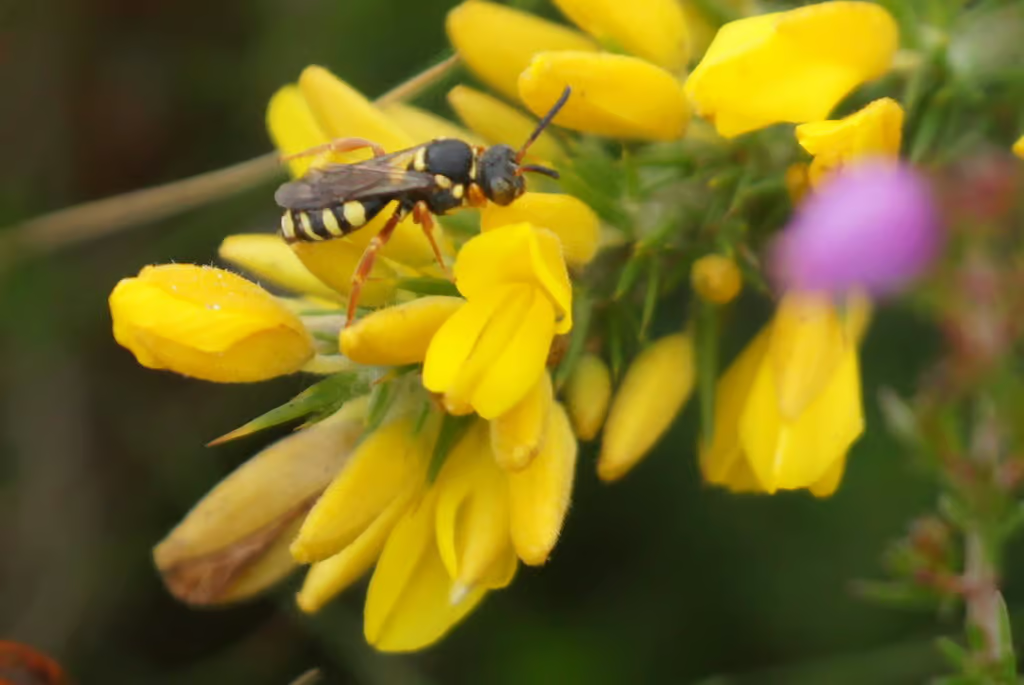
Nomada rufipes, the black-horned nomad bee, on gorse at Chobham Common. Mike Pennington, CC BY-SA 2.0, via Wikimedia Commons.
UK Bee Species
Black-horned Nomad Bee (Nomada rufipes)
Nomada rufipes (Fabricius, 1793) · family Apidae
The black-horned nomad bee looks more like a small wasp than a bee, and it behaves like neither. It is a cuckoo, laying its eggs in the burrows of heathland mining bees, and it is tied so closely to heather that its year runs on the same clock as the moorland bloom. On many heaths it is easier to find than the bees it depends on.[1] See where it fits among Britain's bees on the UK Native Bee Species Map, or among the world's bees in the World Bee Atlas.
Quick facts
| Rank | Classification |
|---|---|
| Kingdom | Animalia |
| Phylum | Arthropoda |
| Class | Insecta |
| Order | Hymenoptera |
| Family | Apidae |
| Genus | Nomada |
| Species | Nomada rufipes |
A bee built like a wasp
Nomad bees have almost no hair. They are smooth, hard-shelled and marked in yellow and black, and most people who meet one assume they are looking at a small solitary wasp. The resemblance is not an accident of taste: a hairless body is what you get when a bee no longer needs to carry pollen, and a tough cuticle is useful when your working life involves entering other bees' burrows uninvited.
This species carries a single yellow spot on the scutellum, the small plate behind the thorax, and its antennae are dark, which is where the English name comes from.[2] Males are always black and yellow. Females are the interesting ones.
A colour form found nowhere else
Female black-horned nomad bees range from black with well-separated yellow side spots to extensively red with yellow side spots, and every intermediate in between. Both extremes can turn up in the same population on the same heath.[2]
The red-marked form appears to be unique to the British Isles.[2] A bee that is common across northern Europe has a version of itself that exists only here, on our heaths, and nobody has fully explained why.
How to recognise it, and what it is confused with
Start with the yellow spot on the scutellum and the dark antennae. Then work through the near misses, because this is a genus where several species overlap.
The painted nomad bee
Some individuals of Nomada fucata come close in appearance, but its antennae give it away: orange in the female, black and yellow in the male, against the uniformly dark antennae of this species.[2] It is also a different bee ecologically, a cuckoo of the yellow-legged mining bee rather than a heathland specialist. Our guide to the painted nomad bee covers that one.
A recent arrival
Nomada bifasciata is even more similar and has only recently established in Britain. Its antennae are not as black, and females are larger with a more obvious black hair pile on head and thorax.[2] This is a genuine trap for anyone working from an older field guide.
The useful shortcut is the calendar and the ground under your feet. If you are standing on a southern heath in August among flowering ling, and a small wasp-like bee is working low over bare sandy patches, the odds are strongly in favour of this species. Most other nomads have finished by then; this one and a handful of relatives fly well into September.[4]
The bee it robs, and why heather decides everything
Its principal host on southern heathland is the heather mining bee, Andrena fuscipes, and that host is about as specialised as British bees get. It is confined entirely to heathland, it gathers pollen exclusively from heathers and chiefly from ling, and its flight peaks in August with the ling bloom.[5]
So the chain is short and rigid. Ling heather flowers in August. The heather mining bee times its whole year to that bloom and provisions its cells with heather pollen. The black-horned nomad bee times itself to the heather mining bee. Remove the heather and all three links fail in order.
Away from heathland the same bee uses other hosts, chiefly Andrena denticulata and A. nigriceps, which is how it turns up on brownfield sites, coastal habitats and grasslands.[2] The rare buff-banded mining bee A. simillima is another recorded host.[5] That flexibility is probably why it is doing better here than its most specialised host is.
Common here, vulnerable there
In Britain this bee is not regarded as scarce or threatened. In Germany it is listed as Vulnerable, along with two of its most frequent hosts.[1] Across Europe it is considered a northern species that becomes scarce towards the south.[1]
That is worth sitting with. British lowland heath is a habitat we have lost most of, and what remains is fragmented. Yet it still holds enough of this system for the bee to count as common, which makes those heaths more internationally significant than their size suggests.
Where the honey connection sits
Heather is the one plant that links this bee to the jar. The same ling that the heather mining bee depends on is what makes heather honey a distinct and strongly flavoured honey, and it flowers in the same narrow late-summer window. Beekeepers move hives onto the moors for it; solitary bees are already there and cannot move.
It is a useful reminder that a honey is a record of a place and a fortnight. If you want to understand the plant behind it, our guide to growing heathers covers the species and their flowering times, and heather against manuka explains why heather honey behaves the way it does in the jar.
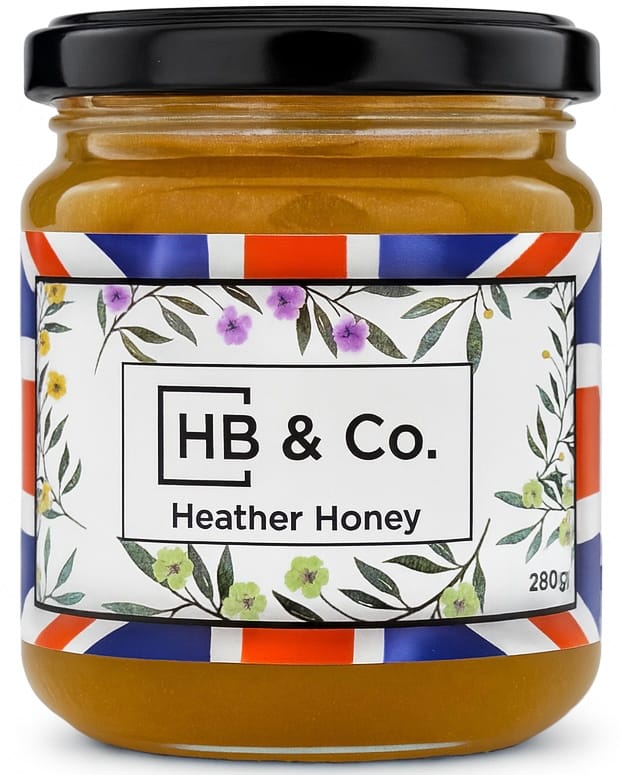
Raw Heather Honey
Dark, bold and faintly bitter, from the same late-summer ling bloom this bee's whole year is built around. 280g.
Shop Heather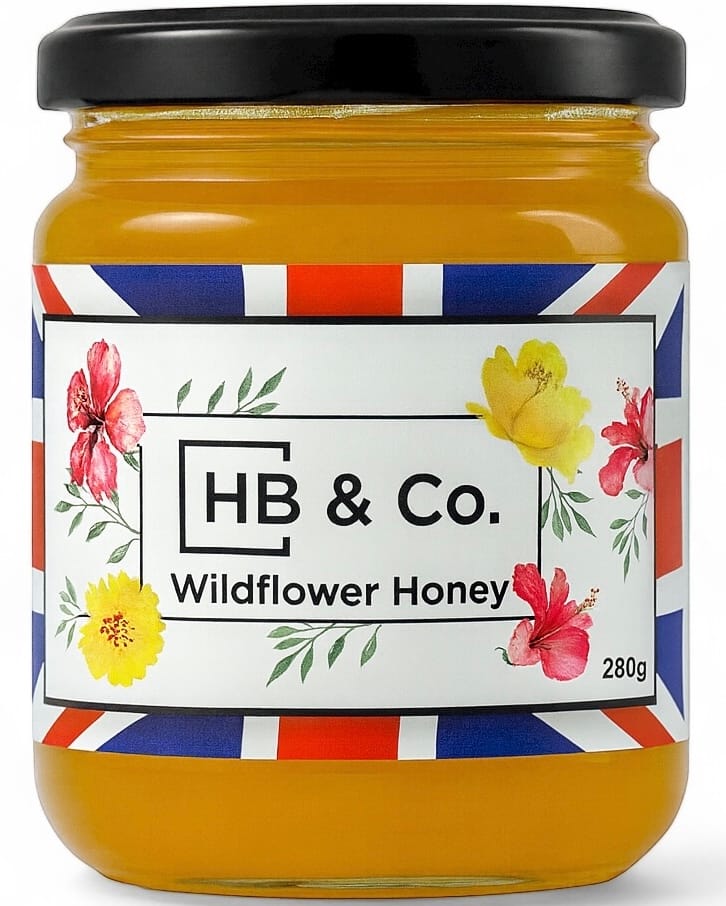
British Wildflower Honey
Raw honey from meadows and hedgerows. Our British honey supplier holds SALSA Certification. 280g.
Shop Wildflower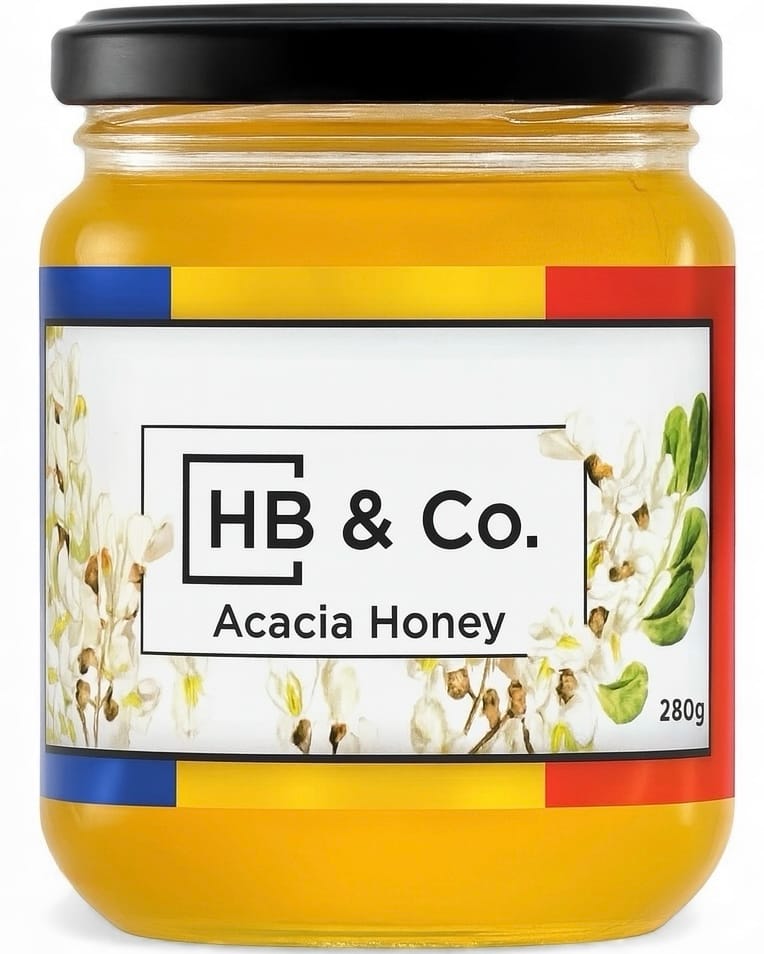
Raw Acacia Honey
The opposite end of the range: pale, delicate and slow to crystallise. Free UK delivery on orders of 3 or more jars, on any order type. 280g.
Shop AcaciaBrowse all six raw honeys in the shop, or start at the HoneyBee & Co. homepage.
Frequently asked questions
Why is it called the black-horned nomad bee?
For its antennae, which are dark along their length. That is one of the characters used to separate it from similar nomad bees, several of which have orange or partly yellow antennae. Nomad bees as a group take their name from having no nest of their own.
Is it a bee or a wasp?
A bee. Nomad bees are almost hairless, smoothly built and marked in yellow and black, so they read as wasps at a glance. The lack of hair is a consequence of the lifestyle: a cuckoo bee carries no pollen, so it has no need of the branched hairs and pollen brushes other bees rely on.
Which bees does it parasitise?
Chiefly the heather mining bee, Andrena fuscipes, on southern heathland. Away from heaths it uses Andrena denticulata and A. nigriceps, and the rare buff-banded mining bee has also been recorded as a host. All of them are ground-nesting mining bees.
When and where should I look for it?
Late summer on lowland heath, especially August while ling is in flower, over bare or sparsely vegetated sandy ground where mining bees nest. It often flies well into September, later than most nomad bees. It also turns up on brownfield sites, coastal habitats and grassland where its other hosts occur.
Why are some females red and others black?
Both forms occur, along with intermediates, and both can be present in the same population. The extensively red form appears to be unique to the British Isles, which makes British heathland populations distinctive within the species' European range.
Does it make honey?
No. It collects no pollen and stores nothing, taking nectar only for its own flight. Honey in any quantity comes only from honeybees. Compare the bee families in the World Bee Atlas.
Is it rare or under threat in Britain?
No, it is not regarded as scarce or threatened here, and on good heathland sites it can be more conspicuous than its hosts. The picture differs on the continent, where it is listed as Vulnerable in Germany along with two of its main hosts, and becomes scarce towards southern Europe.
Does it sting?
Female nomad bees have a sting but are tiny, unaggressive and have no nest to defend. They are of no consequence to people, pets or gardens. Most encounters happen because someone is deliberately looking at bees on a heath.
Related species
Sources and references
- BWARS (Bees, Wasps and Ants Recording Society). Species account: Nomada rufipes (Fabricius, 1793). Description, British and European distribution, status, German Red List listing, habitat range and the note that it can be more readily found than its hosts. bwars.com
- Falk, S. Species account for Nomada rufipes, accompanying the Field Guide to the Bees of Great Britain and Ireland. Scutellum spot, dark flagella, the red and black female forms and the British exclusivity of the red form, host list by habitat, and separation from N. fucata, N. bifasciata and N. errans. Steven Falk collection
- NatureSpot. Species page and recording guidance for the black-horned nomad bee, including habitat notes and the standard required for verified records. naturespot.org
- Falk, S. Revised British Nomada key, BWARS, 2024. Genus-level flight periods, including the note that this species often flies well into September. bwars.com key, PDF
- BWARS and Falk species accounts for the hosts Andrena fuscipes and Andrena simillima: heathland confinement, exclusive heather pollen use, the August peak with ling, and both species recorded as hosts of this nomad bee. bwars.com

Dragos NistorFounder, HoneyBee & Co. · Guest Lecturer, University of GreenwichHoneyBee & Co. draws on six generations of family beekeeping heritage, with honey from the Nistor family apiaries in Transylvania and from carefully chosen British producers. Our British honey supplier holds SALSA Certification, and we offer a 15% NHS Discount. Every jar is raw, unfiltered and traceable to the hive.
Published 16 September 2026. Questions are answered on our FAQ page.