

 Italiano
 English (UK)
 Français
 简体中文
 한국어

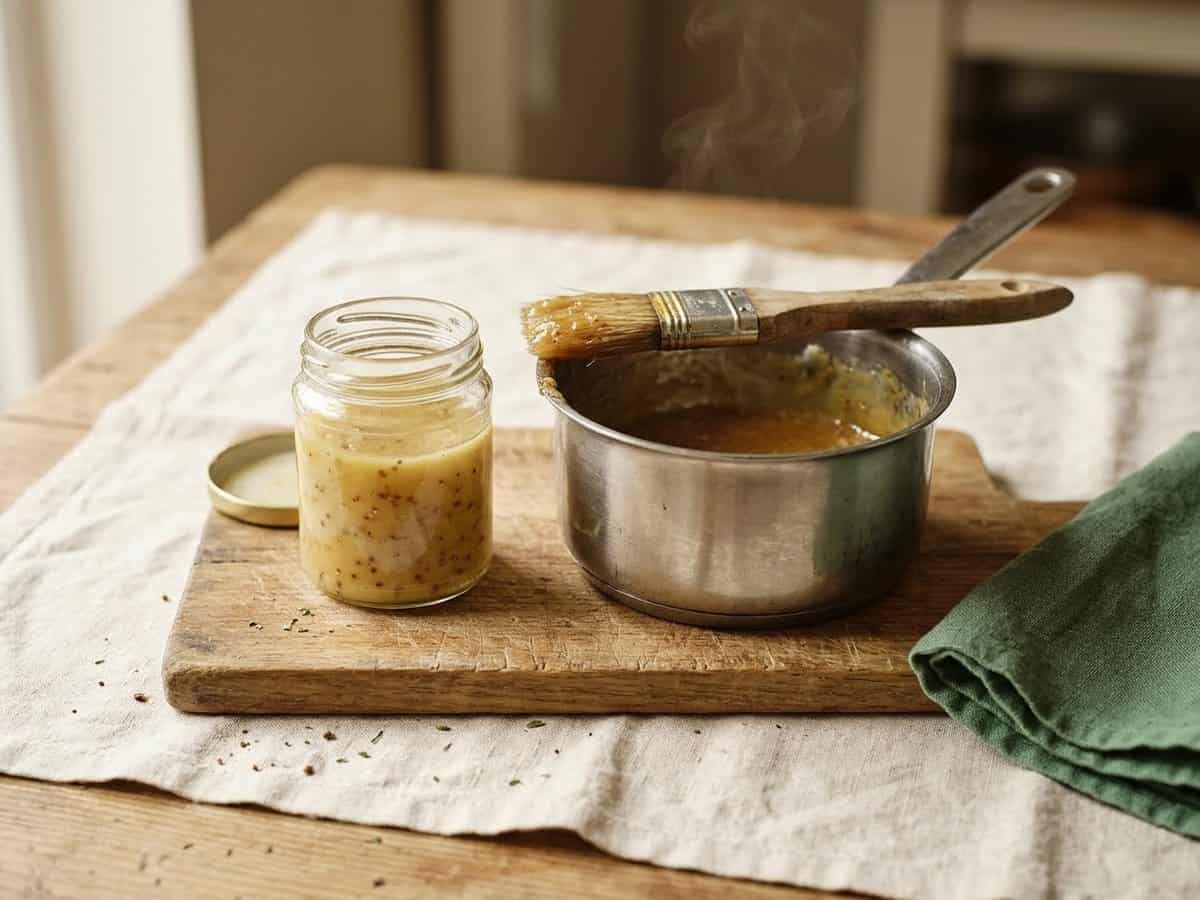
Stessi quattro ingredienti, due usi: quello più liquido si usa per condire le insalate, quello più denso si usa per l’arrosto.
Ricetta
Condimento e glassa alla senape e miele: un unico rapporto, due utilizzi
La senape al miele è una ricetta in cui l'olio può essere aggiunto o meno. Per un condimento, sbatti 2 parti di miele, 2 parti di senape e 2 parti di aceto, poi aggiungi 6 parti di olio mescolando bene. Per una glassa, usa 3 parti di miele, 2 parti di senape in grani e 1 parte di aceto, senza olio, e spennellala negli ultimi 10-15 minuti di cottura. Entrambe richiedono cinque minuti, si conservano per una settimana in frigorifero e sono più buone se preparate con un miele grezzo che abbia un po’ di sapore proprio; ecco perché le prepariamo con miele di girasole dai nostri alveari.
Vestizione
2 : 2 : 2 : 6miele : senape : aceto : olio, in volume
Senape di Digione liscia, aceto di sidro, olio d’oliva leggero o olio neutro. Sbattere i primi tre ingredienti, quindi aggiungere l’olio a filo. Si ottengono circa 180 ml, sufficienti per sei insalate. Si conserva in frigorifero per una settimana.
Smalto
3 : 2 : 1miele : senape integrale : aceto, senza olio
Farina integrale per dare consistenza, un cucchiaio di senape di Digione se volete un tocco piccante. Scaldate fino a quando il composto non si scioglie, spennellate due volte negli ultimi 10-15 minuti. La quantità è sufficiente per un prosciutto affumicato da 1,5 kg, otto cosce di pollo o due filetti di salmone.
In questa pagina: Ingredienti Metodo Orari Perché funziona Quale miele? Con cosa abbinarlo Risoluzione dei problemi Domande
Ingredienti
Condimento alla senape e miele (circa 180 ml)
- 2 cucchiai di miele grezzo (di girasole o di acacia)
- 2 cucchiai di senape di Digione
- 2 cucchiai di aceto di sidro
- 6 cucchiai di olio d'oliva leggero o di un olio dal sapore neutro
- 1 spicchio d'aglio piccolo, schiacciato fino a ottenere una pasta (facoltativo)
- Mezzo cucchiaino di sale fino
- Pepe nero
Glassa alla senape e miele (quantità sufficiente per un arrosto da 1,5 kg)
- 3 cucchiai di miele grezzo (di girasole)
- 2 cucchiai di senape integrale
- 1 cucchiaio di aceto di sidro
- 1 cucchiaino di senape di Digione (facoltativo, per dare un tocco piccante)
- Un pizzico di sale fino
- Un pizzico di chiodi di garofano macinati o qualche foglia di timo (facoltativo, per il prosciutto o il pollo)
Metodo
Il condimento
- Versate il miele, la senape, l’aceto, l’aglio (se lo usate), il sale e qualche macinata di pepe in una ciotola o in un barattolo di marmellata pulito. Mescolate con una frusta o agitate fino a quando il miele non si sarà sciolto nell’aceto; se il miele è indurito, mettete prima il barattolo in acqua tiepida, come spieghiamo in Come ammorbidire il miele cristallizzato.
- Aggiungi l'olio un cucchiaio alla volta, mescolando con la frusta tra un'aggiunta e l'altra, oppure versalo tutto nel barattolo e agita energicamente per 30 secondi. La senape fa da legante tra l'olio e l'aceto, così otterrai un condimento denso e lucido invece che separato.
- Assaggialo su una foglia, non con il cucchiaio. Se è troppo forte, aggiungi mezzo cucchiaino di miele in più. Se è troppo dolce, aggiungi qualche goccia di aceto in più. Se è troppo denso, aggiungi un cucchiaino d’acqua.
- Conservare nel barattolo in frigorifero per un massimo di una settimana. Una volta raffreddato, il composto si addensa; agitare nuovamente prima dell'uso.
La glassa
- Mescolare il miele, la senape integrale, l'aceto, la senape di Digione, il sale e le spezie a piacere in un pentolino. Scaldare a fuoco basso per un minuto finché il composto non si scioglie e assume un aspetto lucido. Non portare a ebollizione: la glassa che si è attaccata al fondo del pentolino si attaccherà nuovamente in forno.
- Cuocete la carne o il pesce quasi fino a cottura ultimata senza aggiungere la glassa. Spennellate metà della glassa negli ultimi 10-15 minuti, poi il resto 5 minuti prima della fine, in modo che il miele si dorino senza bruciarsi.
- Verificate che la carne sia cotta prima di toglierla dal forno. Il consiglio natalizio della Food Standards Agency è di “tagliare la parte più spessa della carne e verificare che non sia più rosa e che i succhi che fuoriescono siano trasparenti”, come potete leggere su gov.uk. La glassa non cambia nulla.
Tempistiche e quantità
| Articolo | Vestizione | Smalto |
|---|---|---|
| Preparazione | 5 minuti | 5 minuti |
| Cucina | Nessuno | 1 minuto di preriscaldamento, poi gli ultimi 10-15 minuti di cottura |
| Rende | Circa 180 ml (6 porzioni di insalata) | Circa 90 ml (un pezzo da 1,5 kg, 8 cosce o 2 filetti di salmone) |
| Mantiene | 1 settimana in frigorifero, agitare prima dell'uso | 1 settimana in frigorifero; riscaldare prima di spennellare |
| Blocchi | No, si divide | Sì, fino a 3 mesi |
Perché funziona
In quel barattolo stanno avvenendo tre cose, e conoscerle è ciò che ti permette di sistemare una partita invece di ricominciare da capo.
La senape è l'emulsionante
L'olio e l'aceto tendono a separarsi; la senape impedisce che ciò accada. I ricercatori che hanno descritto una vinaigrette alla senape nel *Journal of Food Science and Nutrition Research* hanno testato tre rapporti tra olio e aceto e tre concentrazioni di senape e hanno riferito che “la capacità emulsionante della senape è stata confermata”, il che significa che è la senape, e non la sbattitura, a tenere insieme il condimento; l’articolo è Lozano-Gendreau e Velez-Ruiz, 2019. Ecco perché questa ricetta prevede di unire la senape e l'aceto prima dell'olio, ed ecco perché un condimento preparato con troppo poca senape si separa, per quanto lo si agiti.
Il calore attenua il sapore piccante della senape, ed è per questo che la glassa ha un sapore più delicato rispetto al condimento
Mustard’s heat is made, not stored: an enzyme in the seed, myrosinase, converts a compound in the seed into the pungent one when the seed is crushed and wet. Heat deactivates the enzyme. A study of yellow mustard processing in the journal Food and Function reports that thermal treatment “deactivates the enzyme” and that the heat-treated mustard “has no pungency”; the paper is Marambe and colleagues, Royal Society of Chemistry. In practice, a glaze that tasted fierce in the pan comes out of the oven rounded and sweet, so make the glaze hotter than you think you want it, and keep the dressing raw.
Honey browns faster than sugar
Honey is mostly fructose and glucose with about a fifth of its weight as water, and fructose browns at a lower temperature than table sugar. That is the glaze’s advantage and its risk: it colours in ten minutes, and it blackens in twenty. Hence the two late brushings rather than one early one. The same chemistry is behind every honey glaze on this site, from the barbecue guide to the honey and soy wings.
“The emulsifying capacity of the mustard was corroborated.” Lozano-Gendreau and Velez-Ruiz, Physicochemical and Flow Characterization of a Mustard-Vinaigrette Salad Dressing, Journal of Food Science and Nutrition Research, 2019
Quale miele?
A supermarket blend disappears behind the mustard; the only thing it adds is sweetness, and sugar would do that. A single-origin honey with its own character changes the dressing. Our house choice is sunflower: bold, golden, slightly waxy on the tongue, with enough body to stand up to Dijon and to survive the oven. For a dressing on delicate leaves, acacia is the gentler option; it is slow to crystallise, so it dissolves into the vinegar without warming. For a glaze on gammon, heather is the dark, serious choice. All three, with their tasting notes, are in il negozio, e il Selezione di barbecue e griglie boxes the three we reach for when cooking.
Our rule: taste the honey on its own before it goes in. If it tastes of nothing, the dressing will taste of mustard and the glaze will taste of sugar.
Sunflower Honey from our family hives
Harvested in late summer from the sunflower fields around our family’s apiaries in Transylvania, this is the honey we cook with at home, because it is the one the family always has most of. It sets quickly to a pale gold cream, which is normal for sunflower and reversible in warm water, and its flavour holds through heat better than any of our lighter honeys, which is why it leads the Baker’s Kitchen Selection too. Read the tasting notes on the Sunflower Honey page, or stock the kitchen with the three-jar pack; free UK delivery applies on 3 or more jars on any order type. The flavour is explained in detail in the sunflower honey taste explained.

Con cosa abbinarlo
Risoluzione dei problemi
| Problem | Cause | Fix |
|---|---|---|
| Dressing splits in the jar | Oil added too fast, or not enough mustard | Put a teaspoon of mustard in a clean bowl and whisk the split dressing into it a spoon at a time |
| Dressing tastes harsh | Raw garlic, or a sharp vinegar | Let it stand 20 minutes; add a teaspoon more honey; next time use cider rather than white wine vinegar |
| Glaze burns before the meat is done | Brushed on too early, or oven too hot | Scrape off the blackened layer, cover loosely with foil, and reglaze for the final 5 minutes only |
| Glaze slides off | Meat surface wet, or glaze too thin | Pat the meat dry; simmer the glaze one more minute to thicken; score fat so it grips |
| Honey is solid in the jar | Raw honey crystallises, especially sunflower | Stand the jar in warm water for 10 minutes; never microwave the jar |
| Dressing solid in the fridge | Olive oil sets cold | Twenty minutes on the counter and a shake |
A jar that never runs out
If honey mustard becomes a weekly habit, the cheapest way to keep raw honey in the cupboard is a abbonamento: your chosen jar every month, two months or three, at 20 percent off. Pause or change the honey whenever you like. Sunflower for cooking and acacia for dressings is the pairing most of our subscribers settle on.
Domande
Posso usare la senape inglese al posto di quella di Digione?
Sì, ma usane metà della quantità. La senape inglese è molto più piccante e, nel condimento crudo, quel piccante rimane. Nella glassa, invece, si addolcisce in forno, quindi lì puoi osare di più.
Perché il mio condimento alla senape e miele ha un sapore amaro?
Di solito è colpa dell'olio. L'olio extravergine di oliva può avere un sapore piccante e amaro che contrasta con quello del miele; un olio d'oliva leggero o un olio neutro lascia invece che siano il miele e la senape a prevalere. Anche l'aglio crudo lasciato riposare troppo a lungo ha lo stesso effetto.
Posso preparare la glassa senza aceto?
Sì, ma sarà più sottile e brucerà più in fretta, perché c’è meno liquido. Il succo di limone ha lo stesso effetto dell’aceto.
La cottura distrugge ciò che rende il miele grezzo così speciale?
Heat changes raw honey, which is why we never heat our jars above 40 degrees before they are sold. In a glaze you are choosing to cook it, and the flavour of a single-origin honey still comes through; what you lose is the texture and the aroma you would get from the jar. For the dressing, nothing is heated, so everything in the jar is in the dressing. Our baking guide covers how honey behaves in the oven.
Quanto tempo si conserva il miele grezzo una volta aperto?
Honey keeps very well and remains safe to eat well beyond its best-before date. Lid on, away from the kettle, and it will outlast the mustard. Our guide Il miele ha una data di scadenza? has the detail.