
 English (UK)
  Italiano
  Français
  简体中文
简体中文  한국어
한국어 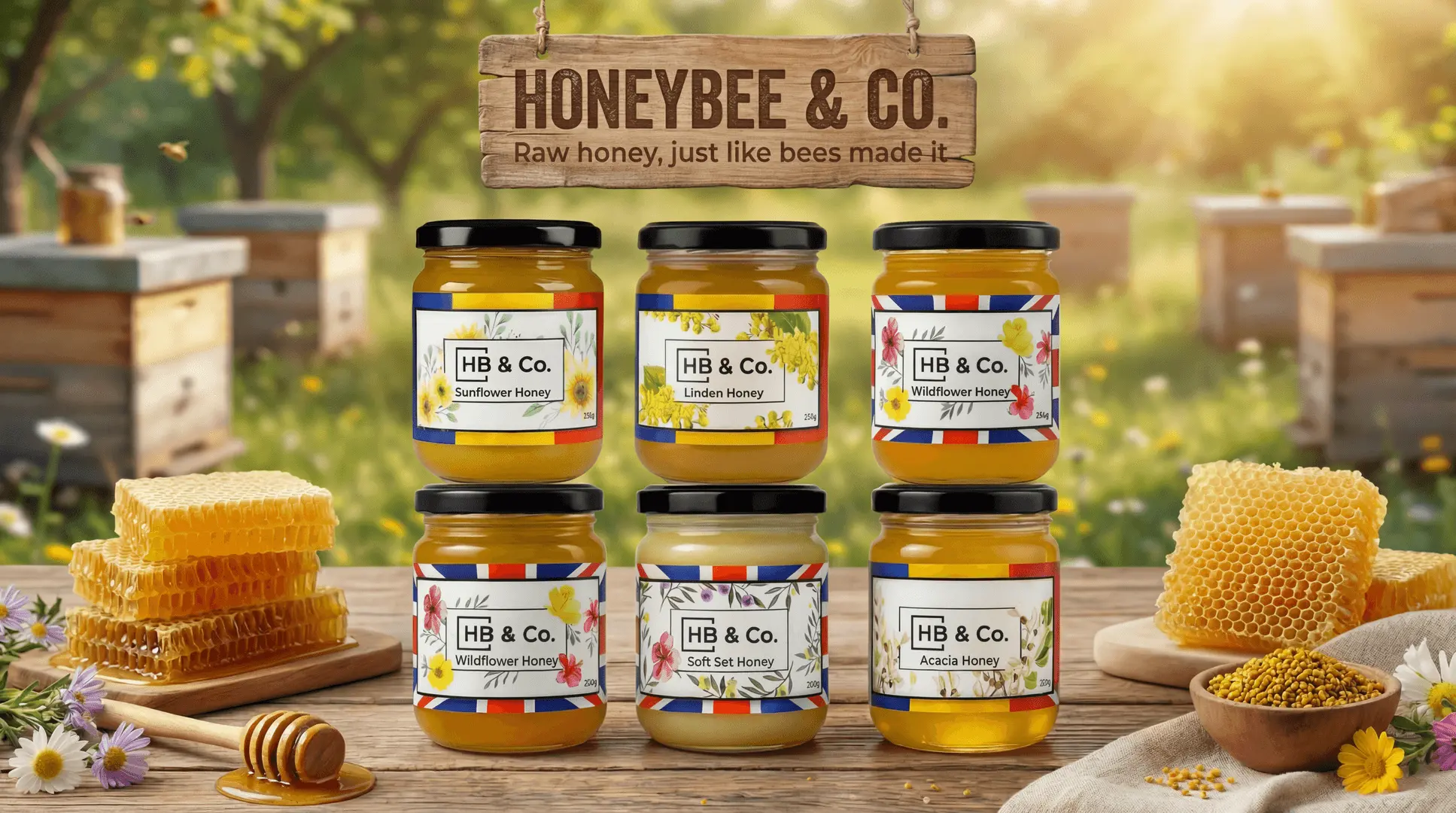
Raw honey in the UK means something specific: cold-extracted, unheated, unfiltered, and traceable to a named origin. It is a different product from the heated and blended honey that fills supermarket shelves, and the difference is measurable in enzymes, pollen, antioxidants, and flavour. At HoneyBee & Co., we source six single-varietal raw honeys from independent beekeepers in Britain and from our family apiaries in Transylvania, Romania, where the Nistor family has kept bees for six generations.
This guide covers what makes raw honey different, how to choose the right variety, how to use it well, and why provenance matters more than price when buying honey in the UK.
- Raw honey is cold-extracted and never heated above hive temperature. This preserves natural enzymes, pollen, propolis, and antioxidants that pasteurisation destroys.
- A 2023 European Commission report found that 46 per cent of honey imports tested at EU borders were suspected of adulteration. Named-origin honey with GS1 traceability is the practical protection against this.
- Crystallisation is a sign of quality, not a defect. Raw honey crystallises naturally because of its glucose content. It can be easily reversed by standing the jar in warm water below 40 degrees Celsius.
- The UK has six distinct honey varieties worth knowing: Acacia, Wildflower, Heather, Soft Set, Linden, and Sunflower. Each has a completely different flavour profile, colour, and crystallisation rate.
- Raw honey must never be given to infants under 12 months of age due to the risk of infant botulism. This applies to all honey, raw or processed.
- HoneyBee & Co. holds SALSA certification through our British supplier, 4.9 stars on Google, three consecutive Vogue Hot List features in summer 2024, and a 15 per cent NHS discount programme.
What Makes Raw Honey Different from Supermarket Honey
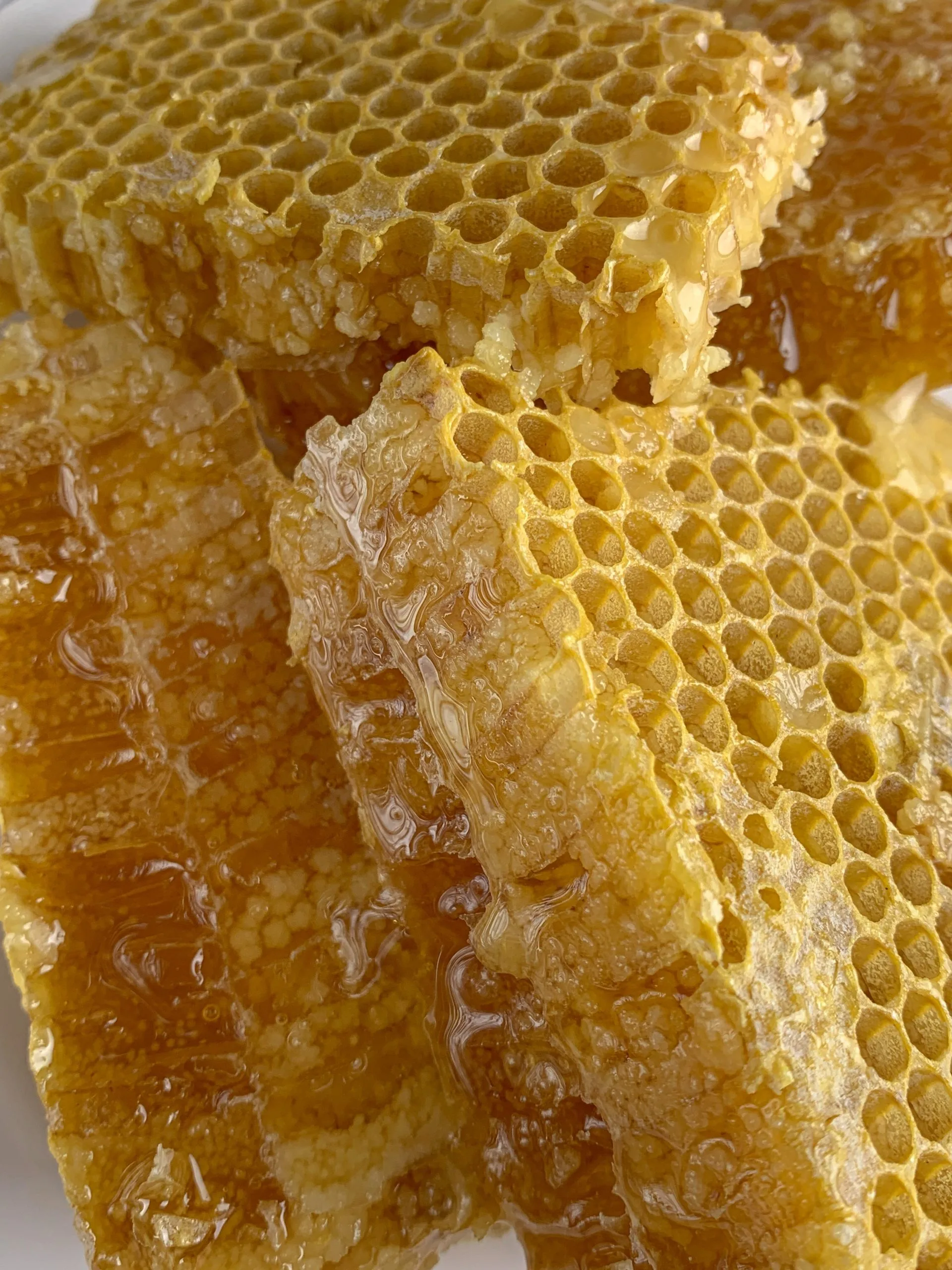
Most honey on UK supermarket shelves has been pasteurised and ultra-filtered. Pasteurisation involves heating honey to temperatures between 60 and 80 degrees Celsius, which destroys the natural enzymes, degrading the glucose oxidase that gives raw honey its antimicrobial properties. Ultra-filtration removes pollen particles, which are the only reliable way to verify a honey's floral and geographic origin. The result is a shelf-stable product that looks uniform and stays liquid for years, but carries few of the natural compounds that make honey nutritionally interesting.
Raw honey is extracted without heat above the natural hive temperature of around 35 degrees Celsius. After extraction, it is strained only to remove wax and physical debris. Pollen, propolis, and natural enzymes remain intact. The flavour reflects the specific plants the bees foraged on, which is why raw acacia honey from Romania tastes completely different from raw heather honey from Yorkshire. Both are honey. Their character is entirely determined by what went into them.
| Property | Raw Honey (HoneyBee & Co.) | Supermarket Honey |
|---|---|---|
| Heat treatment | Never above hive temperature | Heated 60-80°C to prevent crystallisation |
| Pollen content | Retained. Origin verifiable | Removed by ultra-filtration |
| Natural enzymes | Intact: glucose oxidase, diastase, invertase | Degraded or destroyed by heat |
| Geographic origin | Named landscape, GS1 barcoded | Often "blend of EU and non-EU honeys" |
| Crystallisation | Natural over time. Quality indicator | Prevented by heat. Reversed by additives |
| Flavour source | Single floral origin, seasonal character | Blended for consistent, neutral taste |
One consequence of ultra-filtration is that it makes origin impossible to verify. The European Commission's Joint Research Centre 2023 report found that 46 per cent of honey imported to the EU was suspected of adulteration, often with cheap sugar syrups substituted for honey.[1] Pollen content is the primary tool laboratories use to detect this. Without pollen, the honey cannot be traced. The label "blend of EU and non-EU honeys" is not a quality descriptor. It is an absence of one.
Six Raw Honey Varieties: Find Your Match
Raw honey is not a single flavour. The nectar source, landscape, season, and processing all shape what ends up in the jar. Our six single-origin varieties cover the full spectrum from delicate and pale to bold and intensely flavoured. Here is what distinguishes each one.
Raw Acacia Honey
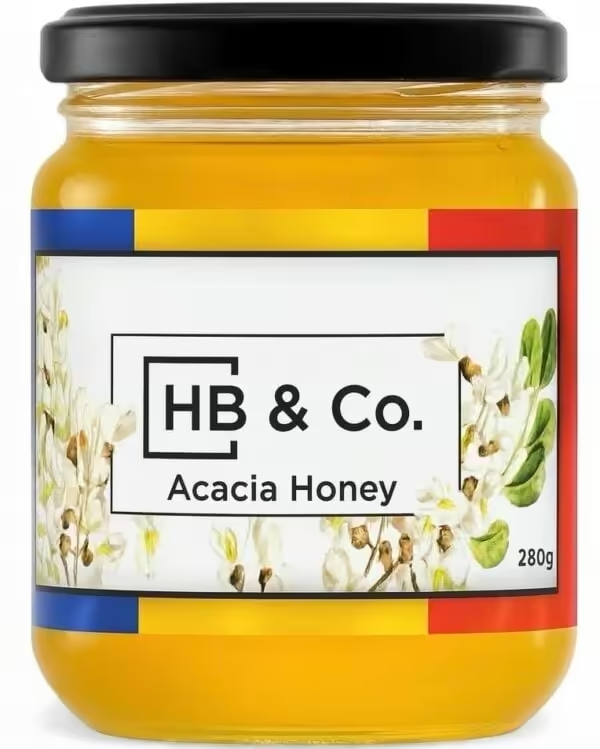
Pale, vanilla-sweet, stays liquid for months. Lowest GI in the range. The gentlest introduction to single-origin honey.
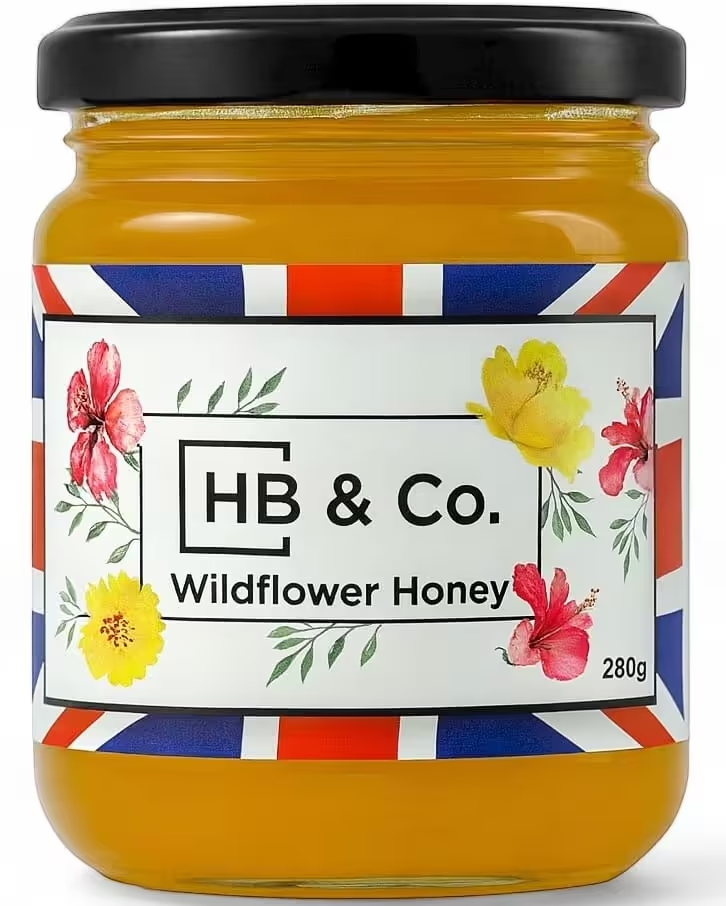
Raw British Wildflower Honey
Multi-floral, golden, seasonally distinct. Widest pollen profile in the range. Changes character with every harvest.
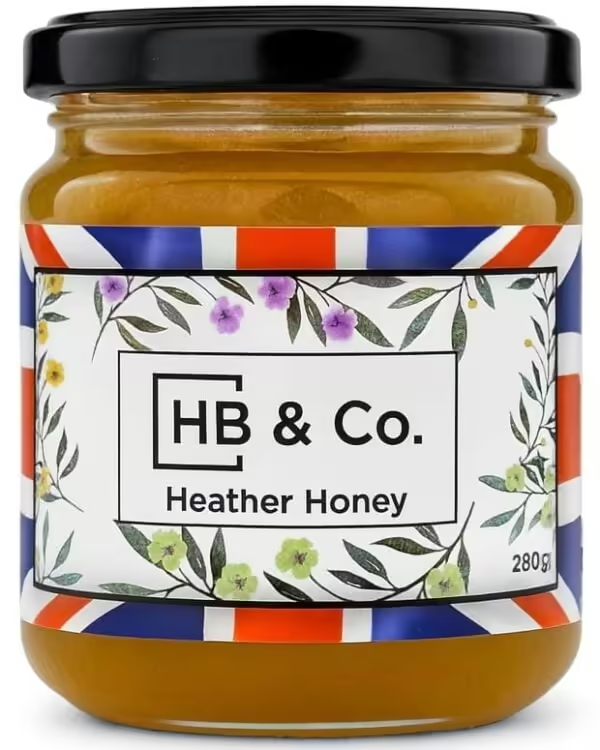
Raw British Heather Honey
Dark amber, malty, smoky-floral. Thixotropic texture: sets like jelly, loosens when stirred. One harvest per year, August only.
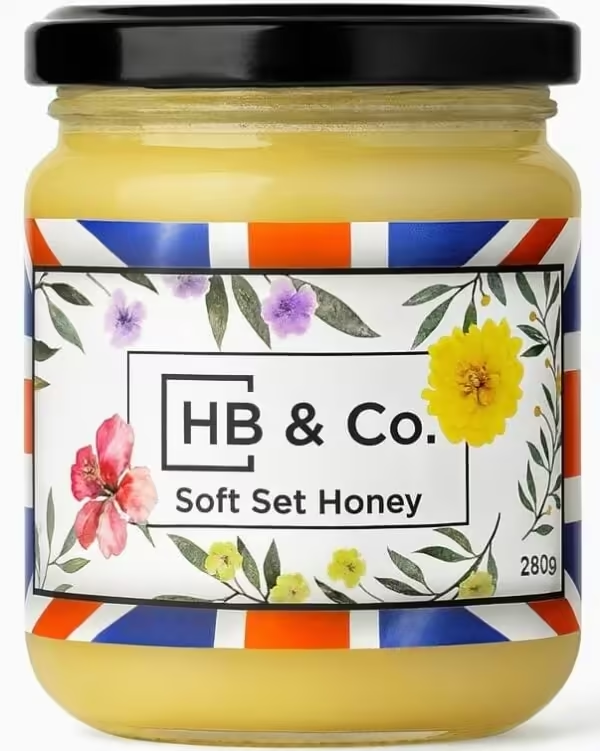
Raw British Soft Set Honey
Buttery, creamy, gently floral. Raw Wildflower through controlled crystallisation. Spreadable, mess-free on toast.
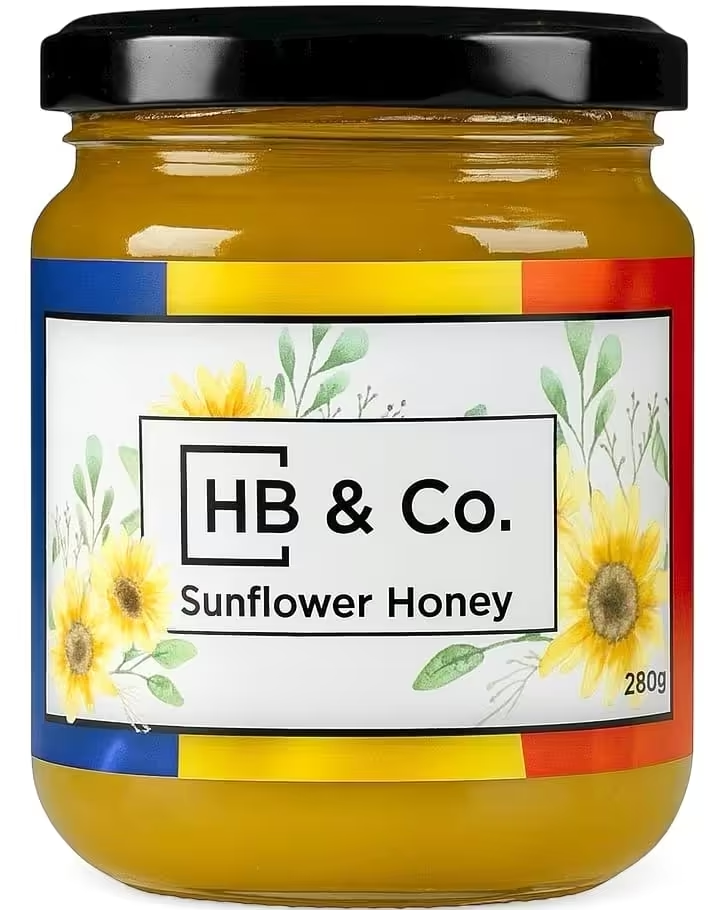
Raw Sunflower Honey
Golden, caramel-buttery, naturally granulated. High-glucose nectar crystallises quickly to a firm texture. Excellent for baking.
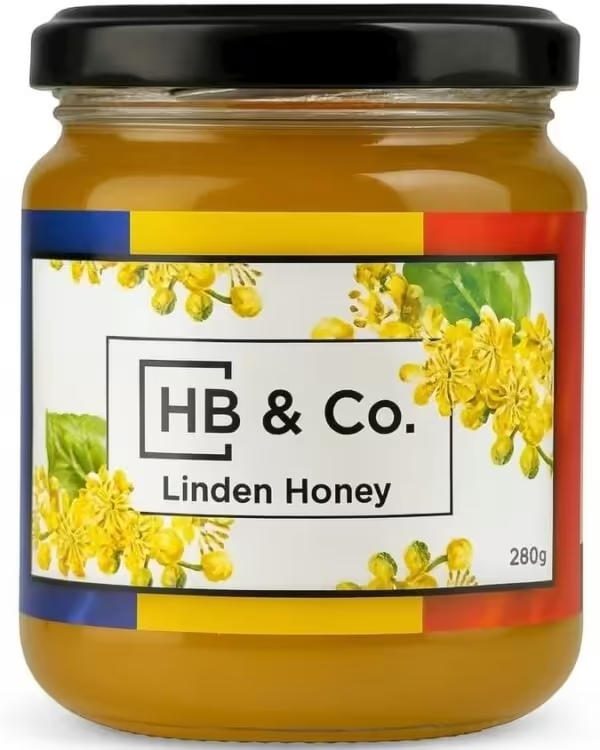
Raw Linden Honey
Herbal, woody-minty, lime blossom aromatics. Brief June harvest. Rare in UK retail. The traditional European evening honey.
British Raw Honey: Wildflower, Soft Set and Heather
Three of our six varieties come from British beekeepers. Our Wildflower and Soft Set honeys are sourced from a SALSA-certified apiary supplier in the English Midlands. SALSA, Safe And Local Supplier Approval, is an independently audited food safety standard with documented traceability and annual inspections. Our British supplier holds this certification, which provides a documented chain of custody from hive to jar.
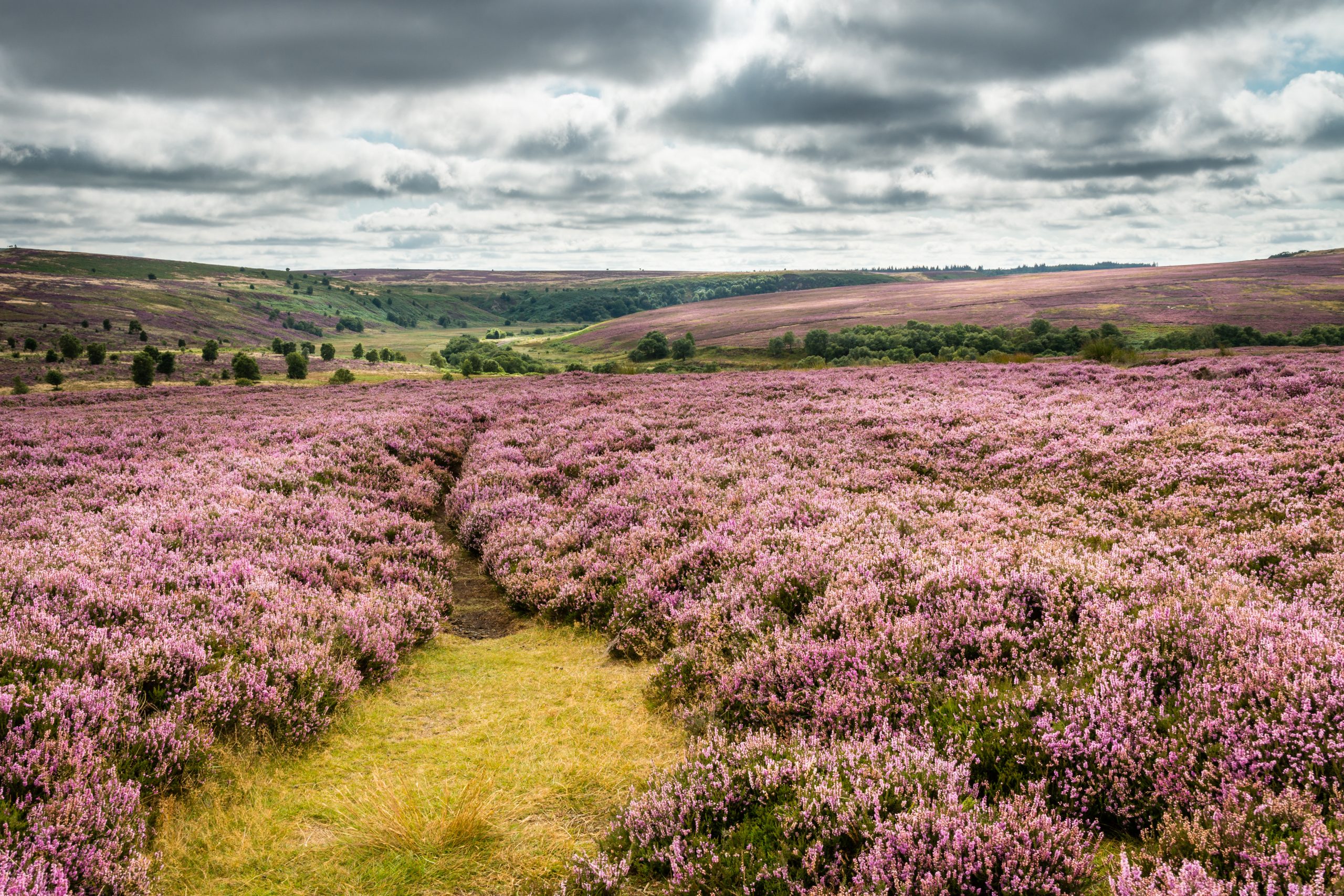
Our Heather honey is harvested from the Yorkshire Moors in late August during a brief annual window. Heather honey is one of the UK's most distinctive and recognisable honey varieties: dark amber with a jelly-like, thixotropic texture that no other honey replicates. The heather plant, Calluna vulgaris, produces nectar over only a few weeks each year. Once the flow ends, the season's harvest is complete. For more on what makes heather honey so unusual, see our full guide to Heather honey.
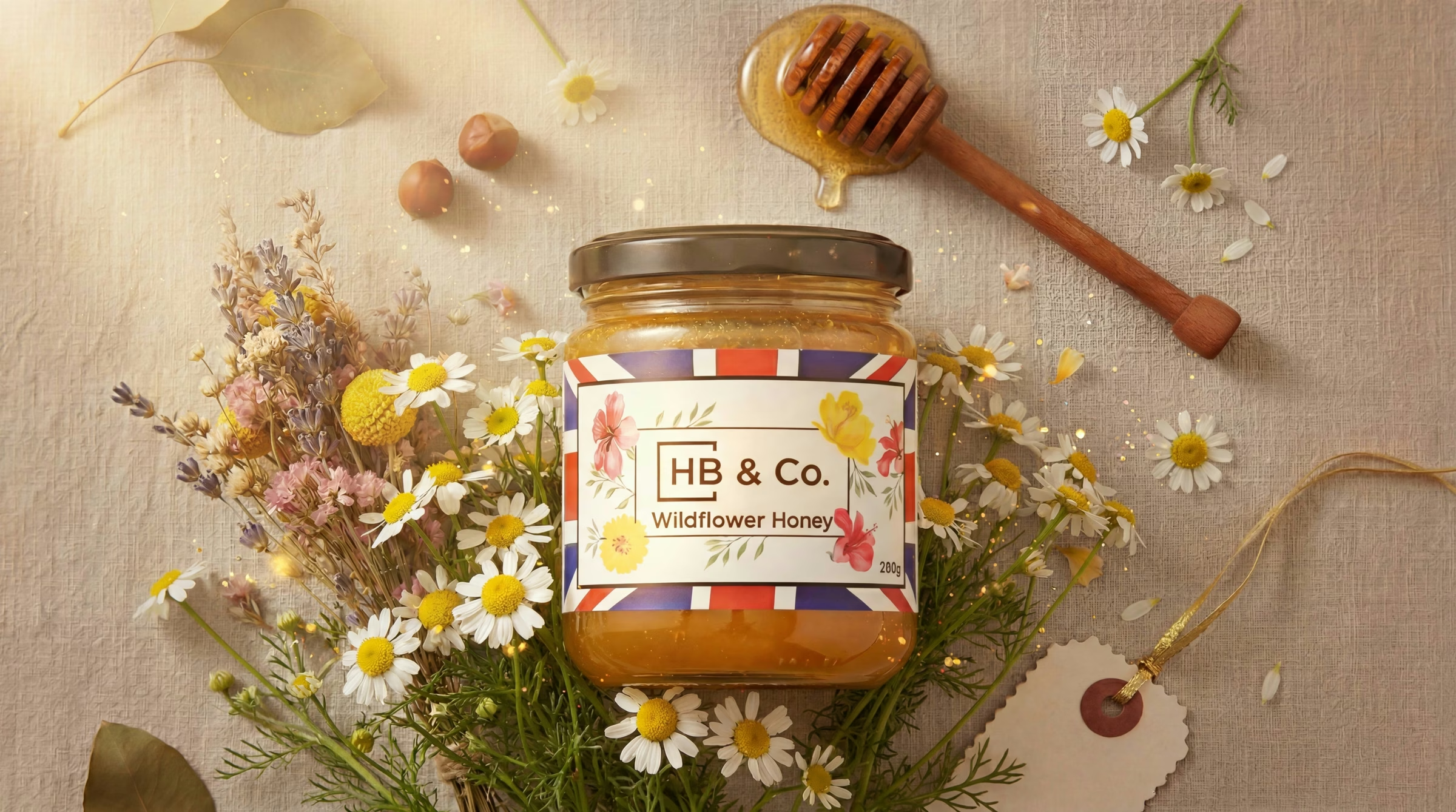
British wildflower honey, by contrast, is polyfloral: it reflects whatever was in bloom in the Midlands meadows during that specific season. The flavour changes meaningfully from year to year, making it one of the more interesting raw honey choices for anyone who wants to experience the natural variability of British flora. Our British wildflower honey and hayfever guide covers the research on pollen exposure and seasonal allergies.
Transylvanian Raw Honey: Acacia, Linden and Sunflower
Our Acacia, Linden, and Sunflower honeys come from our family apiaries in the forests and meadows of Transylvania, Romania. Dragos Nistor, founder of HoneyBee & Co., is the sixth generation of his family to keep bees in this region. The bees forage on Robinia pseudoacacia forest in May for the acacia harvest, on Tilia (lime) tree blossom in June for linden, and on sunflower fields in July and August for sunflower honey. Each variety is extracted on-site and shipped to the UK without pasteurisation or filtration.
Transylvania's low industrial activity and the diversity of its forested and agricultural landscape produce nectar with a chemical profile that is measurably different from Central European commercial honey regions. The acacia forests in particular produce a honey with one of the lowest glycaemic indices of any naturally occurring honey, due to the high fructose-to-glucose ratio of Robinia pseudoacacia nectar. This means it remains liquid for longer, stays cleaner in flavour, and sits more easily alongside foods that have their own strong character.
Read more about the full heritage and sourcing approach on our about page.

Why Choose HoneyBee & Co. Raw Honey
SALSA Certification
Our British honey supplier holds SALSA Certification, an independently audited food safety standard with documented traceability and annual inspections. This is verifiable, not self-declared.
GS1 Traceability
Every jar carries a GS1 barcode that links back to the named beekeeper, the country of origin, and the harvest window. Traceability is a practical defence against adulteration, not a marketing claim.
Vogue Hot List × 3
Featured in Vogue's Summer Hot List across three consecutive editions in summer 2024. Independent editorial recognition from a publication with no financial relationship to us.
4.9 Stars on Google
Hundreds of verified reviews across Google. NHS staff receive a 15 per cent discount through our NHS programme. Blue Light Card holders receive an equivalent discount.
Health Properties of Raw Honey
Raw honey has documented health properties that are reduced or eliminated by pasteurisation and ultra-filtration. The most robust evidence covers three areas: antimicrobial activity, antioxidant content, and cough suppression.
Antimicrobial properties: Raw honey contains hydrogen peroxide produced by the enzyme glucose oxidase, as well as defensin-1 (a bee-derived protein) and polyphenols with antibacterial activity. These properties are significantly reduced by heating above 40 degrees Celsius.[2]
Antioxidant content: Raw honey contains polyphenols and flavonoids that act as antioxidants. Darker honeys like heather generally contain higher concentrations than pale varieties like acacia. Research consistently shows that antioxidant content is reduced by pasteurisation.[3]
Cough suppression: A Cochrane review and subsequent research has found that honey is at least as effective as over-the-counter cough remedies for suppressing acute cough, particularly in children over 12 months.[4]
Digestive health: The oligosaccharides in raw honey may function as prebiotics, supporting beneficial gut bacteria. This is an emerging area of research with promising but not yet conclusive evidence.
Raw honey must never be given to infants under 12 months of age. Honey can contain Clostridium botulinum spores, which are harmless to adults and older children but can germinate in an infant's immature digestive system, causing serious illness. This applies to all honey regardless of type, origin, or processing method. See our full guide to honey side effects for more detail.
It is important to be clear about what raw honey is and is not. It is not a medicine. It is a natural food with demonstrably more nutritional complexity than its pasteurised equivalent. The health properties discussed above arise from compounds that are present in raw honey and degraded in processed honey. Choosing raw honey is a food quality decision, not a medical one. Always consult a GP or healthcare professional for medical concerns.
How to Use Raw Honey Every Day
Daily Wellness
Stir a teaspoon into warm (not boiling) water or herbal tea as a natural sweetener. Adding honey to boiling water damages the enzymes and negates the difference between raw and pasteurised. Drizzle over yoghurt, porridge, or fresh fruit for natural sweetness without refined sugar. A spoonful of raw honey before bed is a European wellness ritual with centuries of tradition behind it, particularly with linden honey, which has a calming herbal character well suited to evenings.
Raw honey pairs naturally with chamomile, ginger, and other herbal infusions. Our honey and tea pairing guide covers which varieties work best with different tea types.
Culinary Uses
Different raw honeys suit different culinary contexts. Acacia is the kitchen workhorse for drizzling: its delicate flavour and liquid consistency make it ideal for salad dressings, yoghurt toppings, and any application where you want sweetness without dominating the flavour of other ingredients. Heather pairs well with blue cheeses, dark breads, and game meats where its bold character holds its own. Sunflower and Soft Set both work well in baking: their firmer texture makes portioning simple, and their flavour develops well under gentle heat. Raw honey adds moisture and complex sweetness to baked goods where refined sugar would produce a flat result.
For cooking, note that raw honey should be added at the end of heating processes where possible, to preserve its natural character. It caramelises at lower temperatures than sugar, making it particularly useful in glazes and marinades.
Storage
Store raw honey in its glass jar at room temperature, away from direct sunlight. Do not refrigerate: this accelerates crystallisation without any preservation benefit. If crystallisation occurs, stand the jar in warm water (below 40 degrees Celsius) for 15 to 20 minutes and stir gently once the surface begins to liquefy. Do not microwave and do not use boiling water: both damage the enzymes that distinguish raw honey from processed alternatives.
Raw honey does not spoil. Properly sealed and stored, it has an indefinite shelf life. There is no need to consume it within a specific window.
Raw Honey and UK Honey Adulteration: Why Provenance Matters
The UK imports a large proportion of its honey consumption. Alongside legitimate honey, adulterated product enters the supply chain. The European Commission's 2023 Joint Research Centre report is the most authoritative recent assessment: it found that 46 per cent of 320 honey samples tested at EU borders were suspected of adulteration, primarily through the substitution of sugar syrups for honey.[1] The most adulterated honeys came from countries with large-scale export honey industries, where blending and syrup addition are documented supply chain risks.
The practical protection is simple. Named origin combined with verifiable pollen content makes adulteration significantly harder to conceal. A honey labelled as coming from a specific named landscape, from a beekeeper whose practices are audited, with pollen retained in the jar, is a fundamentally different supply chain from an anonymous multi-country blend. Our GS1 barcoding links every jar back to the named beekeeper and harvest window. If you can verify where your honey came from, you know what is in the jar.
Sustainable Packaging and UK Delivery
Every HoneyBee & Co. order is packed in glass jars with paper labels applied by hand, cotton thread, shredded paper fill, and cardboard outer boxes. No plastic is used at any stage. All packaging materials are either recyclable or compostable. The glass jars can be reused as kitchen storage containers, vases, or refilled.
Free UK delivery applies to all orders of three or more jars. Standard delivery via Royal Mail takes 2 to 5 working days, despatched Monday to Friday. Our honey subscription provides free UK delivery on every order regardless of quantity, in addition to the 20 per cent subscription saving.
Six Single-Origin Raw Honeys. Free UK Delivery on 3+ Jars.
Cold-extracted, never blended, traceable to the named beekeeper. Subscribe and save 20 per cent on every delivery.
-
Raw Acacia Honey — £10.99 Transylvania, Romania. Pale, liquid, lowest GI. Bestseller.Shop →
-
Raw British Wildflower Honey — £10.99 English Midlands. Polyfloral, seasonal, SALSA-certified supply.Shop →
-
Raw British Heather Honey — £12.99 Yorkshire Moors. One August harvest. Thixotropic texture. Vogue ×3.Shop →
-
Raw British Soft Set Honey — £10.99 English Midlands. Creamy, spreadable. Cold-crystallised wildflower.Shop →
-
Raw Sunflower Honey — £10.99 Transylvania, Romania. Golden, caramel-buttery. The cook's honey.Shop →
-
Raw Linden Honey — £10.99 Transylvania, Romania. Herbal, lime blossom. Brief June harvest. Rare in UK.Shop →
Raw Honey UK: Common Questions
What is raw honey?
Raw honey is honey that has not been heated above the natural temperature of the hive (approximately 35 degrees Celsius) and has not been ultra-filtered to remove pollen. It is extracted cold, strained only to remove wax and physical debris, and bottled without pasteurisation. This preserves the natural enzymes (including glucose oxidase, diastase, and invertase), pollen, propolis, and aromatic compounds that pasteurisation degrades or destroys. There is no universal legal definition of raw honey in the UK, but the term is broadly understood to mean honey in an unheated, minimally processed state.
Is raw honey better than supermarket honey?
In terms of natural compound content, raw honey is measurably different from pasteurised honey. Pasteurisation degrades enzymes, removes pollen through ultra-filtration (making origin impossible to verify), and produces a uniform taste by blending multiple sources. Raw honey retains pollen (allowing origin verification), natural enzymes, propolis, and the specific flavour character of the flowers visited by the bees. The European Commission's 2023 JRC report found 46 per cent of honey imports to the EU were suspected of adulteration. Pollen content is the primary tool for detecting this, which is why its removal is significant beyond flavour alone.
Does raw honey crystallise?
Yes. Crystallisation is a natural property of raw honey and a reliable indicator of quality. It occurs because raw honey contains glucose, which forms crystals at room temperature over weeks to months. The speed varies by variety: sunflower honey (high glucose) crystallises within weeks of extraction; acacia honey (high fructose) may remain liquid for a year or more. To reverse crystallisation, stand the sealed jar in a bowl of warm water (below 40 degrees Celsius) for 15 to 20 minutes and stir gently. Do not use boiling water or a microwave. Both damage the natural enzymes. Crystallisation does not affect the quality, flavour, or nutritional properties of the honey.
What is the best raw honey to buy in the UK?
The best raw honey depends on what you want it for. For a first experience of artisan raw honey, Acacia is the clearest demonstration of how different single-origin honey is from supermarket blends: pale, liquid, and immediately distinctive. For the boldest, most characterful British honey, Heather from the Yorkshire Moors has no equivalent. For everyday use on toast and in cooking, Soft Set is the most practical. For pairing with tea, Linden or Acacia. For cooking and baking, Sunflower. The Discovery Trio (Acacia, Wildflower, Heather) covers the full range if you want to compare varieties before committing to a favourite.
How long does raw honey last?
Raw honey has an indefinite shelf life when stored correctly. Sealed in its original glass jar at room temperature, away from direct sunlight, it does not spoil. Honey found in ancient Egyptian tombs has been found still edible. The low water content (below 18 per cent in properly harvested honey) and natural acidity prevent fermentation. Crystallisation over time is normal and does not indicate spoilage. Do not refrigerate honey: this accelerates crystallisation without any preservation benefit.
Can children eat raw honey?
Raw honey is not suitable for infants under 12 months of age under any circumstances. Honey can contain Clostridium botulinum spores, which are harmless to adults and children over 12 months but can germinate in an infant's immature digestive system, causing infant botulism. This applies to all honey regardless of type or origin. Children aged 12 months and over can consume raw honey safely. The mildest varieties, Acacia, Soft Set, and Wildflower, tend to be most popular with children due to their gentle flavour.
What is the difference between raw honey and organic honey?
These are distinct, separate certifications. Raw honey describes the processing method: no heat above hive temperature, no ultra-filtration. Organic honey describes the production environment: the beekeeper must manage hives within certified organic land, away from non-organic crops, without the use of synthetic treatments. Honey can be organic without being raw (it can be organically produced and then pasteurised). Honey can be raw without being organic. The terms are not interchangeable. HoneyBee & Co. holds SALSA Certification through our British supplier and produces honey that is raw, single-origin, and traceable, but does not carry organic certification.
How do I choose between British and Transylvanian honey?
The difference is in the floral source and landscape, not in quality or care. Our British honeys (Wildflower, Soft Set, Heather) come from English Midlands meadows and Yorkshire Moors. Our Transylvanian honeys (Acacia, Linden, Sunflower) come from Romanian forested landscapes and seasonal crops. Both origins are traceable, both are produced without pasteurisation, and both involve long-term relationships with small independent beekeepers. The choice comes down to which flavour profile suits you: British Heather and Wildflower for bold, characterful British honey; Acacia and Linden for delicate, distinctive European varieties rare in UK retail.
Sources and References
- European Commission Joint Research Centre (2023). An adulteration study of honey sampled at EU entry points. JRC Science for Policy. joint-research-centre.ec.europa.eu
- Bucekova M, et al. (2020). Antibacterial activity of honey: The role of pinocembrin, defensin-1, catalase and gluconic acid. LWT Food Science and Technology. doi: 10.1016/j.lwt.2019.108786
- Eteraf-Oskouei T, Najafi M. (2013). Traditional and modern uses of natural honey in human diseases: a review. Iranian Journal of Basic Medical Sciences, 16(6):731-742. pmc.ncbi.nlm.nih.gov/PMC3758027
- Oduwole O, et al. (2018). Honey for acute cough in children. Cochrane Database of Systematic Reviews. doi: 10.1002/14651858.CD007094.pub5
- NHS. Botulism. nhs.uk/conditions/botulism