

 Français
  English (UK)
  Italiano
  简体中文
简体中文  한국어
한국어 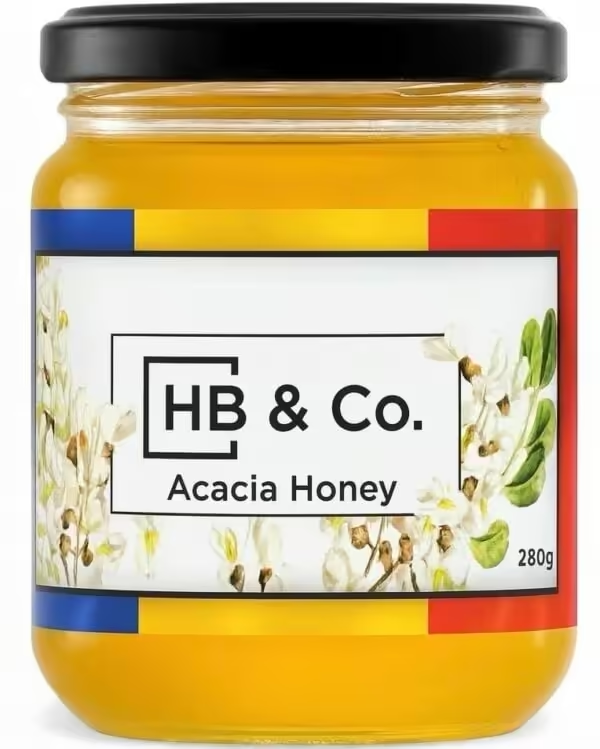
Miel d'acacia sur abonnement
Sauvegarder 20% - Annuler à tout moment
Le miel le plus polyvalent de notre gamme, livré à votre rythme. Acacia brut Transylvanian à £8.79 le pot au lieu de £10.99. Même économie de 20% à chaque fréquence. Modifiez, interrompez ou annulez à tout moment.
Choisissez votre fréquence de livraison
La même économie 20% à chaque fréquence. Changez, mettez en pause ou annulez à tout moment à partir de Mon compte. Pas d'obligation d'achat, pas de durée minimale.
Vous voulez d'abord essayer un seul pot ? Acheter en une seule fois £10.99 →
- Livraison gratuite au Royaume-Uni à partir de 3 pots commandés
- Modifier ou annuler à tout moment
- Six générations d'héritage familial
- Brut, jamais chauffé, jamais mélangé
Pourquoi s'abonner à acacia
Le miel qui mérite d'être mis en pilote automatique
Des six miels de notre gamme, l'Acacia est celui que la plupart des ménages épuisent en premier. Voici pourquoi il mérite la place d'abonné.
01
Le cheval de bataille de tous les jours
Suffisamment doux pour le thé, le porridge, les enfants et les invités. L'Acacia est le pot que tout le monde cherche à se procurer. La plupart des ménages terminent un pot de 280g en quatre à six semaines.
02
Toujours versable
Le miel reste liquide plus longtemps que tout autre miel de notre gamme. Pas de réchauffement, pas d'attente. Versez-le directement du pot le premier jour et le sixième mois.
03
Jamais à court
Le seul inconvénient du miel brut d'origine unique est qu'il s'épuise. L'abonnement signifie que le prochain pot est déjà en route avant que le pot actuel ne soit épuisé.
04
Livraison prévisible
Trois fréquences pour s'adapter à la vitesse à laquelle votre foyer consomme un bocal. Passez de l'une à l'autre à tout moment en fonction de vos habitudes.
05
20% éteint, pour toujours
Le prix d'un pot est de £10.99. Le prix de l'abonnement est de £8.79 par pot à chaque fréquence. L'économie est automatique et permanente tant que vous êtes abonné.
06
Fixer le prix d'aujourd'hui
Votre économie sur 20% est calculée par rapport au prix de détail actuel. Si les prix augmentent à l'avenir, les abonnés conservent la réduction 20% par rapport à la base d'origine.
Comment cela fonctionne-t-il ?
Trois étapes, puis ça marche tout seul
Choisir
Choisissez votre fréquence : mensuelle, bimestrielle ou trimestrielle. La remise 20% est la même pour les trois.
Recevoir
Votre premier pot est expédié dans un délai de 2 à 5 jours ouvrables. Les pots suivants sont expédiés automatiquement selon le calendrier que vous avez choisi. Livraison standard au Royaume-Uni, gratuite à partir de 3 pots.
Ajuster
Pause, saut, changement de fréquence ou annulation en Mon compte. Pas d'appels téléphoniques, pas de formulaires de rétention, pas d'attente.
Votre épargne, en livres
Combien vous économisez par an ?
20% off semble abstrait. Voici ce que cela signifie concrètement sur votre compte à la fin de l'année.
Mensuel
£26.40
économisés par an
12 pots × £2.20 économisés sur chaque livraison, automatiquement, tant que vous êtes abonné.
Tous les 2 mois Les plus populaires
£13.20
économisés par an
6 pots × £2.20 économisés sur chaque livraison, automatiquement, tant que vous êtes abonné.
Tous les 3 mois
£8.80
économisés par an
4 pots × £2.20 économisés sur chaque livraison, automatiquement, tant que vous êtes abonné.
Les trois fréquences permettent d'économiser le même montant de 20% par pot. L'économie annuelle totale dépend de la fréquence des envois.
Ce que vous obtenez
Cinq avantages réservés aux abonnés
20% sur chaque livraison
Il ne s'agit pas d'une promotion pour une première commande. L'économie 20% s'applique à chaque livraison pendant toute la durée de votre abonnement.
Ne jamais manquer d'Acacia
Votre prochain pot est déjà programmé avant que le pot actuel ne soit vide. Pas de nouvelle commande, pas d'oubli, pas de rupture de stock au petit déjeuner du dimanche.
Priorité en cas de récoltes limitées
Notre période de récolte annuelle d'acacias est courte. Lorsque le stock est limité, les abonnés sont servis avant les acheteurs ponctuels.
Flexibilité totale de votre compte
Changez la fréquence, sautez une livraison, faites une pause d'un mois, mettez à jour votre adresse ou annulez complètement. Le tout en libre-service à partir de Mon compte.
Aucun lien, jamais
Pas de durée minimale, pas de frais de résiliation, pas d'obstacles à la rétention. Si Acacia ne fonctionne pas, vous résiliez et cessez de payer.
Ce que vous obtenez réellement
Le même acacia brut. Même pot. Même norme.
Chaque bocal de votre abonnement est le 280g identique pot de Transylvanian Acacia brut qui est expédié en une seule fois au prix de £10.99. Même provenance unique, même extraction à froid, même source botanique (Robinier faux-acacia), même taux d'humidité. L'abonnement change le prix et la cadence. Il ne change pas le miel.
Pour une analyse sensorielle complète, l'histoire de l'espèce Robinia, les détails de la récolte et les propriétés naturelles complètes, voir la page produit Miel d'Acacia →
Origine et provenance
D'où vient le miel de votre abonnement ?
Chaque pot de votre abonnement est récolté lors d'une courte période fin mai et début juin, lorsque les forêts de robiniers autour de l'île sont en train de se régénérer. Ruchers de la famille Nistor à Transylvania, Roumanie s'épanouissent. Six générations d'apiculteurs familiaux, une fenêtre de récolte par an, une provenance qui ne change jamais d'une livraison à l'autre.
Lire l'intégralité de l'histoire du patrimoine Transylvanian →
Propriétés naturelles
Ce que le cru rend possible
Deux propriétés à connaître sur l'acacia brut. Le profil complet se trouve sur la page du produit.
Indice glycémique plus faible
L'indice glycémique de l'acacia est d'environ 32, soit l'un des plus faibles de toutes les variétés de miel. Il est souvent choisi par les personnes qui surveillent leur glycémie. Le miel reste un sucre et doit être consommé avec modération.
Enzymes préservées
Le miel brut conserve la glucose oxydase, l'enzyme responsable de son activité antibactérienne naturelle. Cette enzyme est détruite par la pasteurisation. Tout notre Acacia est extrait à froid et n'est jamais chauffé au-dessus de la température de la ruche.
Voir la liste complète des propriétés naturelles de l'Acacia →
À des fins éducatives uniquement. Il ne s'agit pas d'un avis médical. Le miel brut est déconseillé aux enfants de moins de 12 mois. Consultez votre médecin traitant si vous souffrez d'une maladie ou si vous êtes enceinte.
Ce qui le distingue
Acacia brut vs Acacia de supermarché
L'acacia de la plupart des supermarchés est pasteurisé, ultra-filtré et mélangé à partir de plusieurs pays. L'acacia brut d'origine unique Transylvanian est un produit tout à fait différent.
HoneyBee & Co. Acacia brut
- Jamais chauffé lors de la transformation. Extraite à froid pour préserver les enzymes, le pollen et les antioxydants.
- Origine unique Transylvania. Provenant des ruchers de la famille Nistor. Une fenêtre de récolte, une provenance.
- Filtration minimale. Le pollen naturel reste dans le pot, ce qui permet de vérifier l'origine.
- Traçabilité totale. Chaque pot porte un code-barres GS1 et les détails de la récolte sur l'étiquette.
Acacia typique de supermarché
- Pasteurisé. Chauffés à 70 degrés ou plus, ils détruisent les enzymes et modifient la saveur.
- Mélangé. Plusieurs pays d'origine réunis dans un seul pot anonyme.
- Ultra-filtré. Le pollen a été enlevé, ce qui rend l'origine impossible à vérifier par une analyse en laboratoire.
- Souvent falsifiés. Des études indépendantes ont révélé la présence de sirops de sucre ajoutés dans une part importante du miel importé.
Fondateur et continuité
Un abonnement est une relation, pas une transaction

Dragos Nistor, Fondateur
Apiculteur de six générations - Conférencier invité, Université de Greenwich - LinkedIn Top Voice 2024
"Lorsque vous vous abonnez, vous participez à une activité que ma famille pratique depuis six générations. Les mêmes apiculteurs. Les mêmes forêts. Les mêmes normes, saison après saison. C'est ce que signifie réellement un abonnement : une relation, pas une transaction. Nous ne changeons pas de source d'approvisionnement pour atteindre un certain niveau de prix et nous ne diluons pas le produit pour augmenter le volume."
Figurant dans la Summer Hot List de Vogue sur trois éditions consécutives à l'été 2024. NHS 15% Remise disponible pour tout le personnel de NHS. Chaque pot est codé GS1 pour une traçabilité complète de la ruche à votre table.
Avis vérifiés
La confiance de nos clients
Soyez le premier à commenter ce produit.
Laisser un commentaire
Votre expérience aide les autres clients et représente beaucoup pour nous.
Vous n'êtes pas prêt à vous abonner ?
Essayez d'abord de faire des réserves
Un forfait unique de 3 jars vous permet de tester la rapidité de votre utilisation d'Acacia, sans engagement récurrent.
3x Stock d'acacia
Trois pots pour un seul achat. Économisez 5% par rapport aux pots individuels. Parfait pour tester votre taux d'utilisation avant de vous engager dans un abonnement.
Explorer →Trio de découvertes
Acacia, fleurs sauvages et bruyère en un seul coffret. Nos trois miels les plus populaires pour découvrir le caractère de la gamme avant de choisir un abonnement.
Explorer →4,9 étoiles
53 avis Google
3x Vogue
Liste des nouveautés de l'été 2024
6 générations
Héritage de la famille Nistor
SALSA
Fournisseur britannique certifié
Prix PME
L'année 2024 la plus respectueuse de l'environnement
Questions relatives à l'abonnement
Fonctionnement de l'abonnement
Réponses aux questions les plus fréquentes des clients sur Acacia sur abonnement. Pour les questions concernant le miel lui-même, voir la rubrique Miel d'acacia page produit.
Comment fonctionne l'abonnement ?
Comment puis-je résilier mon abonnement ?
Puis-je interrompre ou sauter une livraison ?
Comment modifier la fréquence de livraison ?
Quand serai-je facturé ?
La livraison gratuite au Royaume-Uni est-elle incluse dans mon abonnement ?
Puis-je passer à un autre miel sur l'abonnement ?
Le personnel du NHS et les détenteurs de la carte Bluelight bénéficient-ils d'une réduction supplémentaire en plus du 20% ?
Que se passe-t-il si je suis absent lors d'un accouchement ?
En quoi un abonnement diffère-t-il de l'achat d'une offre groupée de 3 produits ?
Également sur abonnement
S'abonner et économiser sur une autre variété
Les six miels peuvent être souscrits individuellement. Même économie de 20% pour toutes les variétés.





Acacia brut. 20% de réduction. Pour l'éternité.
Choisissez votre fréquence ci-dessus et votre premier pot est en route. Modifiez, mettez en pause ou annulez à tout moment à partir de votre compte.
Retour à S'abonner ↑