

 Français
 English (UK)
 Italiano
 简体中文
 한국어

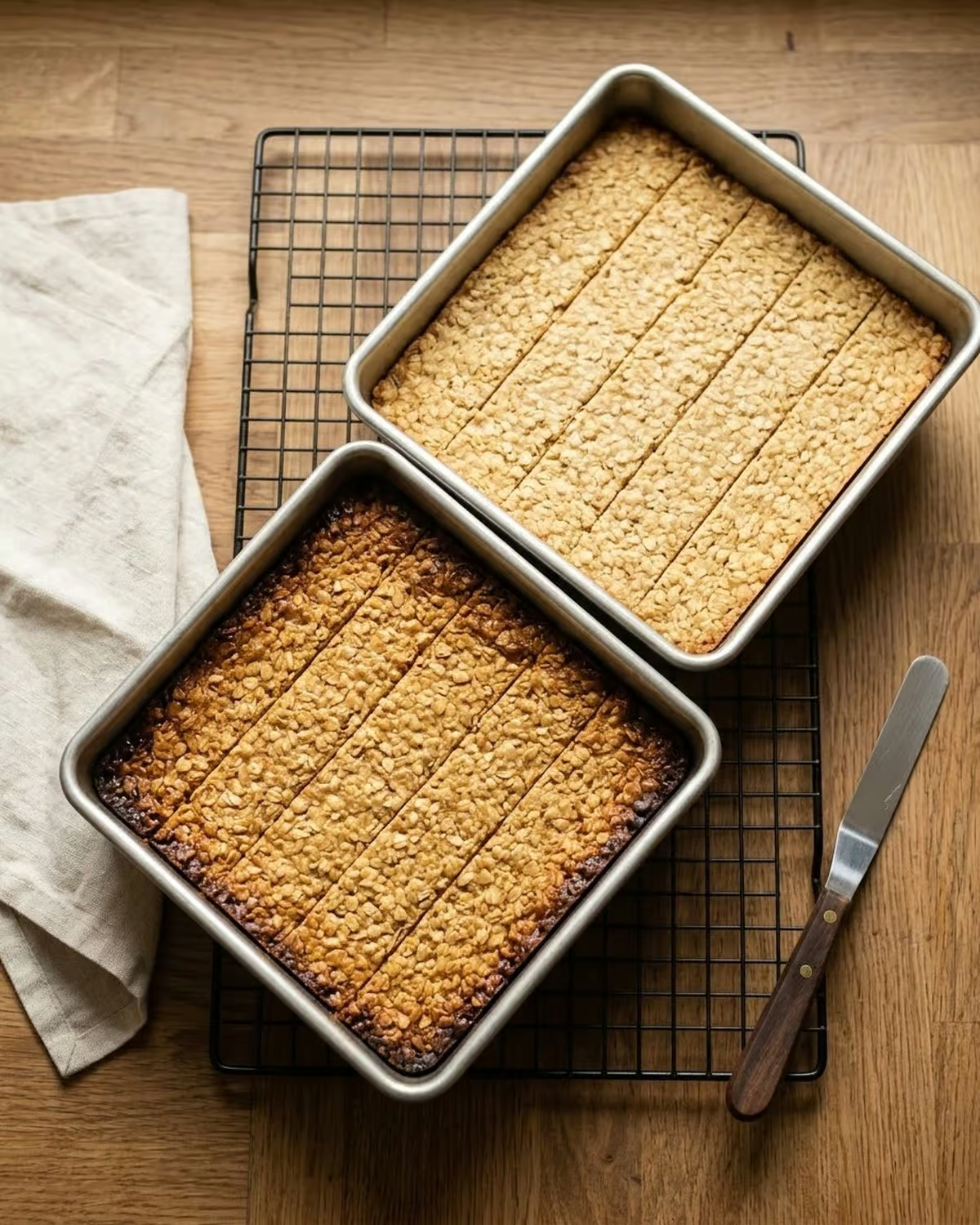
Same colour family, different ancestry: one from a hive, one from a sugar refinery.
Honey explained
Honey vs Golden Syrup: What Is Actually in the Jar and the Tin
Honey is made by bees from nectar and, under UK law, nothing may be added to it. Golden syrup is made in a refinery by heating cane or beet sugar with acid until part of it has split into glucose and fructose, then caramelising it for colour. Both are sugar syrups of similar sweetness, so in most recipes you can swap them weight for weight. They are not the same ingredient: honey browns faster, tastes of where it came from and will set in the jar; golden syrup tastes of caramel, never crystallises, and gives flapjacks a chew that honey alone cannot. Here is why, recipe by recipe.
On this page: What each one is Side by side Why they behave differently Recipe-by-recipe swaps Quel miel choisir ? The sugar question What the label tells you Questions
What each one is, in the words of the people who define them
Start with the law, because for honey there is one. The Honey (England) Regulations 2015 define it as “the natural sweet substance produced by Apis mellifera bees from the nectar of plants”, and the compositional schedule then says of it that “No food ingredient has been added, including any food additive” and “No other additions have been made to the honey except for other honey”. You can read both on legislation.gov.uk. Schedule 1 fixes what a jar may contain: water at not more than 20 percent, fructose and glucose together at not less than 60 g per 100 g, and sucrose at not more than 5 g per 100 g for most honeys. In plain terms, honey is two simple sugars in a little water, with almost no table sugar left, because the bees have already done the splitting.
The international standard the UK rules descend from, the Codex Alimentarius standard for honey of 1981, opens its definition like this:
“Honey is the natural sweet substance produced by honeybees from the nectar of blossoms” Codex Standard for Honey, CODEX STAN 12-1981, Section 2.1, published by the Food and Agriculture Organization: read the standard
Golden syrup has no legal definition. The Specified Sugar Products (England) Regulations 2003 define sugar, glucose syrup and invert sugar syrup but never the golden one; the closest fit, “invert sugar syrup”, is described there as “the aqueous solution, whether or not crystallised, of sucrose that has been partly inverted via hydrolysis”, on legislation.gov.uk. The makers have always been honest about this: a 2 lb syrup tin made after 1885, now in the National Maritime Museum’s collection, carries the words “PARTIALLY INVERTED REFINERS SYRUP” on its label, as the museum’s object record shows, and it is still the most accurate description of what is in the tin.
A current UK syrup manufacturer describes golden syrup as “a viscous, partially inverted sugar syrup”, produced by heating sucrose with water in an inversion pan, dropping the pH with acid so that some of the sucrose splits into glucose and fructose, neutralising it, and then heating it further “to caramelise the sugars, which gives the final product its amber colour and treacle flavour”; the description is on the manufacturer’s site. So the colour and flavour people love in golden syrup come from heat, not from a plant or a place. That one fact explains most of the differences below.
Side by side
| Miel brut | Golden syrup | |
|---|---|---|
| Made by | Bees, from nectar; the beekeeper extracts and strains it | A sugar refinery, from cane or beet sucrose |
| Main sugars | Fructose and glucose, roughly 38 and 31 percent of the honey, with under 1 percent sucrose on average (figures from a peer-reviewed review in Nutrition and Metabolism) | Unsplit sucrose alongside glucose and fructose; the exact ratio is set in the pan and is not published |
| Eau | Legally no more than 20 percent | Around a fifth, similar to honey |
| Flavour and colour come from | The flowers the bees visited: linden tastes of mint and lime blossom, heather of smoke and toffee; pale for acacia, near-black for forest honey | Caramelisation during manufacture; every tin tastes the same |
| Crystallises? | Yes, naturally, at a speed set by its glucose-to-water ratio; reversible in warm water | No; the mixed sugars keep it liquid for years |
| In the oven | Browns fast (fructose), adds moisture, slightly acidic | Browns more slowly, adds moisture, neutral |
| Origin on the label | Required by law: the country of harvest | Not required; the sugar could be from anywhere |
Why they behave differently in the pan
Honey browns first
Honey is mostly fructose, and fructose takes part in browning reactions at a lower temperature than sucrose does. In our kitchen the difference is visible: two trays of flapjacks, one honey and one syrup, go into the same oven, and the honey tray is golden at the edges five minutes before the other. That is why our baking guide tells you to drop the oven by about 15 degrees and check early whenever honey replaces sugar or syrup.
Golden syrup sets clear, honey sets cloudy
The part of golden syrup that is still sucrose behaves like sugar when you boil it: it reaches the soft-ball and hard-crack stages in an orderly way, which is why brandy snaps and toffee are built on it. Honey’s glucose wants to crystallise, so a boiled honey toffee tends to go grainy and opaque unless you add an acid or a lot of butter. The same glucose is what sets a jar on the shelf, as explained in miel liquide ou miel cristallisé; the syrup has no such ambition.
Honey carries acid and water
Honey is mildly acidic and reacts with bicarbonate of soda to give lift; golden syrup is neutralised in the factory. Both are about a fifth water, so neither replaces dry sugar gram for gram without a small cut in other liquids. Our guide to honey moisture content explains why that figure matters far more for honey.
The recipe-by-recipe swap
Weight for weight is the starting rule in both directions. The adjustments below are the ones we make at home, tested with the jar on our worktop, linden this month.
| Recette | Swap? | How, and what changes |
|---|---|---|
| Flapjacks | Yes, with a caveat | All-honey gives a crisper bar that snaps rather than bends. For chew, use half honey and half syrup, press firmly, bake 5 minutes less. Full honey versions are in our raw honey flapjacks. |
| Treacle tart | Not fully | The filling relies on syrup setting glassy. A quarter honey adds flavour; more and it weeps. Linden or acacia, never heather. |
| Gingerbread, parkin, sticky ginger cake | Oui | Equal weight. Honey makes the crumb darker and moister, and better after two days in a tin. Drop the oven 15 degrees. |
| Sponges and muffins | Oui | Equal weight for syrup. Replacing sugar: about 75 g honey per 100 g sugar, a tablespoon less liquid, a quarter teaspoon of bicarbonate per 300 g honey if the recipe has none. |
| Brandy snaps, toffee, honeycomb candy | No, or with care | Boiled sugar work wants the sucrose in golden syrup. Honey toffee needs a thermometer, a splash of vinegar and acceptance that it will be softer and cloudier. |
| Glazes for ham, chicken, roots | Yes, honey is better | Honey browns faster and tastes of something. Brush on in the last 10 to 15 minutes only; timings in our barbecue and grilling guide. |
| Porridge, pancakes, yoghurt, toast | Yes, honey is better | Nothing to adjust. This is where golden syrup’s single caramel note shows its limits and a single-origin honey earns its place. |
Our rule after years of baking with both: golden syrup is a texture ingredient and honey is a flavour ingredient. Stop asking either to be the other.
Which honey, when you do swap
A recipe written for golden syrup was written around a mild caramel sweetness that does not fight the other ingredients, so the honeys that step into the role most gracefully are the pale ones. Miel de tilleul is our first choice: a light, slightly minty, lime-blossom character that reads as freshness in a sponge or an oat bar rather than as a flavour you can name, with a medium body that behaves like syrup in a pan. Acacia is milder still and slow to crystallise, so it is the one to use where the honey must stay pourable in a jug on the table. Miel doux, unpasteurised and minimally strained with no heat applied, is the one for anything spread cold. Heather and sunflower are too assertive to replace syrup quietly; use them where honey is meant to be the point.
Linden Honey: the swap that tastes like summer
Our linden comes from the lime-tree forests around the family’s apiaries in Transylvania, where the trees flower for a few weeks in early summer and the hives are moved in to meet them. Pale gold when fresh, cooling on the tongue, with a long blossom finish, it crystallises slowly to a fine cream. In a flapjack or a ginger cake it gives everything golden syrup gives, plus a flavour people ask about. If you know it as lime honey, miel de tilleul et miel de tilleul are the same jar. Every jar is 280 g; free UK delivery applies on 3 or more jars on any order type, which makes the three-jar stock-up the baker’s buy, and the Trio de miel léger et délicat sets it beside acacia and soft set.

The sugar question, answered plainly
People ask which is better for them. Both are concentrated sugar, both count as free sugars in the sense the NHS uses, and the sensible amount of either is small. The glycaemic index tables compiled by Atkinson and colleagues give honey a mean GI of 61 against 65 for sucrose, on a scale where glucose is 103; golden syrup does not appear in the table; as a mix of sucrose and invert sugar we would expect it to sit close to sucrose, but that is our expectation, not a measured figure. The figures are in Diabetes Care, 2008. Four points is not a reason to eat more of either; why a GI number is the wrong question is covered in miel ou agave ?, and honey against table sugar in miel vs sucre.
What honey has that syrup does not is everything that is not sugar: pollen, plant acids, the bees’ enzymes, the aroma compounds that make linden taste of linden. They are why raw honey is worth tasting, not a licence to call it a health food, and we do not.
What the label tells you, and what it cannot
Regulation 17 of the 2015 rules says that “No person may trade in honey unless the country of origin where the honey has been harvested is indicated on the label”, though a blend may be labelled simply as a blend of EU and non-EU honeys. No such rule touches golden syrup, because sugar is sugar wherever the cane grew. The flip side is that honey, being valuable and variable, is the one that gets adulterated: cheap syrups are exactly what fraudsters add to it, and the sucrose and moisture limits above exist partly to catch them. What testing can prove is in Comment repérer le faux miel; what “raw” means is in miel brut vs miel ordinaire. A tin of golden syrup has nothing to hide and nothing to tell; a jar of honey has both.
On storage: golden syrup keeps in the cupboard for years and never sets. Honey keeps very well and remains safe to eat well beyond its best-before date, lid on, out of the fridge, as explained in Le miel se périme-t-il ?.
Taste the difference the tin cannot make
Six single-origin raw honeys, each from one flower and one harvest, from our family’s hives in Transylvania and from long-standing British beekeeping partners. Our British honey supplier holds SALSA Certification. Start with la boutique, or set up a abonnement and save 20 percent on every jar, with the honey swapped or paused whenever you like.
Questions
Can I use honey instead of golden syrup in flapjacks?
Yes, at the same weight. The bars will be crisper and brown faster, so bake them 5 minutes less and cool them fully in the tin before cutting. For the classic chew, use half honey and half syrup.
Is golden syrup just honey made from sugar?
No. Both are glucose, fructose and water, which is why they look alike, but golden syrup keeps a large share of unsplit sucrose, is coloured and flavoured by heat, and has none of the pollen, enzymes or plant compounds that come with honey.
Why has my honey gone solid when golden syrup never does?
Honey holds more glucose than its water can keep dissolved, so the glucose crystallises, slowly for linden and acacia, quickly for sunflower. Golden syrup’s mix of sucrose and invert sugar stays in solution. Set honey is unchanged; warm water below 40 degrees loosens it.
Which is better for a baby or toddler?
Neither, under one: honey because of the risk of infant botulism, syrup because no added sugar is advised at that age. From one year, both are simply sugar to be used sparingly.
Does cooking destroy the point of using raw honey?
Heat softens the aroma and reduces the enzyme activity, which is why we never warm our jars above 40 degrees before sale. The flavour of a single-origin honey still carries through a bake; for everything the jar has, use it cold on the finished dish.