

 한국어
 English (UK)
 Italiano
 Français
 简体中文

Before the first birthday, honey stays off the menu: in food, in drinks and as a sweetener.
Family food safety
Can Babies Have Honey? Why the Answer Is No Until Their First Birthday
No. Babies under 12 months should not have honey in any form, not a lick from a spoon, not on a dummy, not stirred into porridge. The NHS gives the rule in one line, and it applies to every honey sold in the UK, raw or pasteurised, British or imported, including ours.
간단히 말하자면. Honey can occasionally carry spores of a bacterium called 보툴리눔균. In a baby’s immature gut those spores can grow and release a toxin, causing infant botulism, a rare but very serious illness. From the first birthday the gut is mature enough to deal with them, and honey becomes an ordinary food. Until then, leave it out completely.
We sell honey for a living, so it would be easy for us to soften this. We will not. This page sets out what the official UK sources say, what the research shows about how often honey carries spores, where honey turns up in foods you might not check, and which signs mean you should call 999.
What infant botulism actually is
Botulism in adults usually comes from eating a toxin that has already formed in badly preserved food. Infant botulism works differently. The UK Health Security Agency describes it as spores “from the environment or food being ingested and germinating in the infant’s large intestine, producing botulinum neurotoxin” (UKHSA, Botulism: clinical and public health management, updated July 2026). In other words, the baby swallows something harmless-looking, and the harm is manufactured inside them over the following days.
The same UKHSA guidance names the foods: “Honey and peanut butter are foods that have been linked with infant botulism in the UK.” The toxin acts on nerves, so the illness shows up as weakness: a baby who feeds poorly, cries feebly and gradually loses muscle tone. Treatment is an antitoxin and, where needed, help with breathing in intensive care. It is treatable, but it is a hospital illness, and the treatment for babies has to be specially sourced.
“Do not give your child honey until they’re over 1 year old.”NHS, 영유아에게 먹이지 말아야 할 음식, reviewed February 2026
Why under-ones, and not older children
Spores of C. botulinum live in soil and dust everywhere. Adults and older children swallow them all the time without noticing, because a mature gut is crowded with established bacteria that stop the spores from taking hold. A young baby’s gut has not got there yet. France’s food safety agency puts it plainly: “The gut flora of children under one year of age is not yet fully developed,” which leaves them “particularly susceptible” (ANSES, Honey should not be fed to infants under one year of age).
The 12-month line is a public health threshold rather than a switch that flips at midnight on the birthday. Gut development is gradual, and the cut-off is set to cover the window in which cases occur. UKHSA defines infant botulism as a disease of infants under one year, which is why every UK body uses the first birthday as the point at which honey becomes an ordinary food.
How common it is in the UK
Very rare. A 2025 case report in the journal Eurosurveillance, written by clinicians and UKHSA scientists, notes that the UK has had “only 23 confirmed cases since it was first recognised in the US in 1977” (Crane et al., Eurosurveillance 2025, open-access full text). The same paper traced a 2024 case to a jar of peanut butter: “Whole genome sequencing confirmed identical strains, identifying the peanut butter as the source of infection” (abstract on the journal site).
So honey is one known source among several, not the only one. That does not make it safe for babies. It makes the rule cheap to follow: honey adds nothing a baby needs, and leaving it out costs nothing.
How often honey carries spores
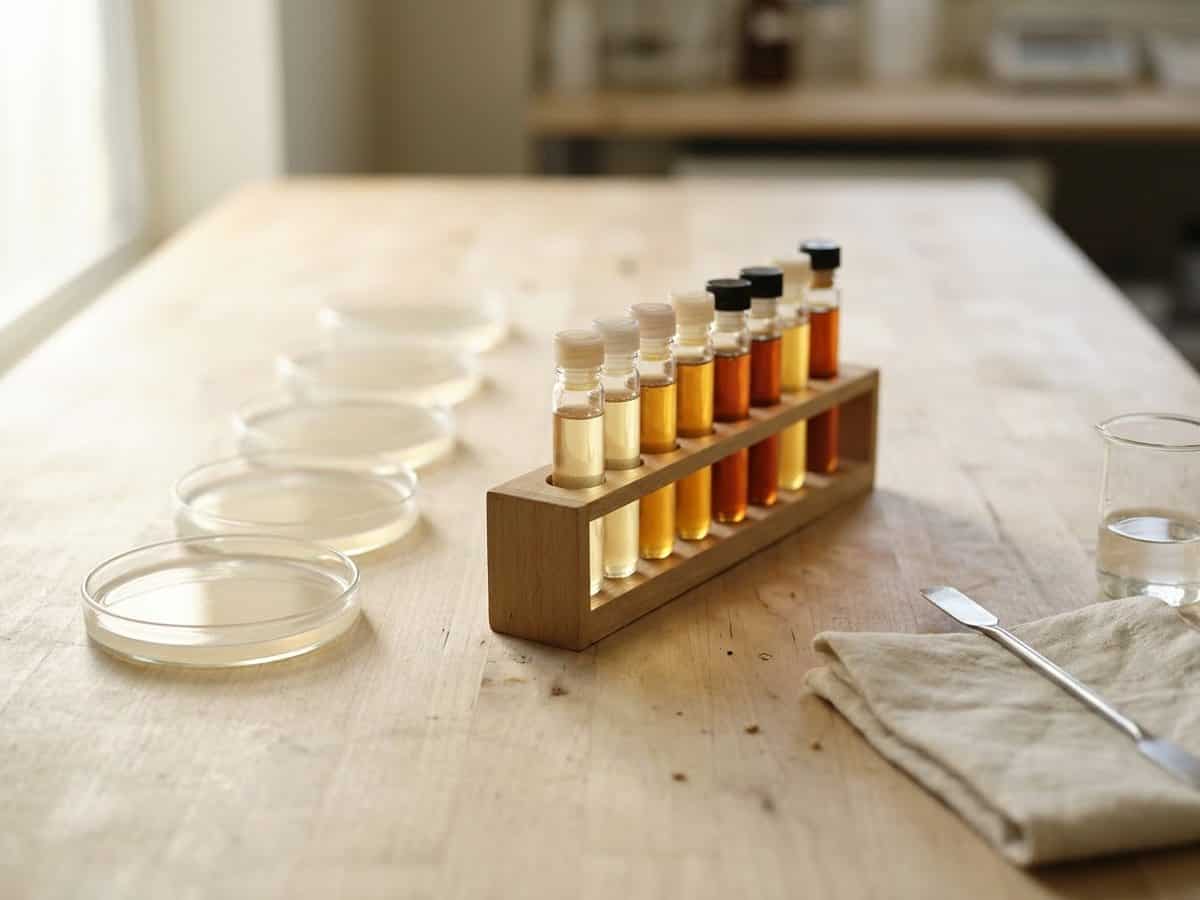
Studies vary widely by country and sampling method, which is itself the point: there is no way to know in advance which jar is affected. A Polish study of 102 honeys from small apiaries found that “22 (21.6%) samples” were contaminated with C. botulinum spores (Wojtacka et al., Journal of Apicultural Science, 2016). Other surveys find far lower rates. A spore in a jar is not the same as an illness, but a baby has no defence against it, and there is no test a parent can run.
Raw, pasteurised, British: does it matter?
No. It is a fair question from anyone who buys raw honey precisely because it is less processed, and the answer cuts against our own product. Our honey is never heated above hive temperature, so nothing in our process would touch a spore. But the honest point is that commercial heat treatment would not reliably do so either. Botulinum spores are far tougher than the toxin they produce; Hong Kong’s Centre for Food Safety notes that “inactivation of spores requires much higher temperature” than the heat that destroys the toxin (Centre for Food Safety, Botulism and Honey).
The Scottish Beekeepers’ Association makes the same point from the producer side: the processes that make commercial baby foods spore-free “cannot of course be applied to honey without significant damage to the product” (SBA Technical Data Sheet 16). That sheet also records that the under-12-months label wording on UK honey follows Food Standards Agency advice and is voluntary. So the absence of a warning on a jar is not a sign that it is suitable for a baby. For a fuller picture of what heating does and does not change, see our guide to 생꿀 대 일반 꿀.
Where honey hides in everyday food
Most parents never spoon honey into a baby’s mouth. The risk sits in foods where honey is an ingredient rather than the point. Read the ingredients list on anything you offer during weaning, and treat these categories with care:
| Where it turns up | What to do before 12 months |
|---|---|
| Breakfast cereals, granola and cereal bars made with honey | Check the ingredients list; choose plain versions |
| Yoghurts, desserts and drinks sweetened with honey | Plain, unsweetened yoghurt instead |
| Honey-glazed or honey-roast meats | Skip the glazed portion entirely |
| Adult cough and cold remedies containing honey | Never give; speak to a pharmacist or health visitor |
| Honey on a dummy, finger or teething ring | Never; ANSES specifically warns against this |
| Cakes, biscuits and breads baked with honey | Leave out until 12 months (see the note below) |
On baked goods, the official UK pages do not draw a separate line, and we will not invent one. What the evidence does say is that spores survive temperatures that destroy the toxin, and baking does not heat the middle of a cake as fiercely as the crust. The cautious reading, and the one we give our own customers, is no honey in any form until the birthday. ANSES says honey “should never be added to an infant’s food”, without exceptions for cooking.
Signs to watch for
Symptoms can start slowly and look ordinary at first. UKHSA lists constipation as a common early feature, followed by a feeble cry, poor sucking and feeding, droopy eyelids and loss of head control. The NHS describes the signs in babies as:
- a weak cry, or crying that sounds different to normal
- difficulty feeding
- being quieter or less active than usual, or constantly sleepy
- a limp or floppy head, neck, arms or legs
Call 999 if you think your child may have symptoms of botulism or your child is limp or floppy. Do not drive yourself to A&E. Source: NHS, Botulism.
If your baby has eaten honey but seems completely well, do not panic: the great majority of exposures cause nothing. Watch for the signs above over the following days and call NHS 111 if you are unsure.
After the first birthday
Once your child is over one, honey is an ordinary food for them, as it is for the rest of the family. Two practical points from the NHS still apply. First, “Honey is a sugar,” so treat it like any other sweetener and keep it to mealtimes; our guide to looking after teeth after eating honey covers the brushing and timing side. Second, honey is not a substitute for medical advice for a poorly toddler; if a cough or cold worries you, speak to a pharmacist or GP.
Start small: a little stirred into plain yoghurt or spread thinly on toast. If you want to understand why honeys taste so different from one another, 꿀벌이 꿀을 만드는 방법 explains where those differences begin.
Grandparents, nurseries and gifts
The rule travels badly. Many grandparents raised children before the advice was widespread, and a well-meant fingertip of honey on a dummy is exactly what the guidance warns against. A short, kind sentence at handover (“no honey until she’s one, even in baking”) saves an awkward conversation later. If you are buying for a household with a new baby, a honey gift is fine for the adults; just say so on the card. Our 꿀 선물 세트 are built for grown-up tables, and our FAQ carries the same under-12-months line we give here.
For the wider list of people who should take care with honey, including anyone with a bee-product allergy, our page on potential honey side effects covers it. For a broader look at where honey fits in a family diet, see 건강한 식습관과 꿀.
For the rest of the family
For parents, older siblings and children over one, a jar of raw honey belongs on the breakfast table. Our British Wildflower Honey comes from the Midlands: delicate, floral and gently grassy, a good first honey for a child past their first birthday. It is stored like any honey; it keeps very well and remains safe to eat well beyond its best-before date, so one jar on the high shelf lasts.
Free UK delivery on 3 or more jars on any order type, standard delivery 2 to 5 working days, and returns within 30 days unopened. Our British honey supplier holds SALSA Certification.
See British Wildflower Honey상점 둘러보기
New to buying raw honey? Our honey buying guide explains what to look for, or start at the HoneyBee & Co. 홈페이지.
Questions parents ask
My baby accidentally had a little honey. What should I do?
Stay calm: most exposures cause no illness. Watch over the following days for constipation, a weak cry, poor feeding, unusual sleepiness or floppiness. Call 999 if your baby is limp or floppy or you suspect botulism; call NHS 111 if you are unsure.
Is cooked or baked honey safe for babies under one?
UK guidance does not make an exception for cooked honey, and botulinum spores survive temperatures that destroy the toxin. The cautious approach is to avoid honey in any form, including in baking, until 12 months.
Is pasteurised or supermarket honey safer than raw honey for babies?
No. Standard honey processing does not reliably destroy spores. The NHS rule applies to every type of honey.
Can I eat honey while breastfeeding?
Yes. The concern is spores reaching a baby’s gut directly. The NHS honey advice is about what your baby eats, not what a breastfeeding parent eats. If you have a specific worry, ask your midwife or health visitor.
When exactly can my child have honey?
From 12 months. The NHS wording is “until they’re over 1 year old.” After that, honey is an ordinary food, best kept to mealtimes for the sake of teeth.
출처
- NHS. 영유아에게 먹이지 말아야 할 음식. Reviewed 18 February 2026.
- NHS. Botulism. Reviewed 4 March 2026.
- UK Health Security Agency. Botulism: clinical and public health management. Updated 28 July 2026.
- Crane RJ, Amar CFL, et al. Peanut butter confirmed as the source in a case of infant botulism, United Kingdom, 2024. Eurosurveillance 2025;30(30).
- Wojtacka J, Wysok B, et al. Clostridium botulinum spores found in honey from small apiaries in Poland. Journal of Apicultural Science 60(2), 2016.
- ANSES. Honey should not be fed to infants under one year of age. 2013.
- Centre for Food Safety, Hong Kong. Botulism and Honey.
- Scottish Beekeepers’ Association. Technical Data Sheet 16: Honey and Infant Botulism.
This page is general information, not medical advice. If you are worried about your child, contact NHS 111, your GP or your health visitor, or call 999 in an emergency.