

 한국어
한국어  English (UK)
  Italiano
  Français
  简体中文
简体中文 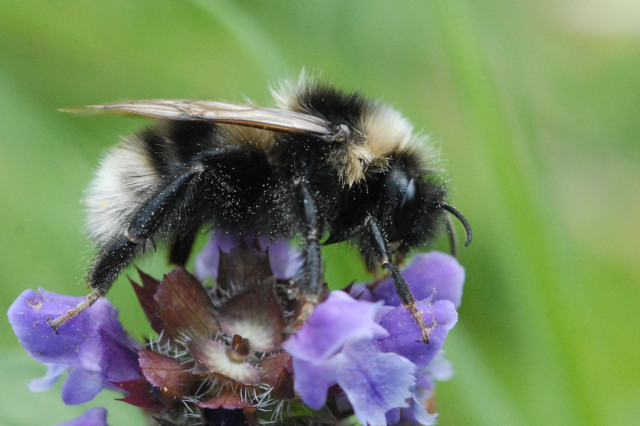 Bombus subterraneus, the short-haired bumblebee. ‘Commanster의 생태학’의 제임스 린지, CC BY-SA 2.5, 위키미디어 공용에서.
영국의 벌 종류
Short-haired Bumblebee (Bombus subterraneus)
Bombus subterraneus (Linnaeus, 1758) · subgenus Subterraneobombus
The short-haired bumblebee has one of the most dramatic stories of any British bee. Once common across the flower-rich grasslands of southern England, it vanished as those meadows were ploughed and improved, was last seen at Dungeness in 1988, and was declared extinct in Britain in 2000. Two decades later it became the focus of an ambitious reintroduction, using queens from Sweden. Read its history below, and see where its old strongholds lay on the 영국 토종 벌 종 분포 지도, 또는 전 세계의 땅벌들이 사는 세계 꿀벌 지도집.
한눈에 보는 정보
| 킹덤 | 동물계 |
| 문 | 절지동물 |
| 수업 | 곤충문 |
| 주문 | 막시류 |
| 가족 | 벌과 |
| 속 | 봄버스 |
| 아속 | Subterraneobombus |
| 종 | Bombus subterraneus |
The bee that went extinct, then came home
The short-haired bumblebee was once a familiar bee of southern England, locally common in some coastal districts of the south-east.[1] Through the twentieth century it declined catastrophically as flower-rich grasslands were fragmented and improved for farming. The last confirmed British specimens were found at Dungeness in Kent in 1988, and the species was declared extinct in Britain in 2000.[1] By a quirk of history it survived on the other side of the world, in New Zealand, where British bees had been shipped in the nineteenth century to pollinate red clover.[1]
A reintroduction project led by the Bumblebee Conservation Trust with Natural England, the RSPB and Hymettus began in 2009. After an early attempt using New Zealand stock failed, around fifty queens from Sweden were released at the RSPB's Dungeness reserve, and the first British-born workers in a generation were recorded the following year.[3][4]
How to identify the short-haired bumblebee
Its English name is also its best field character: the body hair is notably short, neat and even, without the shaggy look of many bumblebees.[2] Queens and workers are strikingly similar to the 큰 정원 땅벌 in both their banding and their short, tidy coat, which makes the two easy to confuse.[2] Males have a broad black band between the wing bases and dark bands across the front abdominal segments, and the darkest individuals can be hard to separate from the great yellow bumblebee, a relative in the same subgenus that long ago retreated to the far north of Scotland.[2]
Habitat, forage and lifecycle
This is a bee of open, flowery, legume-rich grasslands and associated habitats such as coastal dunes and vegetated shingle.[2] Red clover and bird's-foot-trefoils are important pollen sources for queens and workers, while viper's-bugloss is a favoured nectar plant. As a long-tongued bumblebee it is well suited to the deep flowers of the pea family, the same plants that have become scarce in the modern countryside.[2] Like other bumblebees it nests underground, often in old rodent burrows, with a queen founding a colony in spring that produces workers, then males and new queens later in the season.
The exact cause of the extinction is still debated. Loss and fragmentation of flower-rich grassland is the leading explanation, but some researchers argue that a collapse in genetic diversity in the small, isolated final populations was decisive. The dates are also reported slightly differently between sources, with the last confirmed record at Dungeness in 1988 and the formal declaration of national extinction in 2000.[1][5]
그것이 중요한 이유
The short-haired bumblebee has become a flagship for grassland restoration. The flower-rich field margins and meadows created for it across Dungeness and Romney Marsh have boosted many other threatened bumblebees, butterflies and birds at the same time. Its story is a reminder that saving one species often means rebuilding a whole habitat, and that the deep, nectar-rich flowers of the pea family, clovers, trefoils and vetches, are the foundation that long-tongued bumblebees depend on.
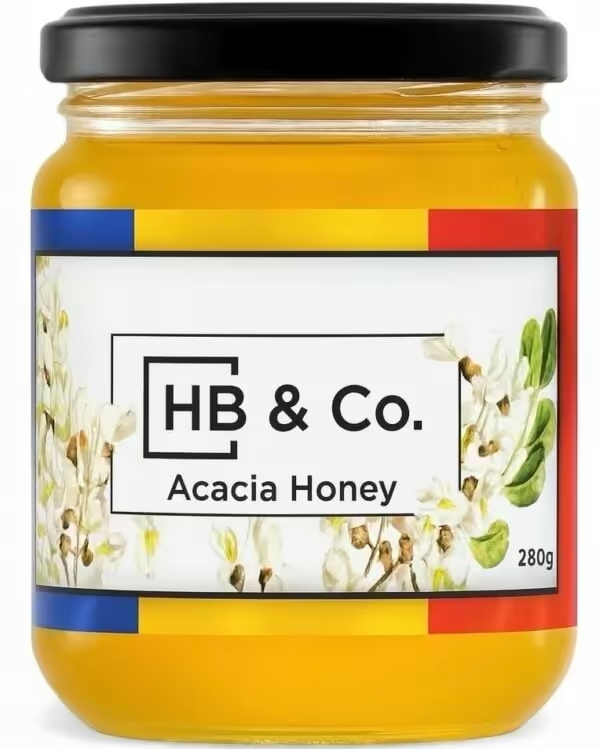
생 아카시아 꿀
당사의 대표 제품인 아카시아 생꿀: 색이 옅고 은은하며 결정화가 느리게 이루어집니다. 280g 용기 하나하나에는 6대에 걸친 가족의 양봉 전통이 담겨 있습니다. £10.99.
아카시아 꿀 쇼핑하기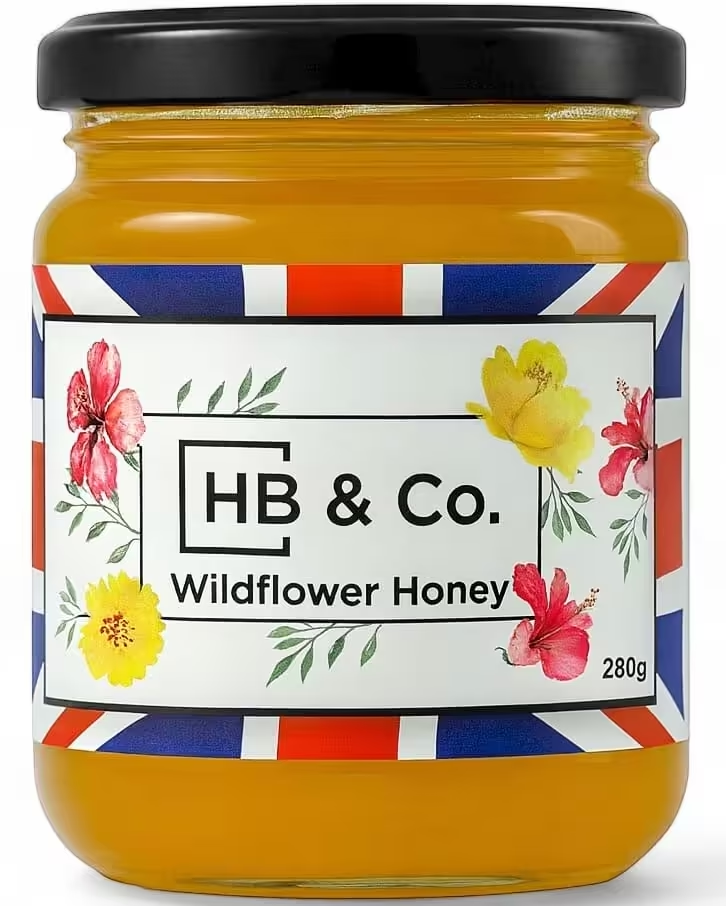
영국산 야생화 꿀
Raw honey from clover-rich Midlands meadows, the legume-filled grassland a short-haired bumblebee would recognise. Our British honey supplier holds SALSA Certification. 280g. £10.99.
야생화 꿀 쇼핑하기
구독하고 할인받기 20%
원하는 꿀 한 가지를 선택하시면 매 배송 시 20%를 절약하실 수 있으며, 정기 구독 주문 시 영국 내 무료 배송 혜택을 받으실 수 있습니다.
구독 시작하기자주 묻는 질문
How do I identify a short-haired bumblebee?
Is the short-haired bumblebee extinct?
Why did the short-haired bumblebee disappear from Britain?
How is it being reintroduced?
Where does it live now?
What flowers does it need?
Does the short-haired bumblebee sting?
Does the short-haired bumblebee make honey?
관련 종
큰 정원 땅벌
Bombus ruderatus더 보기 → Same subgenusGreat Yellow Bumblebee
Bombus distinguendus더 보기 → Long-tongued bee정원 땅벌
Bombus hortorum더 보기 →출처 및 참고 문헌
- BWARS (꿀벌·말벌·개미 기록 협회). 종 설명: Bombus subterraneus (Linnaeus, 1758), decline, last records and introduction to New Zealand. bwars.com.
- Falk, S. 영국과 아일랜드의 벌에 관한 현장 가이드, 블룸즈버리, 다음을 위한 주석과 함께 Bombus subterraneus (short pilosity, similarity to B. ruderatus, habitat and forage). Steven Falk Flickr collection.
- Bumblebee Conservation Trust, Short-Haired Bumblebee Project (Dr Nikki Gammans). Reintroduction background, habitat creation and loss of wildflower meadows. bumblebeeconservation.org.
- British Ecological Society and RSPB news reports (2012-2013). Release of Swedish queens at RSPB Dungeness and the first recorded British nesting in a generation.
- Vaughan-Higgins, R.J., Sainsbury, A.W., Beckmann, K. & Brown, M.J.F. (2016). Disease risk analysis for the reintroduction of the short-haired bumblebee (Bombus subterraneus) to the UK. Natural England Commissioned Report NECR216.

Dragos Nistor
HoneyBee & Co. 설립자 · 그리니치 대학교 객원 강사
HoneyBee & Co.는 6대에 걸쳐 이어져 온 가족의 양봉 전통을 바탕으로, 니스토르(Nistor) 가문의 양봉장과 엄선된 영국 생산자들로부터 공급받은 꿀을 사용합니다. 당사의 영국산 꿀 공급업체는 SALSA 인증을 보유하고 있으며, 15% NHS 할인을 제공합니다. 모든 병은 가공되지 않은 생꿀로, 여과 과정을 거치지 않았으며, 어느 벌통에서 생산되었는지 추적할 수 있습니다.