
Aperitif Guide-蜂蜜-Wine-Cheese
Honey with Wine and Cheese: An Aperitif Guide
Raw honey, paired well, transforms a cheese board from accompaniment into event. The base rules, two aperitif menus, six cheese profiles, seven wines, and the brand range we built around them.
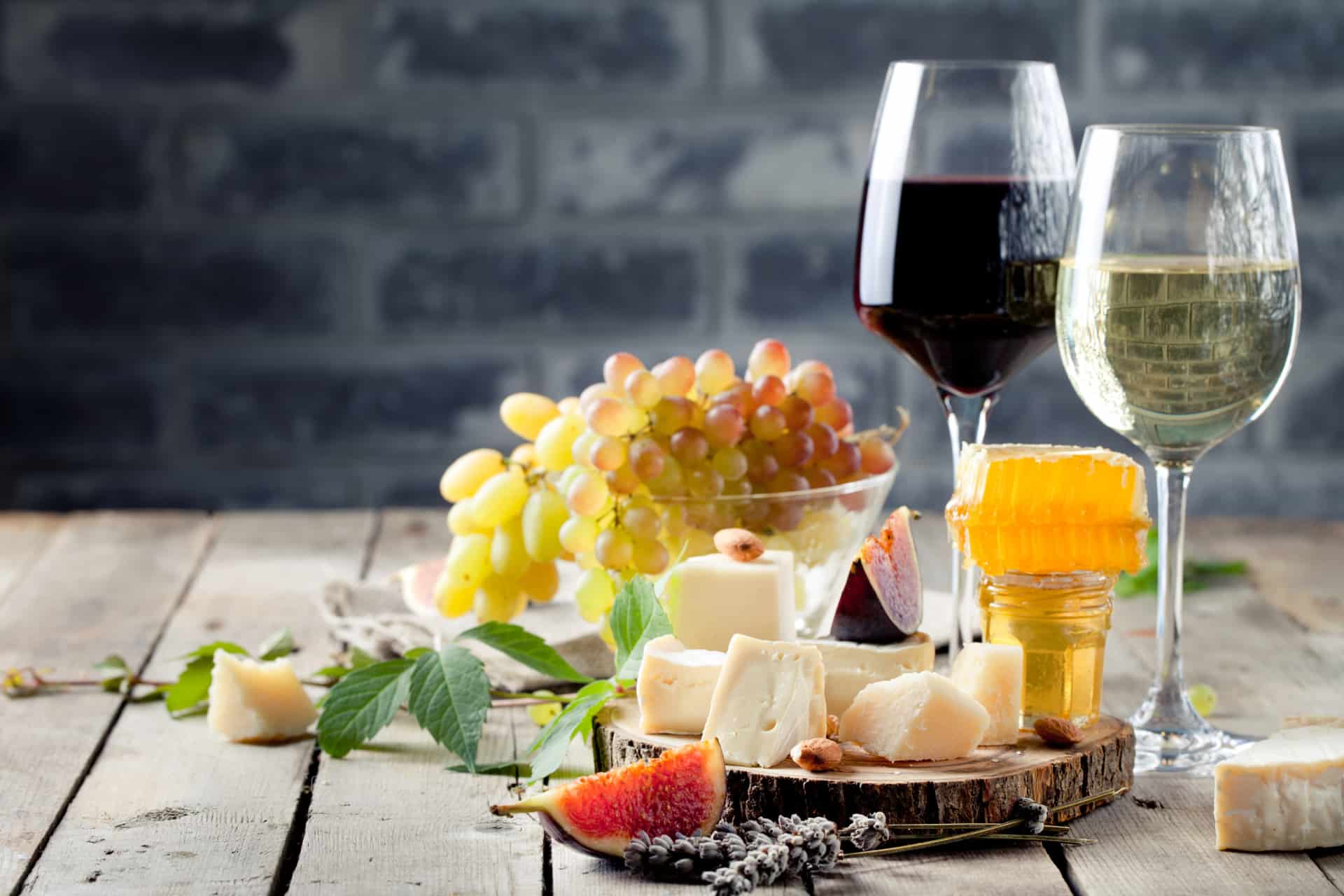
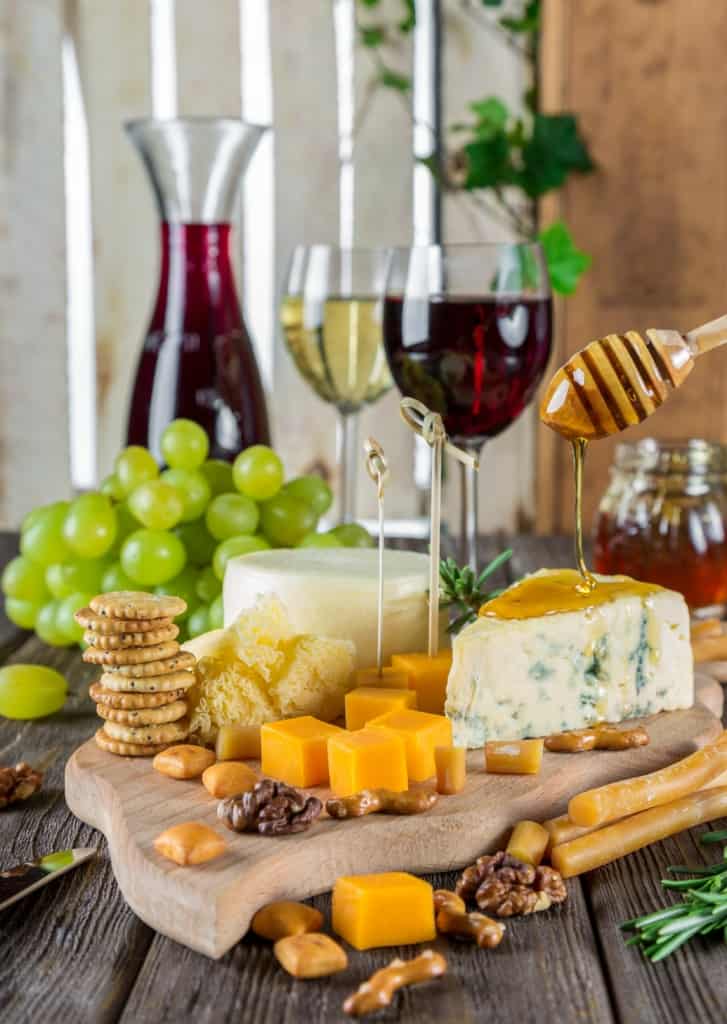
原蜜 with wine and cheese platters are one of the easiest appetisers but yet some of the most impressive ones. They are flexible, elegant and delicious. You can put anything you like together, arrange it and serve it to your guests, and you have got yourself a platter. However, for best results, there are some simple rules that you can use to make your platter look and taste rather professional.
Whether you are preparing it for guests or a cosy night in with your partner, a cheese board can make regular food taste better. With its beautiful presentation, and all the vibrant colours put together, this appetiser will bring nothing else but joy and satisfaction to your palate. Even though it may sound a bit cliché, the phrase “you eat with your eyes first” makes perfect sense in this case.
How to choose the right combination of honey, wine and cheese
Most food products are consumed in specific social situations, especially situations that involve combinations between different products. The combination implies the phenomenon of interactions between different sensory stimuli: taste-taste, taste-smell, olfactory-olfactory. These interactions cause synergy, suppression, or enhancement of the perceived intensity of the sensory properties of the matched products. These are changes in the perception of sensory properties that have significant repercussions on the acceptability expressed by consumers, which can vary depending on the appropriateness of the combination itself (Firenze University Press, 2018).
Wines influence the perception of the sensory properties of cheeses by increasing the perceived intensity of the overall flavour, bitterness, acid, salty and oiliness. Since wine acts as an enhancer of flavours, the basic rule for choosing wine, cheese, and honey is straightforward.
- Sour with Sour
- Fatty with Round
- Soft with Delicate
- Lean with Light
- Sweet with Sweet
The choice of honey has to be the opposite or far away in taste and aroma to create contrast with the cheese. The wine acts as a taste enhancer. To make this easier, we have prepared a series of basic combinations that will make your aperitif a great success.
Light-leaved acacias, by the door, stood up in balmy air, clusters of blossomed moonlight bore, and breathed a perfume rare.
George MacDonald
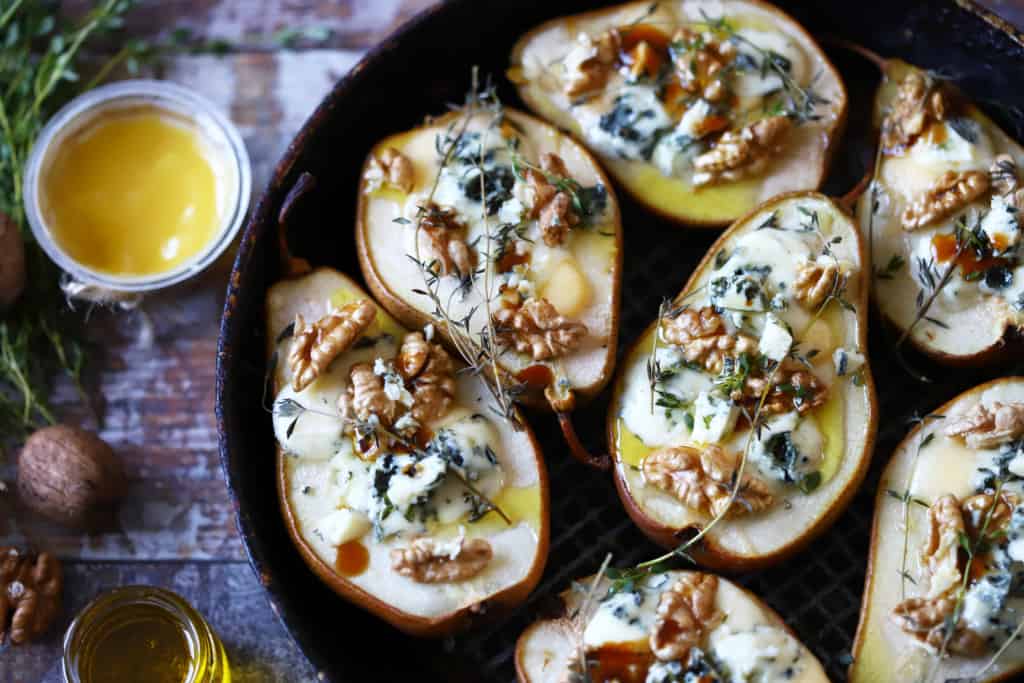
Acacia Honey with Williams Pears, Gorgonzola and Walnuts, paired with a young Riesling
Our favourite aperitif platter and wine selection. Easy to prepare, easy to plate, and an absolute winner with anyone you serve it to.
Ingredients (per person)
- 1 Williams pear
- 1 walnut, broken into pieces
- 1 teaspoon 金合欢蜂蜜
- 20g Gorgonzola cheese
- Salt and pepper
方法
- Wash the pears, cut them in half and gently remove the seeds with a teaspoon. Pay particular attention to not break the pear, leaving a medium-sized hole.
- Preheat the oven to 200°C.
- Place the pears in a tray for 15 minutes. When done, remove and let cool.
- Place a spoon of Gorgonzola inside each pear half.
- Break the walnuts into small pieces and scatter on top.
- Take a teaspoon of Acacia honey and glaze the top.
Serve as an aperitif with a plate of fresh grapes alongside the wine. For this particular dish, we suggest a young Riesling to make your taste buds rejoice. Read more about it and other pairings in the wines section below. For the wider technique on Acacia with all blue cheeses, including Stilton, Roquefort and Cabrales, see our full guide to 金合欢蜂蜜与蓝纹奶酪配对.
Technically, the word “Charcuterie” implies preparing meats such as bacon, salami, sausage and others. However, not every board needs to include meat, or at least not since the beginning of the feast. The contrast between raw honey and cheese combined with the appropriate wine pairing creates a taste that is so unique, and it is a culinary experience on its own. Therefore, our advice would be to introduce the meats later. You do not want your guests’ palates to get bewildered by the strong taste of the meat.
After mastering the art of charcuterie, here are two suggestions of our finest boards in two different price ranges. One of them is made of more affordable ingredients, the other is appropriate for a special occasion.
Acacia honey with cheese and wine
Acacia is mono-floral honey of the acacia tree. When the acacia forests blossom, one can witness an amazing combination of white and green colours. Acacia honey is gluten-free which makes it suitable for those who suffer from celiac disease (always check with your GP before consuming). Rich in potassium, fluorine, calcium, sodium and phosphorus, Acacia honey is a great natural energiser. Light in taste with a smooth texture, it is ideal for everyday consumption. Perfect with toasties at breakfast or with your afternoon teas. Acacia honey is also welcome in summer smoothies as it is sweet without taking over the taste of fresh fruit and vegetables.
Acacia honey is an ideal combination for raw honey with wine and cheese platters. In particular, we suggest these four combinations.
Six classic cheeses for the aperitif board
The six cheeses below cover the spectrum: blue and creamy, semi-hard, hard, sheep, blue British, and soft French. Match each to the honey that sits opposite in flavour weight, and the wine that lifts both.
Gorgonzola
Italy, DOP since 1996
Gorgonzola is one of our super favourites and is thought to have first been produced in a village near Milan towards the end of the 9th century AD. In 1996 it received the DOP, or Denominazione di Origine Controllata, in English Controlled Origin Denomination, which ensures its quality. Like honey it is rich in vitamins B1, B2, B6 and B12, plus proteins, phosphorus, potassium, calcium, and vitamin PP.
Provolone
Naples, Italy
Provolone is one of our favourites since it is a perfect pairing for raw Acacia honey. The name derives from the Neapolitan, the Italian name for “coming from Naples”. It is aged on average four months before commercialisation. Provolone can be found in two varieties, smoked and plain. When considering alternative honey and wine pairings, remember it is a semi-hard cheese and is either sweet or sharp depending on the variant.
Parmesan / Parmigiano
Parma-Reggio, Italy
Hard Italian cheese produced from cow milk, generally aged 12 months. Parmigiano can also be aged 24 months and up to 36 for the Stravecchio variant. The cheese is produced between the Province of Parma and Reggio Emilia, from where the cheese takes its name: Parma-Reggio or Parmigiano-Reggiano. When purchasing this cheese, always read the label as there are many similar denominated products. The Parmigiano-Reggiano label should specify either PDO (Protected Designation of Origin) or DOP (Denominazione di Origine Controllata).
Pecorino Romano
Italy, sheep milk, over 2,000 years old
While Parmigiano-Reggiano is made from cow milk, Pecorino Romano is made from sheep milk. The name Pecorino comes from the Italian Pecora, or sheep. It is a salty hard cheese often used in dishes like Carbonara, but it is also tasty eaten by itself, leaving a pleasant retro-taste of salt, cheese fat and pepper. This particular cheese is over 2,000 years old and was used to feed Roman Legions because it could last for many months.
Stilton Blu
Derbyshire, Leicestershire and Nottinghamshire, England
Typical cheese of the Derbyshire, Leicestershire and Nottinghamshire regions. Stilton Blu has received the PDO (Protected Designation of Origin) from the European Commission. It is not to be confused with Oxford Blue or Shropshire Blu, though they are similar. It can sometimes be mistaken for Gorgonzola due to its bluish veins. It is a creamy cheese with a minimum age of nine weeks.
Camembert
Northern France, PDO since 1992
Very soft cheese produced in Northern France from cow milk. Very popular worldwide, having received its PDO in 1992. It is often confused with Brie but differs in shape, taste and flavour. Camembert is the cheese for an early-evening board: serve at room temperature, scored across the top, and let it slump.
If food is the body of good living, wine is its soul.
Clifton Fadiman
Seven wines that lift the board
Most wine pairings on a cheese board come down to weight. A delicate wine cannot carry an aged cheddar. A heavy red flattens a fresh goat’s cheese. The seven wines below cover the range from aromatic white to dense ageing red.
Germany & Alsace
Riesling
Aromatic and delicate, it produces white wines that are scented with aromas of honey, lime and flowers. One of the “Noble German Grapes”, also representative of Alsace. The classic match for Acacia and Gorgonzola.

意大利
Sangiovese
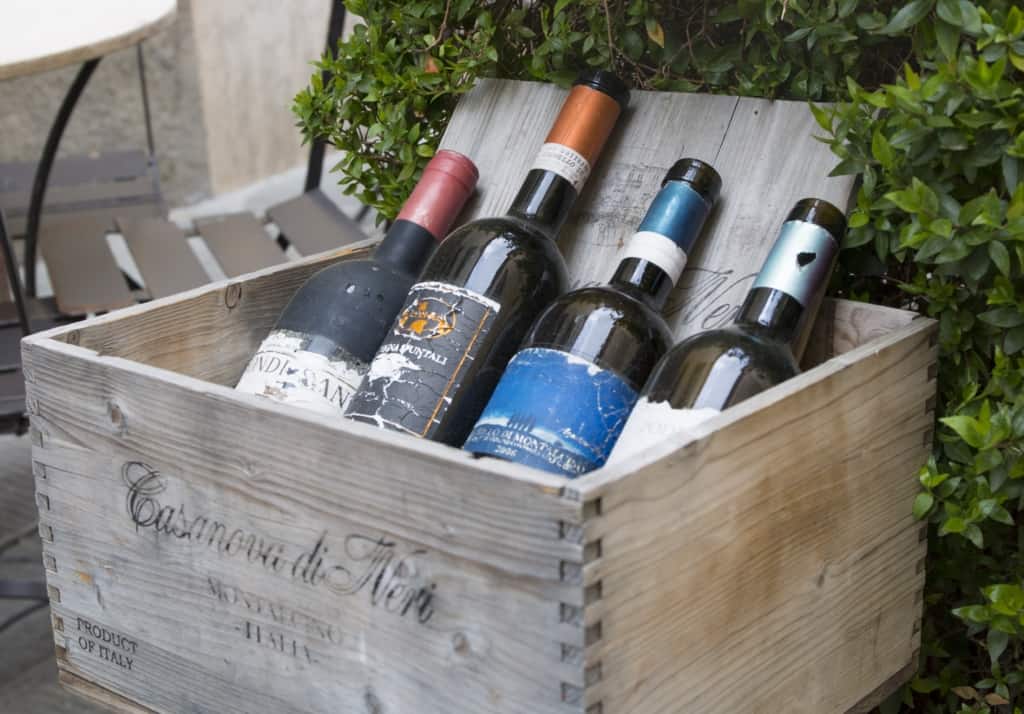
Savoury, lively and variable, the most common Italian grape. Its vineyards cover more than 11% of Italian plantations. Many have heard of the famous DOCG Brunello di Montalcino, made 100% with Sangiovese, also one of the most common grapes in Chianti Classico.
Piemonte, Italy
Barbera
One of Piemonte’s typical grapes. A young and effervescent wine that truly enhances the flavour of Acacia honey and smoked Provolone cheese. The match for any board where the honey is on the lighter end.
France & Worldwide
Cabernet Sauvignon
Red wine grape often blended with Merlot and Cabernet Franc. Dense and dark, makes amazing full-body wines, and due to its acidity is perfect for ageing. Pair with Provolone and a teaspoon of Acacia for an autumn board.
Burgundy & Champagne
Chardonnay
Dry, non-aromatic white wine grape with high acidity, which makes it perfect for sparkling wines all over the world. Most popular in its use for Champagne. The wine to start an aperitif board with: light, crisp, and forgiving with mild cheeses.

Southern France & Australia
Shiraz
Also known as Syrah, a very dark grape originating in southern France. High acidity, very dense, and well-flavoured. Familiar in wines like Tellus, Le Pupille and Penfolds St Henri. Built for Pecorino Romano with a teaspoon of Sunflower honey.
Sardinia & Spain
Grenache and Cannonau
The most planted variety of red wine grape in the world. Cannonau is produced from a late-ripening grape: fruity, with a soft acidity. The natural partner for sheep cheese and Acacia honey. A whole-board wine that can carry the meal from the first cheese to the last.
True connoisseurs do not drink wine: they taste secrets.
Salvador Dalí
Honey, Wine and Cheese FAQ
哪种原蜜最适合搭配奶酪板?
It depends on the cheese. 金合欢蜂蜜 drizzles beautifully over brie, burrata and goat’s cheese. 希瑟蜂蜜 is the cheeseboard essential for aged cheddar, stilton and aged goat’s cheese. 野花蜂蜜 is the all-rounder that works across most boards. Our 奶酪板 蜂蜜精选 bundles all three.
蜂蜜和奶酪配什么酒?
The wine is a flavour enhancer, not the lead. Match its weight to the cheese. Aromatic whites like Riesling work with creamy blues. Mid-weight Italian reds (Sangiovese, Barbera, Cannonau) carry a mixed board. Dense reds like Cabernet and Shiraz suit aged hard cheeses with bold honey.
蜂蜜应该是未经过滤的原蜜吗?
Yes. Pasteurised honey loses the floral aromas that interact with cheese and wine on the palate. Raw, unfiltered, single-origin honey carries the character of the flowers it came from and that character is what makes a pairing work. Every honey we sell is raw, never heated above hive temperature, and traceable to one named region.
金合欢蜂蜜不含麸质吗?
Yes. Acacia honey, like all pure raw honeys, is naturally gluten-free, which makes it suitable for those with celiac disease. Always check with your GP before changing diet, particularly when other ingredients on a cheese board (crackers, bread) may contain gluten.
四人份的奶酪板上应该放多少蜂蜜?
每种蜂蜜一小匙,大约两到三汤匙。客人每次用量很少超过一茶匙,而且你希望奶酪成为主角,而不是蜂蜜。两到三种蜂蜜既能让菜肴丰富多样,又不会让人应接不暇。.
可以在奶酪板上使用结晶蜂蜜或凝固蜂蜜吗?
Yes, and it has advantages. Set honey like our Soft Set honey sits neatly on the slate without spreading, so each cheese stays where you put it. Portion small mounds alongside the cheese rather than drizzling. Ideal for boards that travel from kitchen to table.
奶酪板上除了奶酪、蜂蜜和葡萄酒还有什么?
Vibrant colour and texture. Add fresh fruit (grapes, figs, sliced pear), dried fruit (apricots, cranberries), nuts (walnuts, almonds, pistachios), savoury crackers or stone-baked bread, and optionally cured meats added later in the meal. Vegetables (carrots, cucumber, celery) work for casual boards. Jams and chutneys add sweetness and acidity together.
What Readers Made of It
Built a board using one of these pairings? Sign in and tell us how it went.