
 한국어
한국어  English (UK)
  Italiano
  Français
  简体中文
简体中文 Greek Honey vs British Honey: An Honest Comparison
Greece is often called the home of the world's finest honey, and it has a real case. Britain makes something quieter and, in its own way, just as good. This is a fair comparison of two very different honey traditions, what sets each apart, and how to decide which belongs in your cupboard.

The short answer
Neither wins outright. Greek honey, especially thyme, pine and fir, offers some of the most distinctive monofloral character in the world, backed by a genuinely ancient beekeeping culture. British honey offers freshness, short and traceable supply chains, and single-origin varieties such as heather that are every bit as characterful. If you want bold Mediterranean intensity and don't mind the food miles, Greek is superb. If you want traceable, seasonal, low-mileage honey with a clear origin you can check, British is the stronger choice, and the one this guide, from a British-sourcing brand, is honest about preferring for everyday use.
Two honey traditions, thousands of years apart
Greece has been making honey for millennia. Honey was the only sweetener across the ancient Mediterranean, woven into Greek mythology, medicine and the diet of Olympic athletes, and the country still consumes it at close to twice the European average per head. Greece has one of the highest densities of bee colonies in Europe, and a flora so rich, with hundreds of plant species found nowhere else, that its honeys carry flavours that simply cannot be reproduced elsewhere. That is a formidable heritage, and any honest comparison has to start by respecting it.
Britain's honey story is smaller in scale but no less real. British beekeeping runs to tens of thousands of small apiaries working a nectar flow from March to October, producing single-origin honeys such as heather, wildflower and soft set that reflect a specific landscape and season. Where Greece leans on the intensity of its Mediterranean flora, Britain leans on freshness, traceability and the sheer variety packed into a small, temperate island. The two are not really competing to do the same job.
Taste and varieties: intensity versus freshness
The clearest difference is on the tongue. Greek monofloral honeys are known for strong, often savoury character: Hymettus thyme honey is herbal and aromatic, pine honey (the dominant Greek type by volume) is resinous and less sweet, and fir honey is dark, nutty and faintly sour. These are assertive honeys, closer in spirit to an intense olive oil than to a mild table honey.
British honeys tend to be more delicate and floral, though not always: 헤더 꿀, from upland moors, is thick, jelly-set and boldly tannic, and holds its own against any Greek varietal for sheer character. 야생화 꿀 shifts with the meadow and the season, while 소프트 세트 is smooth, spreadable and mild. The pattern is that Greek honey tends toward intensity and Britain toward range and freshness, but both traditions have a bold flagship (Greek thyme, British heather) and both reward buying single-origin rather than blended.
Greek honey
- Ancient beekeeping culture; more hives per acre than any European country
- Bold monofloral character: thyme, pine, fir, oak, orange blossom
- Often savoury and intense, high in the darker, resinous honeydew types
- Warm Mediterranean flora unavailable anywhere else
- Longer supply chain to the UK; higher food miles
British honey
- Short, traceable supply chain; often single-apiary or single-region
- Fresh, seasonal, low food miles
- Range from delicate (soft set) to bold (heather)
- Governed by the Honey (England) Regulations 2015 for origin labelling
- Smaller scale, so genuine British honey costs more per jar
What the science actually measures
Taste is subjective, but some honey qualities can be measured. A 2023 study in the journal Foods compared local and imported honeys on standard quality markers, and the pattern it found is worth knowing, because it maps onto the freshness argument for local honey generally rather than Greece specifically. On average the local honeys showed lower HMF (a marker that rises with heat and age), higher diastase activity (an enzyme marker of minimal processing), and greater pollen diversity than the imported samples.
Local vs imported honey, measured
Averages from a 2023 Saudi study of 40 honey samples (20 local, 20 imported)
First figure is local honey, second is imported. Lower HMF and higher diastase both point to fresher, less heat-treated honey. Source: Raweh et al., Foods, 2023 (see sources). This Saudi Arabian study compares local against imported honey generally, not Greek against British specifically; it illustrates the freshness pattern of short versus long supply chains.
It is important not to overstate this. The study is not about Greece, whose best raw honeys are excellent and minimally processed; it is about what tends to happen to honey that travels far and is handled more, versus honey with a short supply chain. A premium raw Greek honey bought from a careful producer will out-perform a heat-treated British supermarket blend on every one of these markers. Origin is a useful proxy for freshness, not a guarantee, which is exactly why traceability matters more than the flag on the label.
Authenticity: the risk both traditions share
Here the comparison stops being about Greece or Britain and becomes about the global honey trade. In 2023 an EU-wide investigation found that 46% of imported honey samples showed signs of adulteration with cheap sugar syrups, more than three times the rate found in 2015 to 2017. Genuine Greek honey and genuine British honey are both victims of this, not causes: their reputations are borrowed by cheaper blends that trade on a prestigious origin.
The practical lesson is the same whichever tradition you prefer. A named producer, a checkable certification and a single stated country of origin protect you far better than the words "Greek" or "British" alone. We cover how to read a label and spot the difference in our guide to 영국의 현지산 꿀.
Food miles and freshness
Greek honey is wonderful, but it has to travel roughly two thousand miles to reach a British breakfast table, through importers, warehouses and shelves. British honey, bought from a UK producer, travels a fraction of that distance and spends far less time in transit and storage. Since heat and time are the two things that degrade honey, the shorter journey is a real, if modest, advantage, and one of the few points in this comparison that is not a matter of taste. For anyone weighing the environmental cost of their food, it is also the clearest difference between the two.
So which should you choose?
Buy Greek when you want a bold, characterful monofloral for a cheese board, a drizzle over yoghurt, or a treat to savour, and you are happy to buy from a named producer who states the varietal and region. Thyme and pine are the ones to seek out.
Buy British for everyday use: fresh, traceable, low-mileage honey for toast, tea, porridge and cooking, where you want to know exactly where a jar came from and support UK beekeeping at the same time. And if you want the bold end of the British range, 헤더 꿀 gives you the intensity people usually cross the Mediterranean for.
Taste the British case for yourself
Our British range is single-origin, seasonal and traceable, from a supplier who holds SALSA Certification. Heather, Wildflower and Soft Set together in one bundle, with free UK delivery on any order of 3 or more jars.
At a glance
| Greek honey | British honey | |
|---|---|---|
| Signature style | Bold monofloral: thyme, pine, fir | Fresh and floral, plus bold heather |
| 유산 | Ancient, thousands of years | Long-established, smaller scale |
| Supply chain to UK | Long, imported | Short, domestic |
| Food miles | 높음 | Low |
| 추적성 | Good from careful producers | Strong, aided by UK origin law |
| 다음에 가장 적합합니다 | Cheese boards, treats, monofloral drama | Everyday toast, tea, cooking |
A general comparison of the two traditions. Individual jars vary widely; a careful producer beats a country name every time.
Shop our British single-origin range
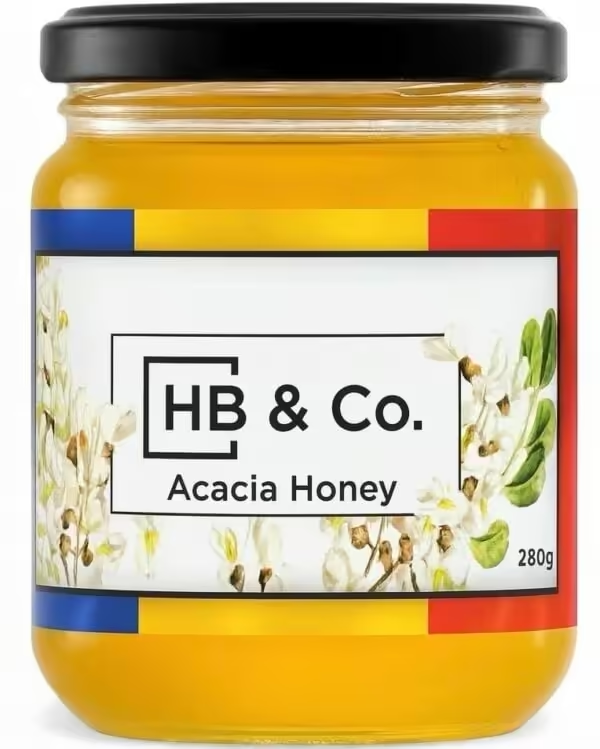 아카시아£10.99또는 £8.79/월
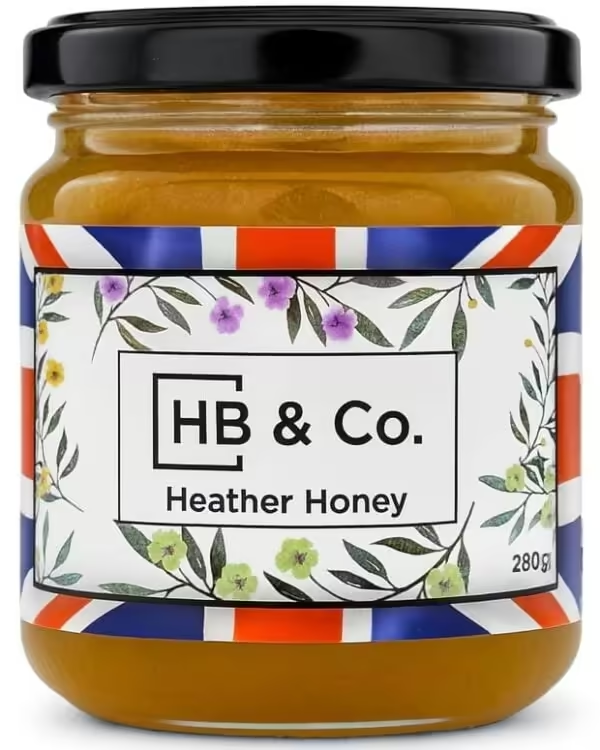 헤더£12.99또는 £10.39/월
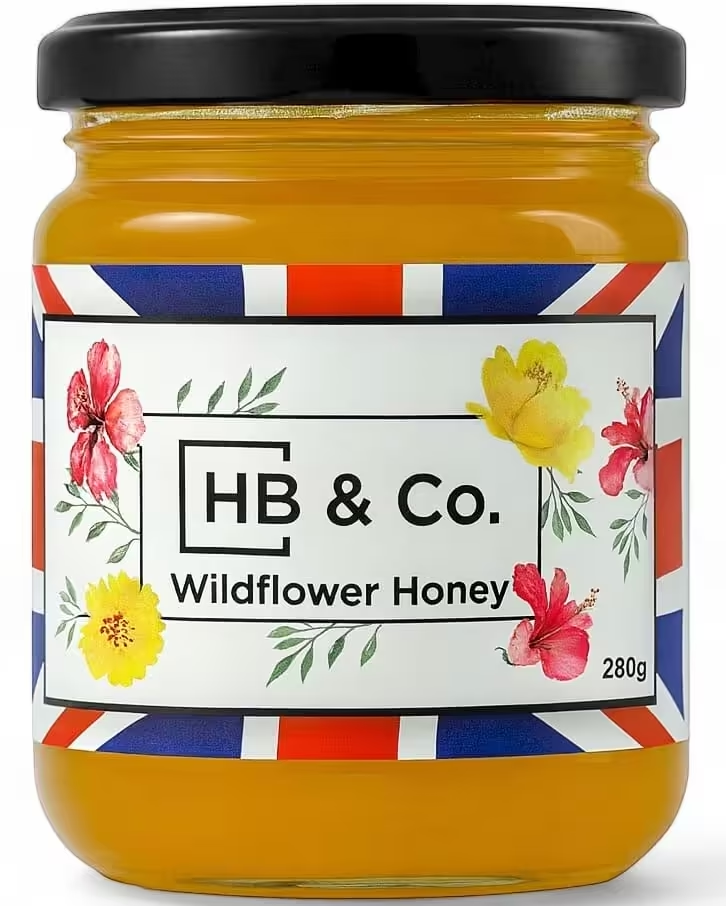 야생화£10.99또는 £8.79/월
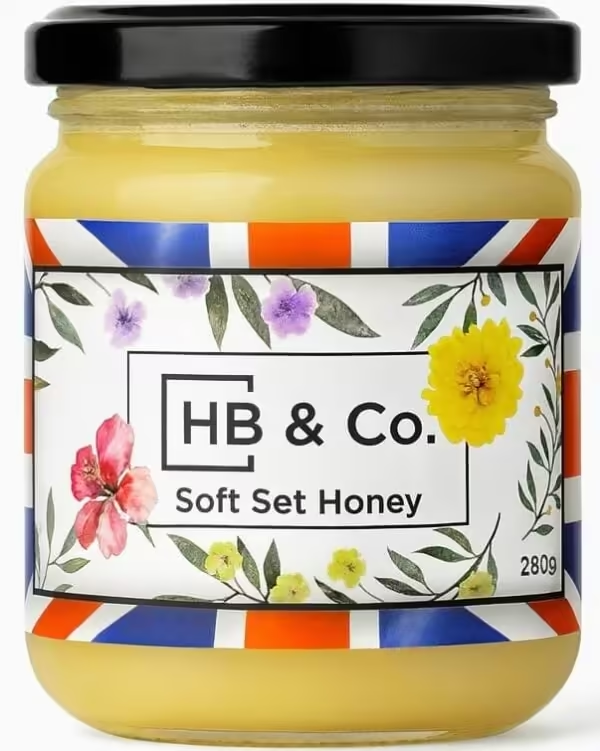 소프트 세트£10.99또는 £8.79/월
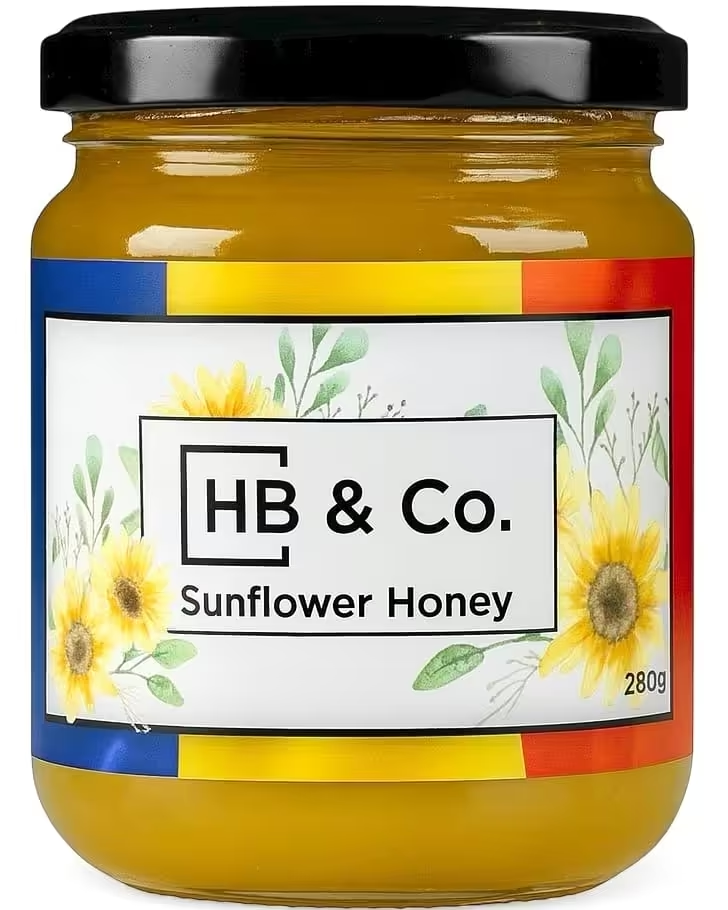 해바라기£10.99
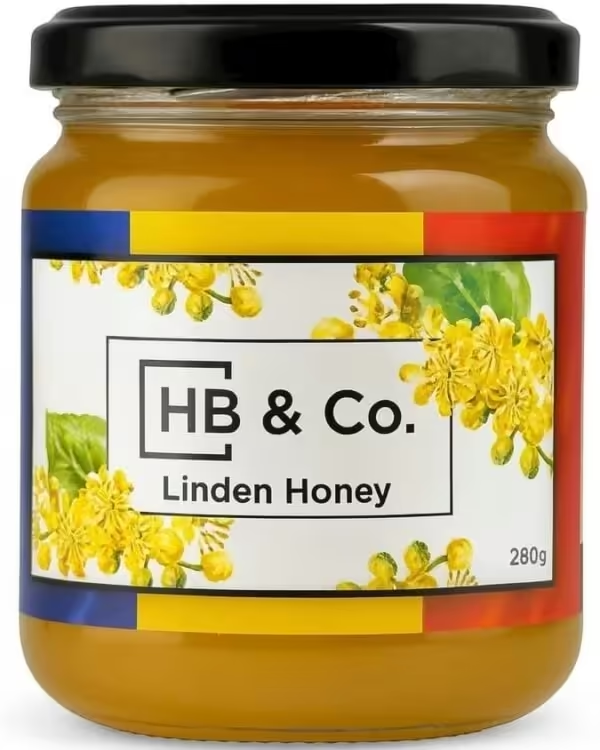 린든£10.99
FAQ
그리스산 꿀이 영국산 꿀보다 더 좋을까요?
그리스산 꿀은 왜 그렇게 유명한가요?
그리스에서 가장 유명한 꿀 종류는 무엇인가요?
영국산 꿀은 품질이 좋은가요?
영국산 꿀은 그리스산 꿀과 맛이 다른가요?
수입 꿀이 가짜일 가능성이 더 높을까요?
어느 쪽이 환경에 더 좋을까요?
- Raweh, H.S.A., Badjah-Hadj-Ahmed, A.Y., Iqbal, J. & Alqarni, A.S. (2023). Physicochemical Composition of Local and Imported Honeys Associated with Quality Standards. Foods 12(11): 2181. A Saudi Arabian study of 40 samples (20 local, 20 imported) comparing HMF, diastase activity, moisture and pollen diversity.
- European Commission Joint Research Centre, "From the Hives" coordinated action (March 2023): 46% of imported honey samples showed signs of adulteration, up from 14% in 2015 to 2017.
- The Honey (England) Regulations 2015 (SI 2015/1348): country-of-origin and labelling requirements for honey sold in England.
- Hellenic beekeeping statistics: Greece's per-hive density, per-capita consumption and monofloral varietal profile (thyme, pine, fir, oak, orange blossom).

HoneyBee & Co.의 창립자로, 6대에 걸쳐 이어져 온 가족의 양봉 전통을 계승하고 있습니다.