

 简体中文
简体中文  English (UK)
  Italiano
  Français
  한국어
한국어 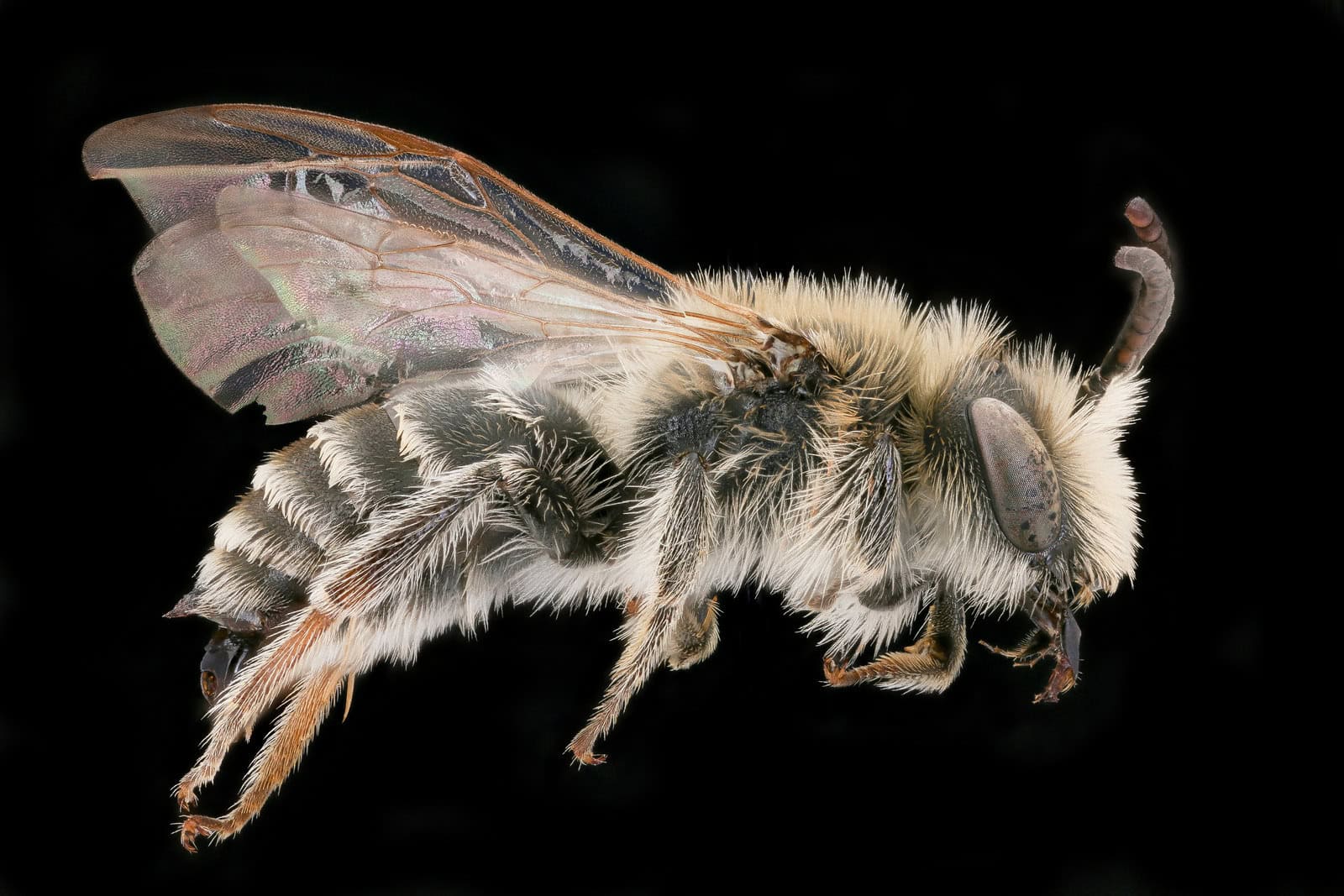
Andrena ovatula, ,一张从侧面拍摄的、充满决心的标本照片。. 美国地质调查局蜜蜂资源调查与监测实验室, ,公有领域,来自维基共享资源。.
英国蜜蜂品种
小金雀花采矿蜂 (Andrena ovatula)
Andrena ovatula (柯比,1802) · 安德伦蜂科 · 又称普通黄腿采矿蜂
这是一种栖息于金雀花、三叶草和干燥沙地中的蜜蜂,每年有两代,两代以截然不同的花为食。 它也是英国境内最难确切鉴定种名的蜂类之一,隶属于一个由四种近乎相同的物种组成的群体;而且在某一方面,人们对其几乎一无所知:在英国群岛上从未发现过它的巢穴。.[1] 在 英国本土蜜蜂物种地图, 的世界蜜蜂中,或在 世界蜜蜂地图集.
简要信息
| 排名 | 分类 |
|---|---|
| 王国 | 动物 |
| 门类 | 节肢动物 |
| 班级 | 昆虫 |
| 订购 | 膜翅目 |
| 家庭 | 鲵科 |
| 属 | 安德列娜, 亚属 Taeniandrena |
| 物种 | Andrena ovatula |
为什么本页面使用博物馆展品
本百科全书中的其他蜜蜂都是活着的,停在花朵或叶片上。而这只蜜蜂则是被钉在黑色背景上的标本,这值得解释一下,因为它所传达的关于该物种的信息,比一张更漂亮的照片要丰富得多。.
当我们去寻找一张照片时,在常用的图片库里,最合适的一张是一张棕色蜜蜂停在苕子上、拍得非常精美的照片。其描述如下: 唇纹蜂 或 Taeniandrena (卵荚草、豌豆草、威尔克草等)。这位摄影师虽然非常清楚自己在做什么,但最多也只能将拍摄对象确定为"这五种之一"。.
对于这一类群来说,这本是司空见惯的结果。因此,我们转而采用了一家蜜蜂实验室鉴定过的标本,虽然主角没那么迷人,但换来了对所观察对象的确切认识。任何展示一张令人信服的野外照片的页面, Andrena ovatula 值得再三斟酌。.
说实话,身份识别问题
Taeniandrena 是一个包含四个英国物种的亚属,而该物种是 Andrena wilkella, ,很容易与之混淆,尤其是在实地考察时更是如此。.[1]
那个管用的角色
该物种的雌雄个体,其第三腹节上的浅色毛带均完整,而在 A. wilkella 它在中间被打断了。.[1] 这就是最实用的区别,也是首先需要关注的。.
配角们
图中雌虫腹部顶端的顶端毛丛呈棕色,而在 A. wilkella, ,而且后胫节基部基胫板周围的毛呈深色,而非橙色。.[3] 雄性在第三和第四体节的后缘均具有完整的毛缘,该处 wilkella 雄性只有第四节,且触角节相对较短,也不那么细长。.[2]
名称混淆问题已澄清。. 这种蜜蜂也被称为“普通黄腿掘土蜂”,距离“ 黄腿矿蜂, Andrena flavipes. 它们属于不同亚属的不同物种,习性各异。几种中等体型的掘地蜂都具有黄色后胫节,这正是该特征无法作为有效名称,更无法作为有效鉴定依据的原因。.[3] 正因如此,我们在此将“金雀花”作为标题。.
两代人,两份菜单
Most British mining bees fly once a year. This one generally goes twice, and the two broods do not eat the same thing.[1]
The spring brood, out from late March, takes pollen largely from common gorse.[2] That is why gorse-rich heaths and coastal commons matter so much to it: in April there is little else offering pollen in quantity on that kind of ground. The summer brood, flying from June into mid September, switches to vetches, bird's-foot-trefoils, clovers and the later-flowering gorses.[2] Across Europe the species is recorded taking pollen from the pea, daisy and cabbage families, so the bee itself is a generalist even though each brood has a clear favourite.[1]
The flight pattern is not settled
Two generations is the usual description, but the literature has doubted it for a century. Writing in 1949, Chambers recorded that in Bedfordshire the first brood sometimes fails entirely. Writing thirty years earlier, Perkins was unsure whether a separate single-generation race appears between the two broods of the commoner form.[1]
Neither question appears to have been resolved since. For a bee that is locally common on southern heaths, that is a remarkable gap, and it is compounded by the other one: nobody has found its nests in Britain or Ireland at all.[1] Elsewhere it is recorded nesting singly or in dispersed aggregations.[2]
Where it lives
It prefers gravelly or dry sandy soils: heaths inland, and on the coast dunes, landslips and cliffs.[1] That is a sharper preference than its sibling shows, and it explains the distribution, which is locally common in southern coastal and heathland districts but scarce across central England.[2]
British records run from East Kent to the Isles of Scilly and north to south-east Yorkshire and Cumberland, with none from Scotland. It occurs in south-west Ireland and County Offaly, and across Guernsey, Alderney, Herm and Sark.[1] Beyond these islands the range reaches from southern Scandinavia to southern Spain and east to Turkey.[1]
If you want to look for it, the combination is gorse, thin sandy ground and sunshine, in April. Our guides to the 石楠矿蜂 和 black-horned nomad bee cover two more specialists of the same heathland, and the 灰矿蜂 和 黄蜂 are the two 安德列娜 most people meet first.
生金合欢蜂蜜
From a tree in the pea family, the same family this bee works all summer. Pale, delicate and slow to crystallise. 280g.
相思树商店
英国野花蜂蜜
Raw honey from clover-rich meadows and hedgerows. Our British honey supplier holds SALSA Certification. 280g.
野花商店
生石楠蜂蜜
Dark and bold, from the same heaths this bee nests on. Free UK delivery on orders of 3 or more jars, on any order type. 280g.
海瑟商店浏览本店全部六款原生态蜂蜜, ,或者从 HoneyBee & Co. 主页.
常见问题
这和黄腿采矿蜂是一样的吗?
No. The yellow-legged mining bee is Andrena flavipes, a different species in a different subgenus with different habits. This bee is Andrena ovatula, sometimes called the common yellow-legged mining bee, which is why we lead with the gorse name instead. Yellow hind tibiae are shared by several medium-sized mining bees and make a poor distinguishing feature.
我该如何将其与威尔克采矿蜂区分开来?
Look at the pale hair band on the third abdominal segment. On this species it runs all the way across; on Andrena wilkella it is broken in the middle. Supporting characters: the female's tail fringe is brown here and orange on wilkella, and the hairs at the base of the hind tibia are dark rather than orange.
为什么它有两个迁徙期?
它通常为双世代型,即一年两代:第一代从3月下旬持续到5月或6月,第二代从6月持续到9月中旬。不同世代的幼虫以不同的花粉为食,春季以金雀花为食,夏季则以苜蓿、三叶草和紫花苜蓿为食。 不过,这种模式尚未完全确定,早在1919年就有文献对部分种群是否表现不同提出过质疑。.
它在哪里筑巢?
生长于干燥的沙地或砾石地、荒原、沿海沙丘、滑坡地及悬崖上。除此之外,说实话,我们对此知之甚少:在不列颠群岛上从未发现过该物种的巢穴。在其分布区的其他地方,该物种通常单独筑巢,或以松散、分散的群落形式栖息,而非形成密集的群落。.
刺痛吗?
雌蜂虽然有螫针,但体型较小,独居且不具攻击性,也没有需要保卫的蜂群。掘土蜂对人、宠物或草坪均无危害,而且大多数人根本不会注意到它们的存在。.
它会产蜜吗?
No. Each female provisions her own cells for her own larvae, with no surplus and nothing stored. Only honeybees make honey in quantity. Compare the bee families in the 世界蜜蜂地图集.
这很罕见吗?
该物种在南部沿海和荒地地区较为常见,在适宜的开阔地带数量可能较多,但在英格兰中部较为稀少,苏格兰则无分布。在约克郡和坎伯兰以北,相关记录逐渐减少。.
我应该种什么呢?
就这一物种而言,花园能提供的条件非常有限。它需要春季生长在贫瘠沙质土壤上的金雀花,以及夏季的豆科植物,这更适合在荒原或沿海公共草地上生长,而非花坛。在草坪中保留三叶草,并在杂草丛生的草地上保留鸟足三叶草,有助于夏季繁殖——在已有该物种分布的地方,这些措施会起到积极作用。.
相关物种
来源与参考文献
- BWARS(蜜蜂、黄蜂和蚂蚁记录协会)。物种简介: Andrena ovatula (Kirby, 1802). Subgenus Taeniandrena, separation from A. wilkella by the entire hair band on the third tergite, British, Irish and Channel Island distribution, European range, soil preferences, bivoltine flight with the Chambers (1949) and Perkins (1919) caveats, polylecty across Fabaceae, Asteraceae and Brassicaceae, and the absence of any British nest records. bwars.com
- Falk, S. 物种描述 Andrena ovatula, the small gorse mining bee, accompanying the 大不列颠及爱尔兰蜜蜂实地指南. Male separation characters, antennal proportions, the spring gorse brood and summer legume brood, nesting singly or in dispersed aggregations, and the local abundance pattern. 史蒂文·福尔克收藏
- Falk, S. 物种描述 Andrena wilkella, used for the direct comparison: the orange apical fringe and orange basitibial hairs of wilkella against the brown and dark equivalents here, and the note that several medium-sized mining bees share yellow hind tibiae. 史蒂文·福尔克收藏
- BWARS物种简介: Andrena wilkella, for its own distribution, flight period and the contrast in habitat preference with this species. bwars.com
- USGS Bee Inventory and Monitoring Lab. Determined specimen image of Andrena ovatula, Dvory nad Zitavou, Slovakia, released to the public domain. 维基共享资源
Dragos NistorHoneyBee & Co. 创始人 - 格林威治大学客座讲师HoneyBee & Co. 承袭了六代家族养蜂传统,所用蜂蜜源自 Transylvania 地区的尼斯特家族蜂场以及精心挑选的英国生产商。我们的英国蜂蜜供应商持有 SALSA 认证,我们提供 15% NHS 折扣。 每罐蜂蜜均为原生态、未经过滤,且可追溯至具体蜂箱。.
发布于2026年9月16日。相关问题请访问我们的 FAQ 页面.