

Bees: A Complete Global Guide
Everything known about the world's 20,000 bee species. Their diversity, their biology, their decline, and their indispensable role in feeding humanity. Explore our tools, discover species, and understand what happens when bees disappear.
Three Tools. One Mission.
Built with peer-reviewed data and six generations of beekeeping knowledge. Each tool is freely accessible, ad-free, and built to make the science of bees genuinely understandable.
20,000 Species. Seven Families.
Bees are not a single creature. They are an order of more than 20,000 described species — a 2026 study in Nature Communications now estimates the true total at between 24,700 and 26,000 — ranging from 2mm to 38mm, from eusocial colonies of 80,000 to solitary individuals nesting in empty snail shells. They inhabit every continent except Antarctica and have been evolving alongside flowering plants for approximately 130 million years.
All bee species belong to seven families within the superfamily Apoidea. The vast majority of species are solitary. Fewer than 10% of bee species live in social colonies (Danforth et al., 2019). The popular image of bees as colony-dwellers reflects honeybees and bumblebees, which together represent a small fraction of bee diversity. The majority of the world's bees nest alone in ground burrows, hollow stems, or cavities in wood and stone, living and dying without a colony structure of any kind.
The smallest bee is Perdita minima of the American Southwest, at just 2mm in length. The largest is Wallace's Giant Bee, Megachile pluto of Indonesia — females reach up to 38mm, with a wingspan of 63mm. Both are functional pollinators despite their radically different scales. Size matters for which flowers each species can access: small bees enter tiny tubular flowers; large bees force open spring-loaded blossoms that smaller species cannot.

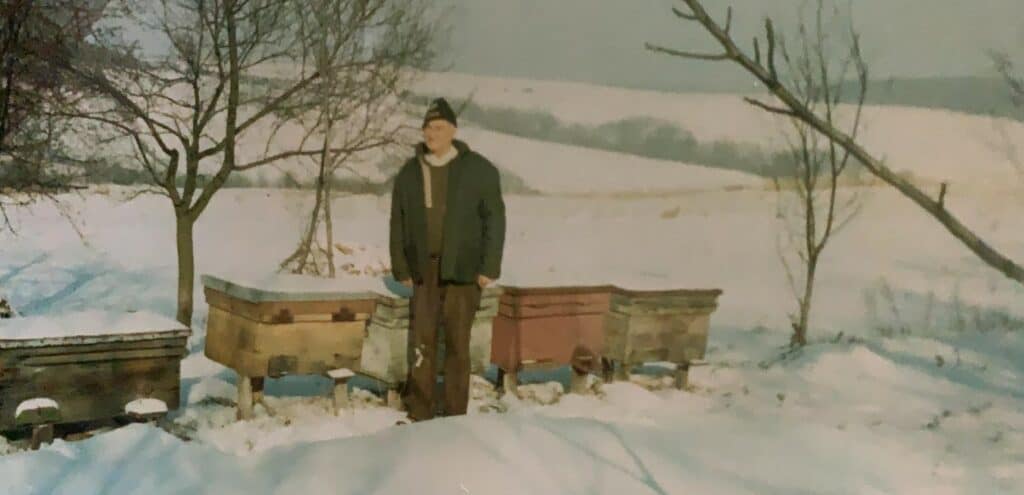
Six generations of this direct knowledge inform every jar of honey we produce and every piece of educational content on this page. The Nistor family's beekeeping roots stretch back to landscapes that were already botanically rich long before industrial agriculture reduced wildflower diversity across most of Europe. That heritage matters to the science: Transylvania's Carpathian meadows still support the kind of floral diversity that most bee populations in Western Europe no longer have access to.
The Seven Families
Every bee species belongs to one of seven families. Each family has distinct anatomical features, nesting behaviours, and ecological roles. Together they constitute one of the most ecologically important insect groups on Earth.
Explore species from all seven families in the World Bee Atlas, filterable by genus and country. UK species from Andrenidae, Apidae, Colletidae, and Megachilidae are mapped in detail in the UK Bee Distribution map.
How Bees Pollinate
Pollination by bees is not incidental. It is a co-evolved relationship in which both parties benefit and upon which the majority of the world's fruit and seed production depends.
Bees collect pollen as a protein source for their larvae and nectar as an energy source for flight and colony maintenance. As a bee moves between flowers of the same species, pollen adheres to specialised structures on their bodies. Most bees carry pollen in dense scopae, which are branched hairs on their hind legs or abdomens. As they visit successive flowers, some of this pollen is deposited on the sticky stigma of the next flower visited. If the pollen is compatible, fertilisation occurs, leading to fruit and seed development.
This process is more efficient than it appears. A single bumblebee forager visits between 50 and 1,000 flowers per trip, making multiple trips per day. A honeybee colony of 50,000 bees collectively visits up to 50 million flowers to produce a single jar of honey. The scale of flower visitation by bee populations means that even small declines in bee numbers translate directly into measurable reductions in crop yield and fruit quality.
Not all pollination works the same way. Some crops, including tomatoes, courgettes, blueberries, and aubergines, require a specific technique called buzz-pollination or sonication. The bee grabs the anther of the flower and vibrates its flight muscles at a frequency of approximately 400 Hz, shaking pollen loose that would otherwise remain trapped. This technique is performed by bumblebees and certain solitary species, but not by honeybees. It cannot be replicated by wind. This is why wild bumblebee populations are essential to tomato production even in regions where managed honeybee colonies are abundant.
See how buzz-pollination affects specific dishes in the Plate Without Bees series. The Italy edition covers the role of Bombus terrestris in Italian tomato production in detail.
Why Bees Are Declining
Global wild bee populations have declined an estimated 30% over the past three decades. The IUCN Red List classifies over 700 bee species as threatened. In the UK, two species became extinct in the 20th century and several more are critically scarce.
Four primary drivers account for the majority of losses. Habitat loss is the most significant. In the UK, wildflower meadows have declined by 97% since the 1930s, eliminating the diverse floral resources that specialist bee species depend on. Bees with narrow dietary requirements, such as the solitary bee Andrena fulvescens, which feeds exclusively on toadflax, cannot survive in landscapes where their host plant is absent.
Pesticide pressure, particularly from neonicotinoid insecticides, has been extensively studied. Sublethal exposure impairs navigation, foraging efficiency, and reproductive success in both honeybees and bumblebees. Several neonicotinoids are banned for outdoor use in the EU; the UK regulatory position has diverged since 2020. The debate is ongoing, and the science continues to accumulate.
Disease and parasites are a third driver. Varroa destructor, an external mite, has devastated managed and wild honeybee populations globally since spreading from Asian honeybees to Apis mellifera in the mid-20th century. Nosema ceranae, a microsporidian fungus, weakens bumblebee colonies. Both pathogens spread in part through shared foraging on flowers, making the density of managed hive placement a genuine conservation concern.
Climate disruption compounds all three. Warming springs advance flower bloom dates, but bee emergence dates do not always follow at the same rate. When the timing mismatch between a specialist bee's emergence and its host plant's bloom exceeds a critical threshold, the bee cannot complete its life cycle. Alpine and Arctic species, including several UK bumblebee species, face range compression as suitable habitat shifts poleward faster than populations can migrate.
You can explore which UK species are most at risk and where their remaining populations are concentrated in the UK Bee Distribution map. Global threatened species are documented in the World Bee Atlas.
Bees in Britain
Britain's 270 bee species span 17 distinct recording regions, from the Hebridean machair to the Thames Estuary. The diversity is lower than continental Europe but includes several species found nowhere else in significant numbers.
Britain's most familiar bee is the buff-tailed bumblebee, Bombus terrestris, visible year-round in gardens and farmland. Its close relative, the great yellow bumblebee, Bombus distinguendus, has lost over 80% of its former UK range and now holds on in fewer than 50 known colonies in the Hebrides and northern Scotland. Both belong to the same genus. Their diverging fates illustrate how habitat specialisation determines vulnerability: B. terrestris is a generalist; B. distinguendus requires unimproved machair grassland, which has almost entirely disappeared from mainland Britain.
The ivy bee, Colletes hederae, represents a different trajectory. It arrived in Britain from France in 2001 and has spread north every year since, now reaching as far as Yorkshire. It forages almost exclusively on ivy blossom and emerges in September and October, making it the last significant bee on the wing each year. Its northward spread is a documented response to warming autumns.
The red mason bee, Osmia bicornis, is the species most responsible for the popularity of bee hotels. An early-season pollinator active from March to June, it is an important visitor to apple, pear, and cherry orchards. Research has shown it to be significantly more efficient per individual than honeybees at pollinating apples, with 250 to 300 females capable of matching the pollination output of two full honeybee hives (Bosch & Kemp, 2002). Commercial orchardists increasingly deploy Osmia cocoons alongside honeybee hives to maximise fruit set.
Explore all 270 UK species, their regional distributions, habitat requirements, and conservation status in the UK Bee Distribution map.
Six Species Worth Knowing
From the bee that produces every jar of HoneyBee and Co. honey to the world's largest species, rediscovered alive in 2019. Each species below links to a full dedicated page.
Individual species pages covering all 270 UK species and notable global species are in development. Each will cover biology, distribution, habitat, threats, and conservation status. Browse all species in the World Bee Atlas in the meantime.
Every Country. Every Cuisine.
Every major cuisine on Earth, mapped against peer-reviewed pollinator dependency data. Each country edition is written in English and the country's primary language, with country-specific bee species data and native crop analysis. Italy is live. Every other country is in production.


All editions use peer-reviewed dependency data from Klein et al. (2007), Dependence of World Crops on Pollinators. Open the main tool to explore all cuisines in one place.
Why We Built This
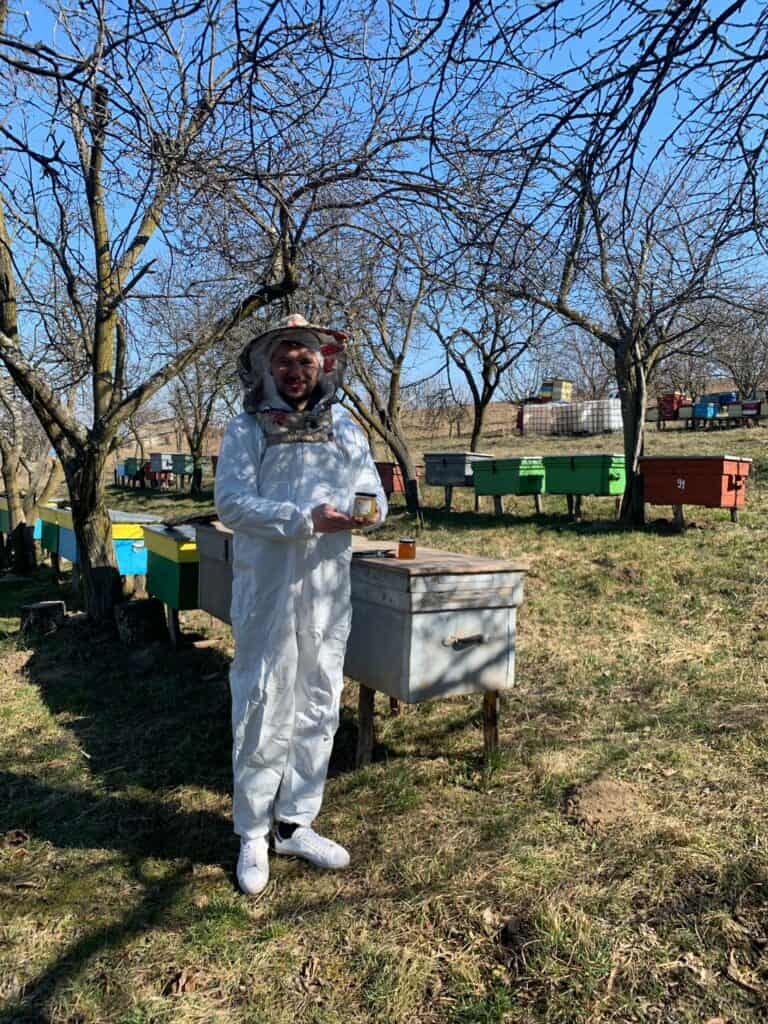
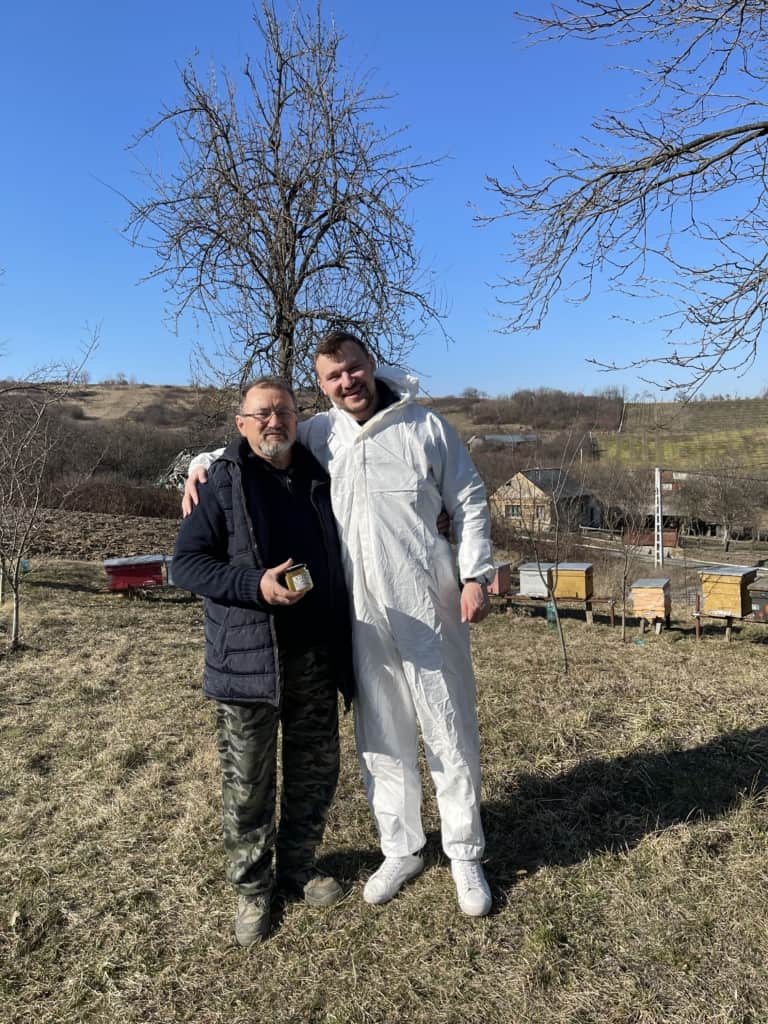
HoneyBee and Co. was founded by Dragos Nistor, a sixth-generation beekeeper whose family has maintained hives in the Carpathian Mountains of Transylvania since the 1800s. The education series on this page represents our commitment to making the science of bees genuinely accessible: not as a marketing exercise, but as a consequence of knowing, through six generations of direct experience, how much depends on the health of bee populations.
Every tool on this page is built with peer-reviewed data, freely accessible, and designed to work in multiple languages. The World Bee Atlas covers 75 countries. The Plate Without Bees series will eventually cover every significant cuisine on Earth, each with a native-language edition. The UK Bee Distribution map documents all 270 British species with peer-reviewed data from BWARS and the National Biodiversity Network.
Our honey is a direct consequence of healthy bee populations in Transylvania and the British Midlands and Yorkshire Moors. Our story and our subscription range are where the education becomes something you can hold in your hands.

Support the Bees. Shop HoneyBee & Co.
Raw, single-origin honey from Transylvanian family apiaries and a SALSA-certified British supplier. Six varieties. Free UK delivery on three or more jars. Save 20% with a subscription.
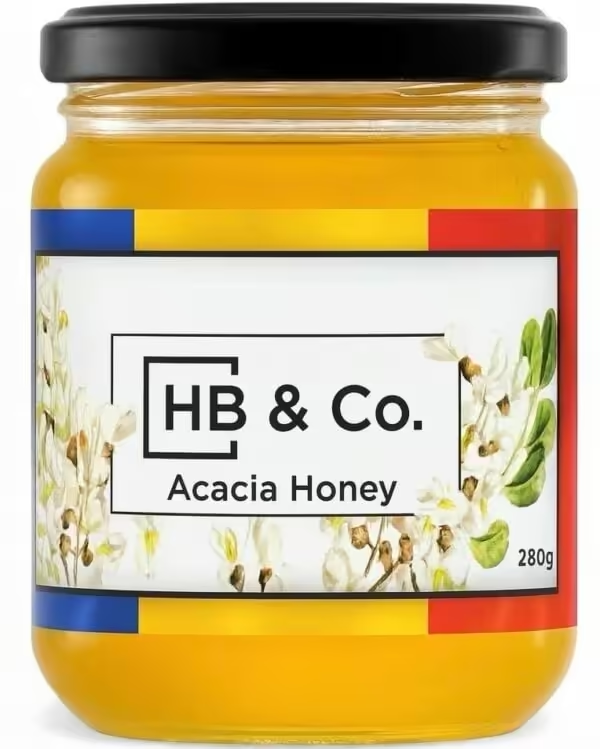
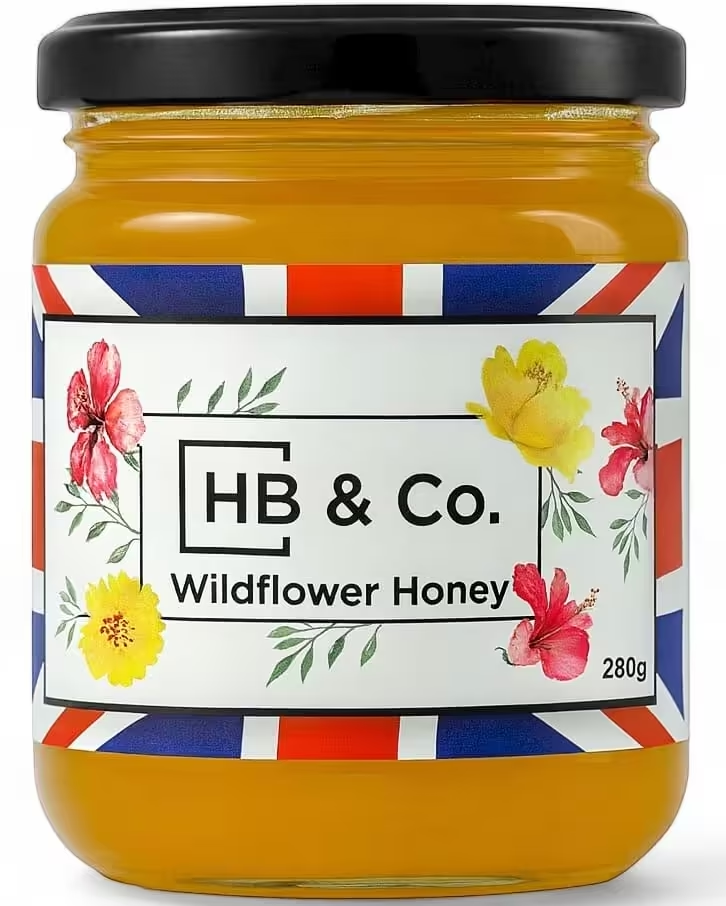
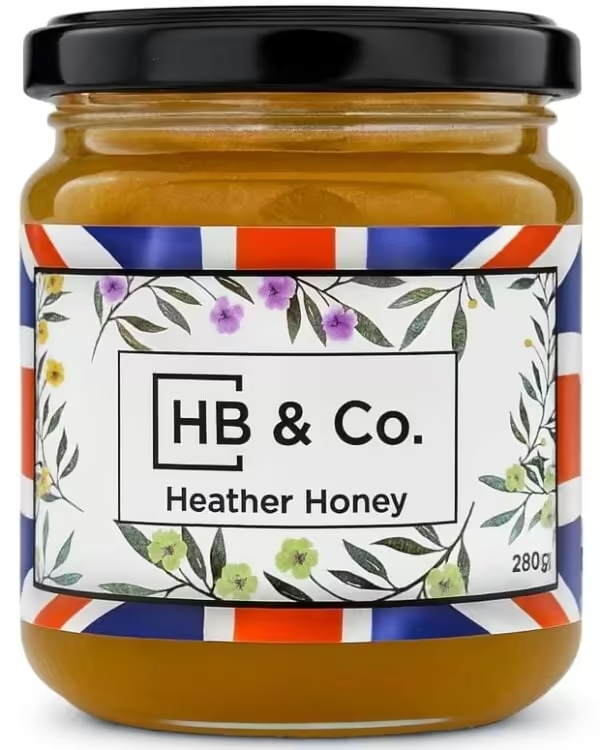
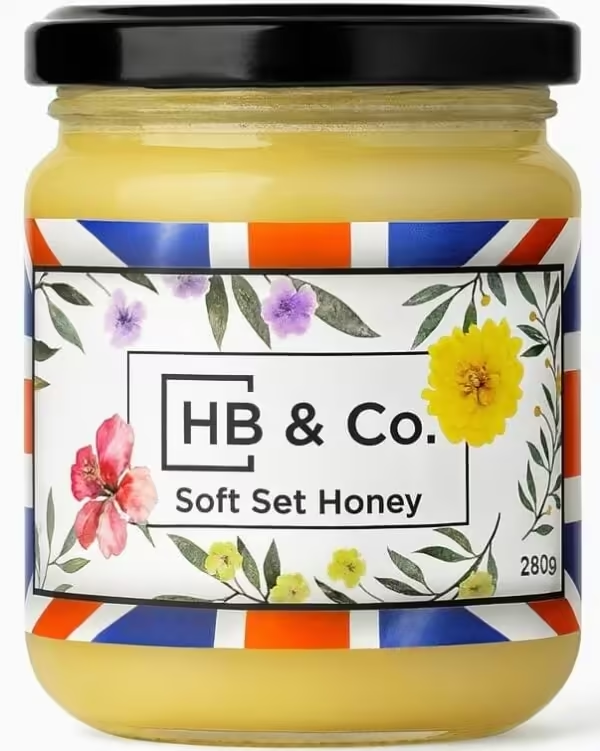
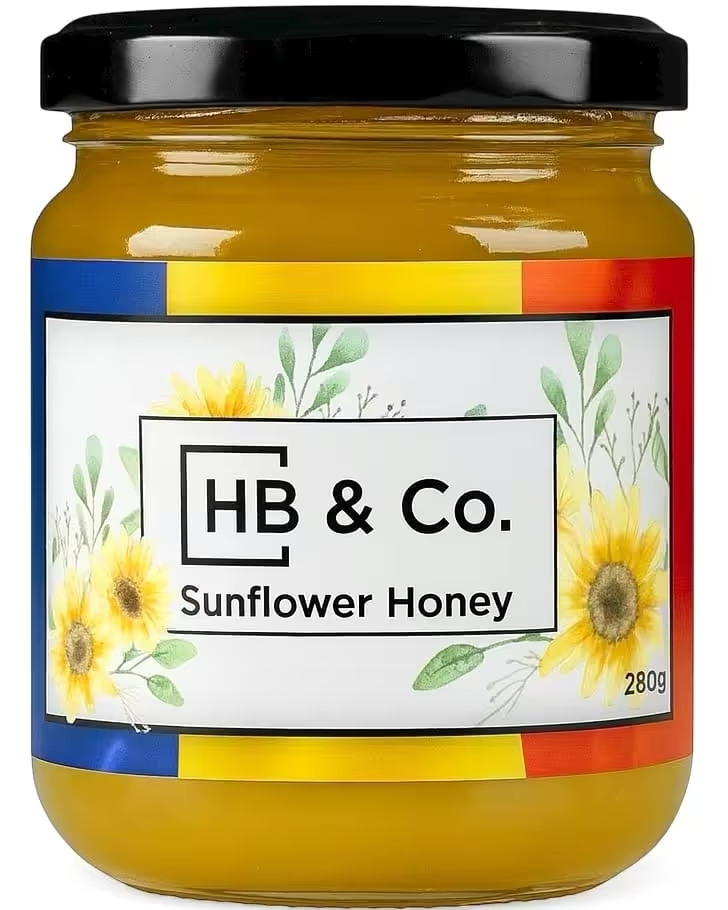
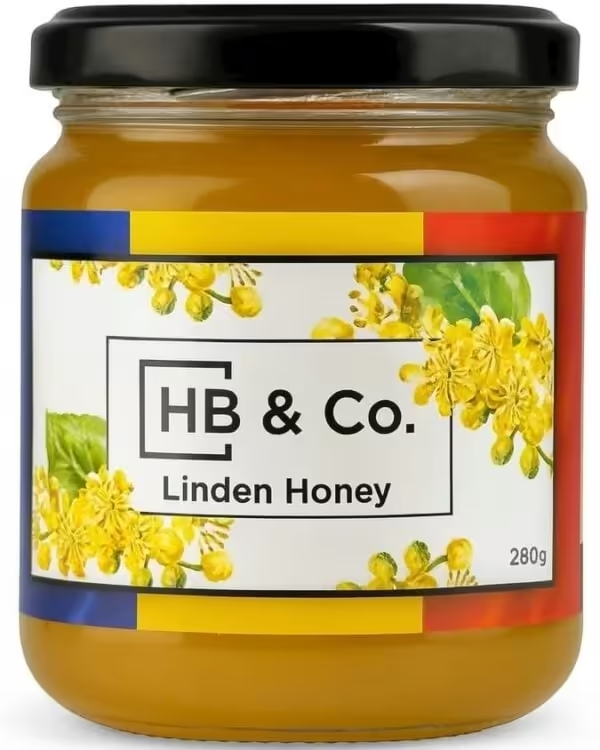
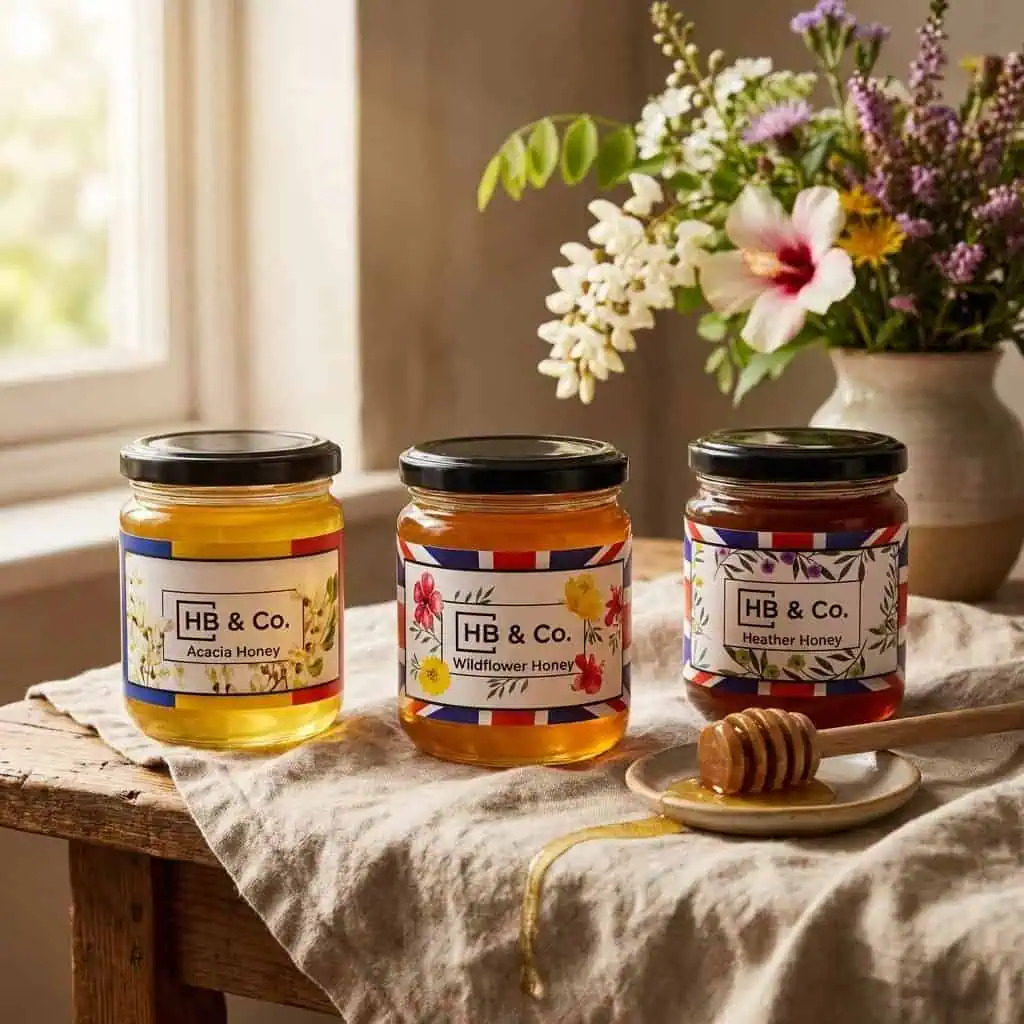
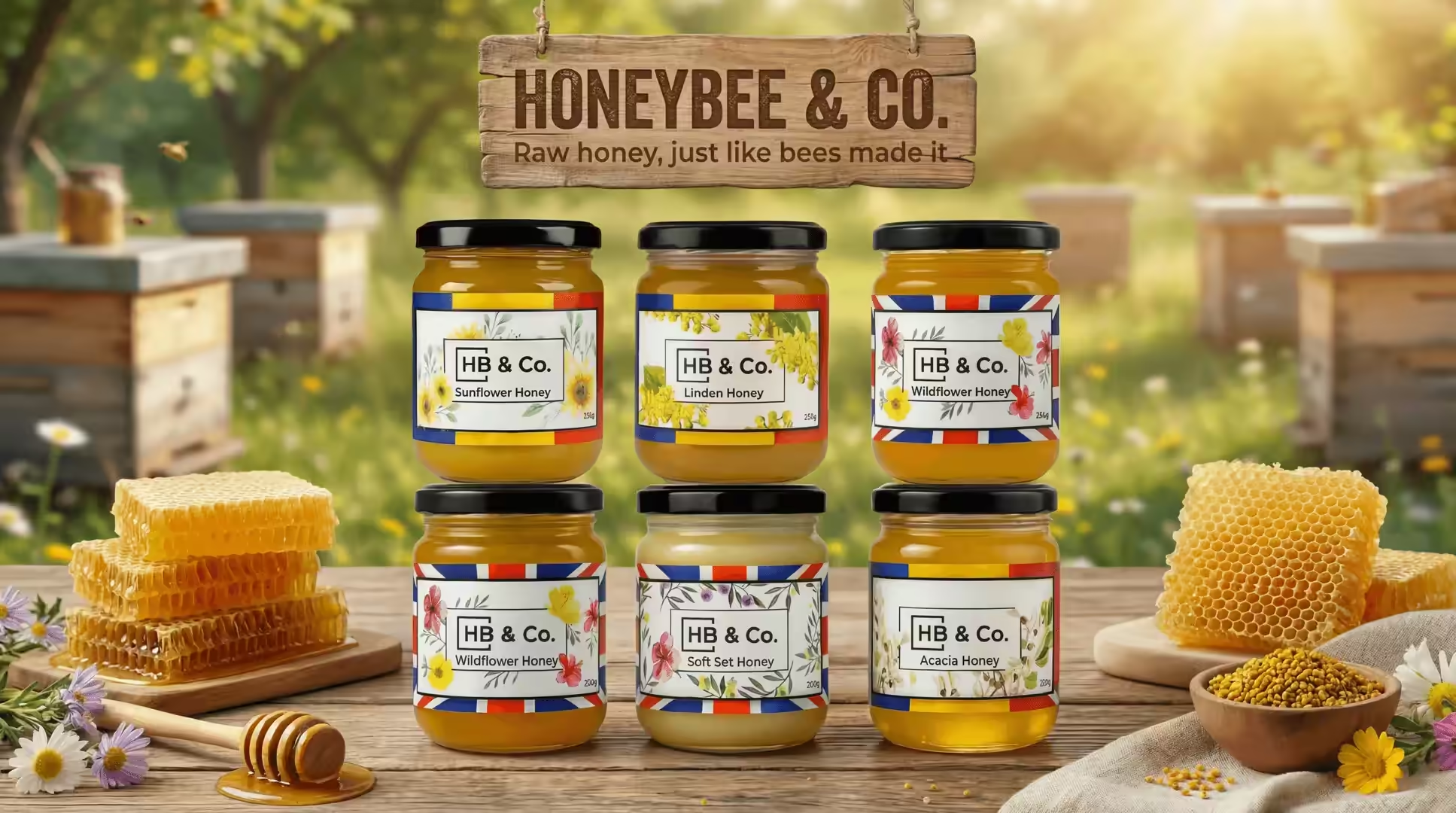
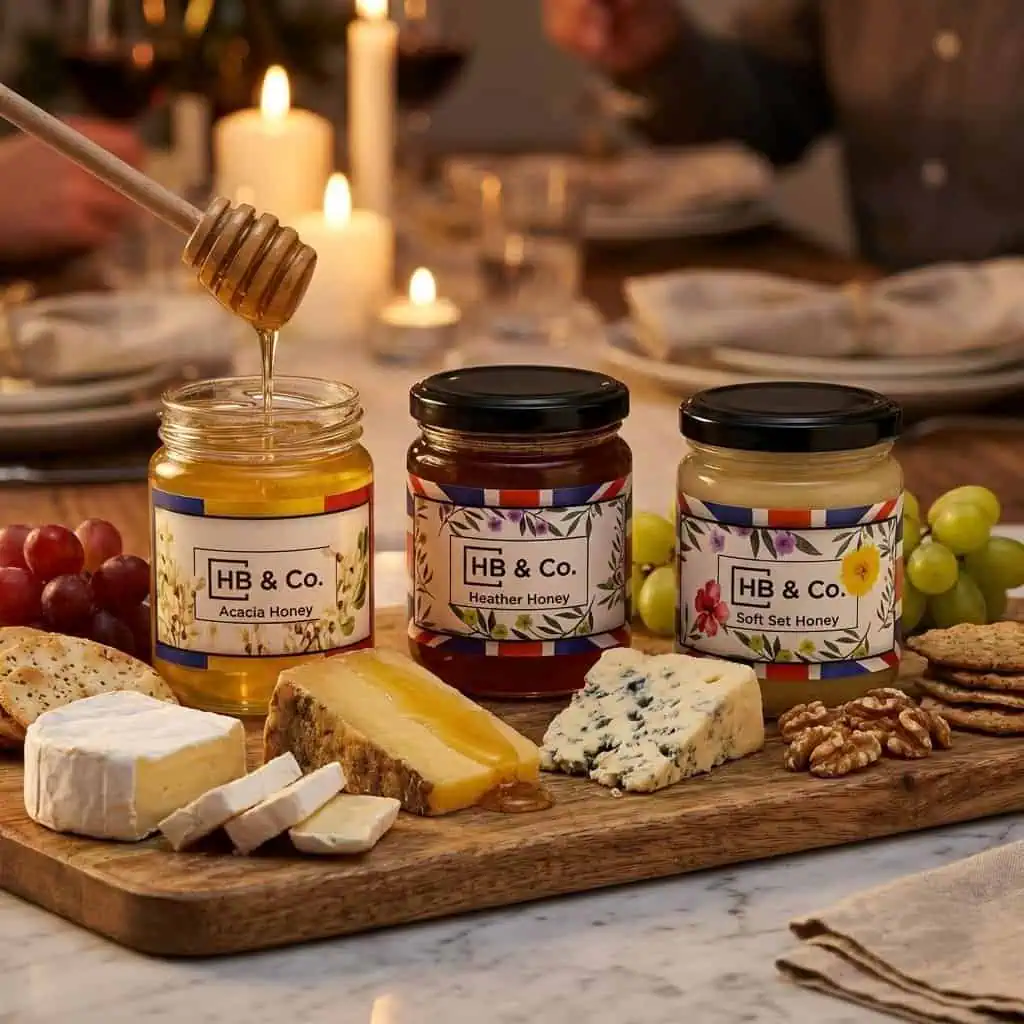
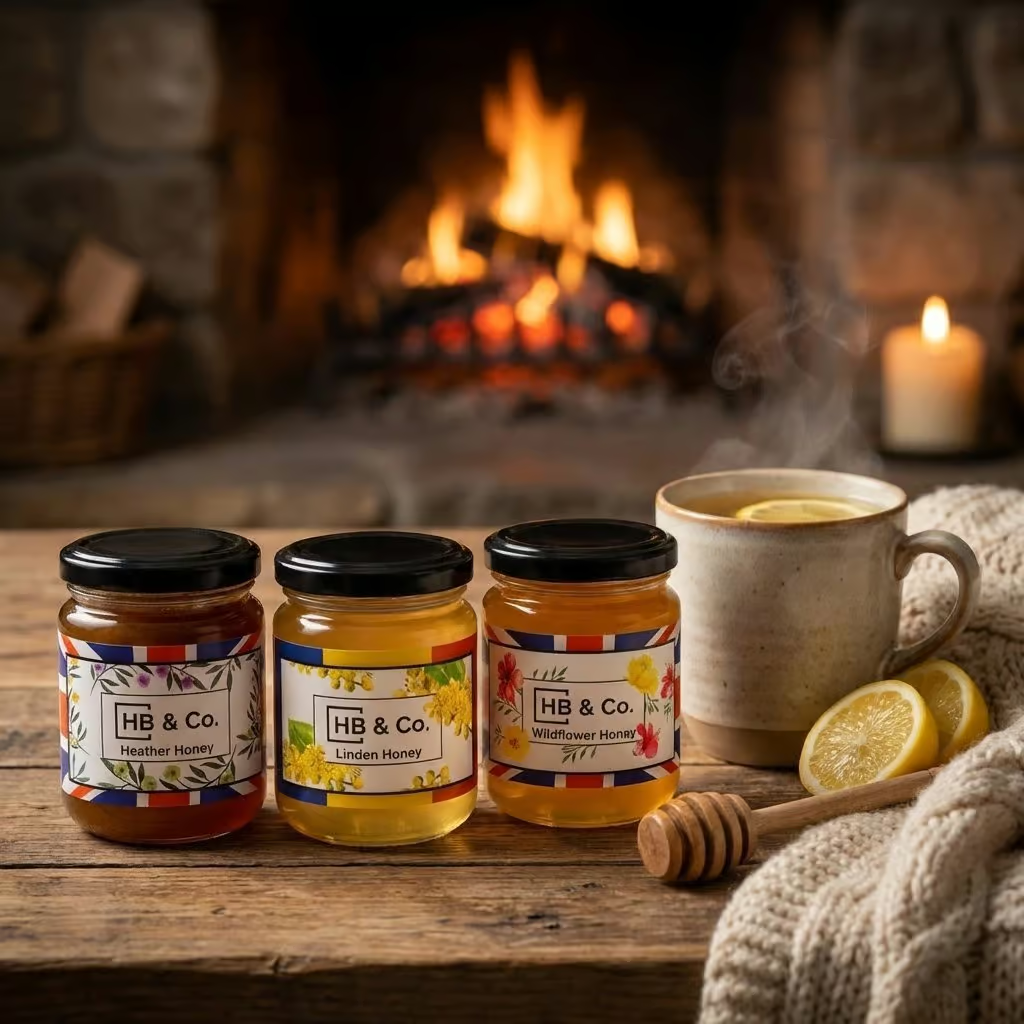
Save 20% on every delivery with a raw honey subscription. Free UK delivery on every subscription order regardless of quantity.
Everything About Bees
Twelve of the most-searched questions about bees, answered with accuracy and depth.
There are approximately 20,000 described bee species worldwide, organised into seven families: Apidae, Halictidae, Andrenidae, Megachilidae, Colletidae, Melittidae, and Stenotritidae. Scientists estimate that undescribed species in tropical regions may push the true total significantly higher. They inhabit every continent except Antarctica.
The UK is home to approximately 270 native bee species. These include 24 bumblebee species, around 245 species of solitary bee (mining bees, mason bees, leafcutter bees, plasterer bees, and cuckoo bees), and a single managed honeybee species, Apis mellifera. Many solitary species are under-recorded, particularly outside southern England.
Bumblebees are larger, rounder, and heavily furred. They live in annual colonies of 50 to 400 individuals that die each winter, with only mated queens surviving. Honeybees are smaller and leaner, live in perennial colonies of 20,000 to 80,000, and survive winter as a full colony by consuming stored honey. Only honeybees produce honey in commercially significant quantities. Both are members of the family Apidae.
Bees are the world's primary pollinators. Around 75% of globally important food crop species depend on animal pollinators to produce fruit, seed, or viable harvest. Without bees, crops including almonds, tomatoes, strawberries, coffee, cocoa, avocados, blueberries, and courgettes would fail at scale. The economic value of insect pollination to global agriculture is estimated at over 150 billion euros annually.
Klein et al. (2007), the most comprehensive peer-reviewed assessment of crop-pollinator relationships, found that 87 of 115 globally important food crops benefit from animal pollination. This represents approximately 35% of global food production by volume and up to 75% of crop species. Calorie staples like wheat, rice, and maize are wind-pollinated and largely unaffected, but most fruits, vegetables, nuts, and flavouring crops depend on bees.
Wallace's Giant Bee, Megachile pluto, is the world's largest bee. Named after Alfred Russel Wallace, who discovered it in the Indonesian island of Bacan in 1858, females reach up to 38mm in length with a wingspan of 63mm. It was feared extinct for over a century before being rediscovered alive in North Maluku, Indonesia in 2019. It nests inside active termite mounds.
Perdita minima, a member of the family Andrenidae, is the world's smallest bee at approximately 2mm in length. It is native to the desert southwest of the United States. Despite its size, it is a functional pollinator, specialising on small desert flowers. It is so small it can be easily overlooked in field surveys.
Many bee species are threatened. The IUCN Red List classifies over 700 bee species as threatened or near-threatened globally. In the UK, two species have become extinct in the 20th century and several more are critically scarce. The Great Yellow Bumblebee (Bombus distinguendus) has lost over 80% of its former UK range. Globally, wild bee populations have declined an estimated 30% over the past three decades due to habitat loss, pesticide exposure, disease, and climate change.
Buzz-pollination, or sonication, is a technique used by bumblebees and certain solitary bees to extract pollen from flowers whose anthers resist simple contact transfer. The bee grips the anther and vibrates its flight muscles at around 400 Hz, shaking the pollen loose. Tomatoes, aubergines, blueberries, and courgettes all require this process. Honeybees cannot perform sonication. It is one reason why wild bumblebee populations are irreplaceable even when managed honeybees are present.
Bees feed on nectar and pollen. Nectar, a sugar-rich solution produced by plant nectaries, provides energy. Pollen provides protein, fats, vitamins, and minerals for developing larvae. Adult bees consume nectar for flight energy, while larvae are fed a mixture of pollen and nectar (or in the case of honeybees, royal jelly for queens). The transformation of nectar into honey involves the addition of enzymes and the evaporation of water from around 80% moisture content down to below 18%.
Lifespan varies significantly by species and caste. Honeybee worker bees live 6 to 8 weeks in summer, or up to 6 months overwintering. Honeybee queens can live 3 to 5 years. Bumblebee workers live 2 to 6 weeks; queens live around a year including hibernation. Most solitary bees live 4 to 8 weeks as adults. The larval and pupal stages, inside sealed nest cells, can last from weeks to years depending on species.
Forager honeybees collect nectar and store it in their honey stomach. Back at the hive, they transfer it to house bees who chew it, adding enzymes including invertase (which breaks sucrose into fructose and glucose) and glucose oxidase (which produces hydrogen peroxide, giving honey its antimicrobial properties). The nectar is then deposited into honeycomb cells and fanned by thousands of bees to evaporate water. When moisture falls below 18%, cells are capped with wax and the honey is stable indefinitely. Raw honey, like ours, is extracted without heating to preserve these enzymes intact.
- Dorey, J.B. et al. (2026). How many bee species are there? A quantitative global estimate. Nature Communications, 17. doi.org/10.1038/s41467 (February 2026)
- Klein, A.M. et al. (2007). Importance of pollinators in changing landscapes for world crops. Proc. R. Soc. B, 274, 303-313.
- Potts, S.G. et al. (2016). Safeguarding pollinators and their values to human well-being. Nature, 540, 220-229.
- Powney, G.D. et al. (2019). Widespread losses of pollinating insects in Britain. Nature Communications, 10:1018.
- Michener, C.D. (2007). The Bees of the World, 2nd ed. Johns Hopkins University Press.
- Falk, S.J. (2015). Field Guide to the Bees of Great Britain and Ireland. British Wildlife Publishing.
- IPBES (2016). The Assessment Report on Pollinators, Pollination and Food Production. Secretariat of IPBES, Bonn.
- Danforth, B.N., Minckley, R.L., Neff, J.L. & Fawcett, F. (2019). The Solitary Bees: Biology, Evolution, Conservation. Princeton University Press.
- Bees, Wasps and Ants Recording Society (BWARS). National recording scheme. bwars.com
- National Biodiversity Network Atlas. UK occurrence records. nbnatlas.org
- IUCN Red List of Threatened Species. Bee assessments. iucnredlist.org
- National Bee Unit / APHA. Wild Bees in the UK, Fact Sheet 08 (October 2024). Defra.