
Portugal's Plate 没有蜜蜂
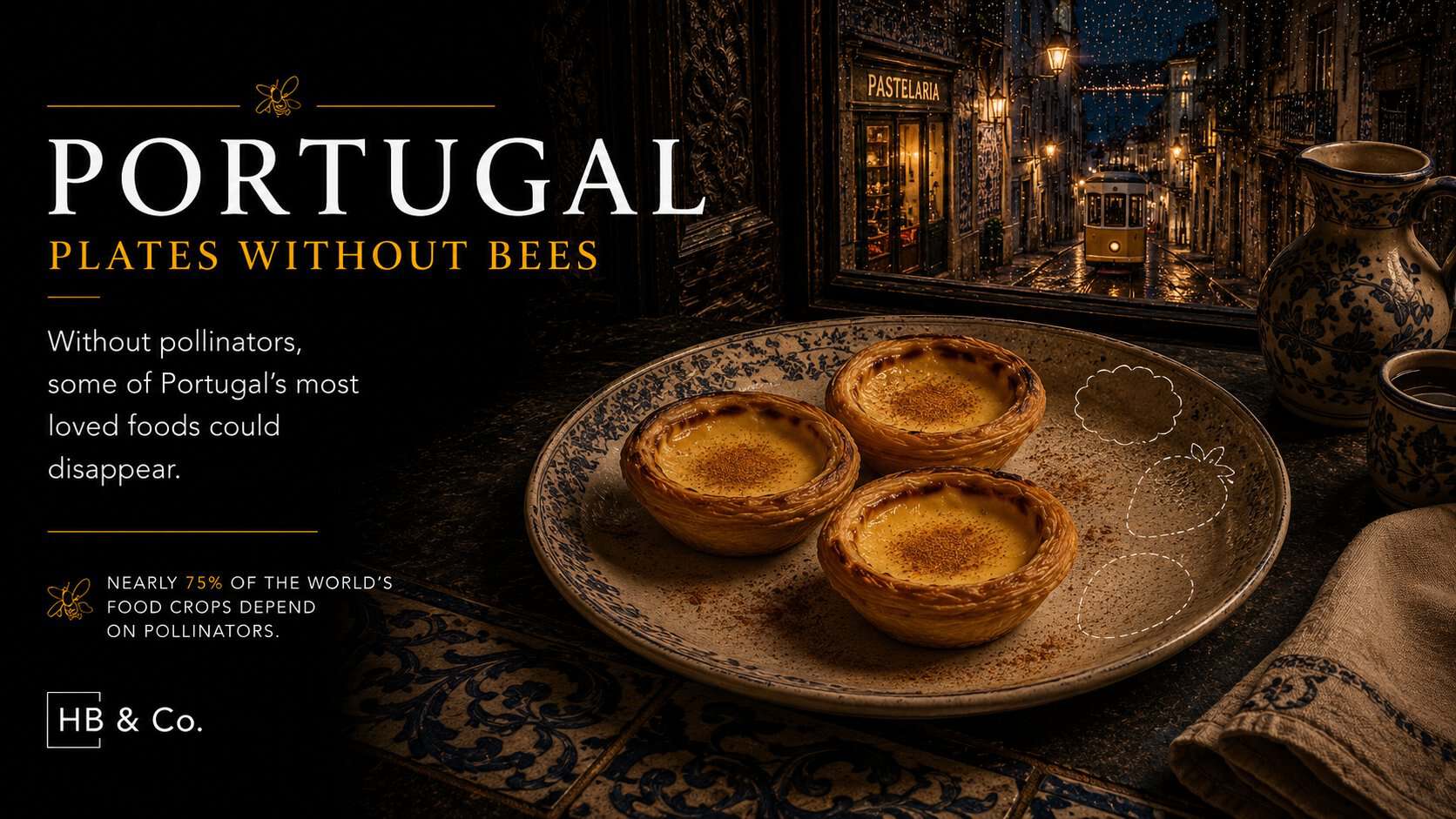
Six iconic Portuguese dishes. Over 750 native bee species. What vanishes from the plate when the pollinators disappear.
 英国
英国
 意大利
意大利
 法国
法国
 西班牙
西班牙
 德国
德国
 希腊
希腊
 葡萄牙
葡萄牙
 罗马尼亚
罗马尼亚
 土耳其
土耳其
 美国
美国
 墨西哥
墨西哥
 巴西
巴西
 阿根廷
阿根廷
 秘鲁
秘鲁
 哥伦比亚
哥伦比亚
 中国
中国
 日本
日本
 韩国
韩国
 泰国
泰国
 越南
越南
 印度尼西亚
印度尼西亚
 菲律宾
菲律宾
 印度
印度
 巴基斯坦
巴基斯坦
 摩洛哥
摩洛哥
 埃及
埃及
 黎巴嫩
黎巴嫩
 沙特阿拉伯
沙特阿拉伯
 埃塞俄比亚
埃塞俄比亚
 尼日利亚
尼日利亚
- 全球 87 种主要粮食作物在某种程度上依赖动物授粉(Klein 等人,2007 年)
- Without bees, a Pastel de Nata dessert plate loses its strawberries, raspberries, and honey accompaniments
- Portugal has over 750 native bee species including the Iberian honeybee Apis mellifera iberiensis
- Portugal's Algarve and Alentejo almond orchards flower in February and depend on managed honeybee colonies during this window
- The February almond bloom across Portugal is one of Europe's most spectacular and most pollinator-dependent agricultural events
Why Portuguese Cuisine Depends on Bees
Portuguese cuisine shares its Mediterranean foundations with Spain - olive oil, garlic, onions, tomatoes, and seafood. The garlic in amêijoas à Bulhão Pato (d:5), the tomatoes in tomato rice (65%), the onions in every cataplana (65%), the lemon over bacalhau (65%) - Portuguese cooking's bee-dependent ingredients are fundamental rather than decorative. The Algarve and Alentejo almond orchards that carpet the landscape white every February depend entirely on managed honeybee colonies during a narrow flowering window. Portugal is a significant European almond producer and this industry would collapse first in any sustained pollinator decline.
The Pastel de Nata, Portugal's national pastry, depends on eggs and cream for its custard - relatively pollinator-independent. But the strawberry (95%), raspberry (95%), and honey (95%) accompaniments that define a proper pastelaria display are all pollinator-dependent. The pastry survives. The fruit table around it does not. Portuguese beekeepers produce distinctive monofloral honeys from eucalyptus, rosemary, and orange blossom using the endemic Iberian honeybee Apis mellifera iberiensis.
The Science Behind Portuguese Crop Pollination
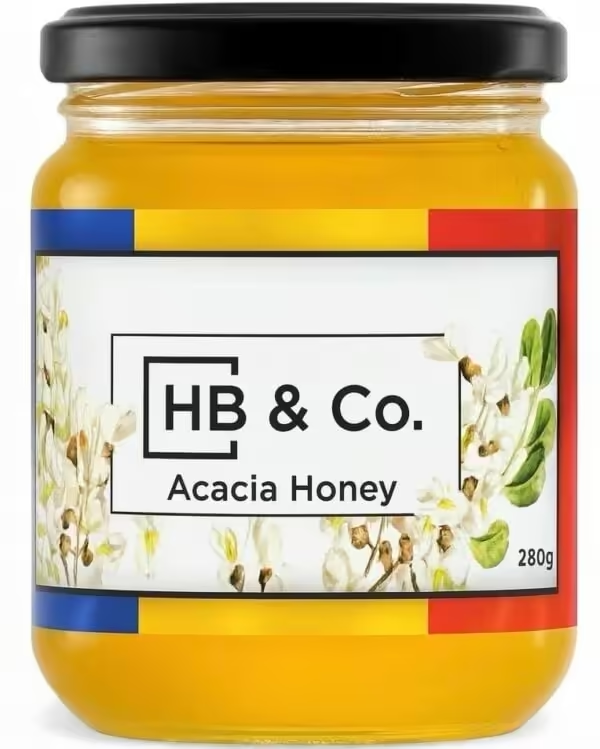
Key Portuguese pollinator dependencies: almonds (65%), tomatoes (65%), cucumbers (95%), onions (65%), lemon (65%), coriander (65%), and strawberries (95%). Our 金合欢蜂蜜 来自 Transylvanian 喀尔巴阡山脉森林。更多信息 关于页面, 请尝试我们的 蜂蜜订阅 并保存 20%,或探索 世界蜜蜂地图集. .关于蜜蜂减少,请阅读我们的文章 蜜蜂数量减少的原因.
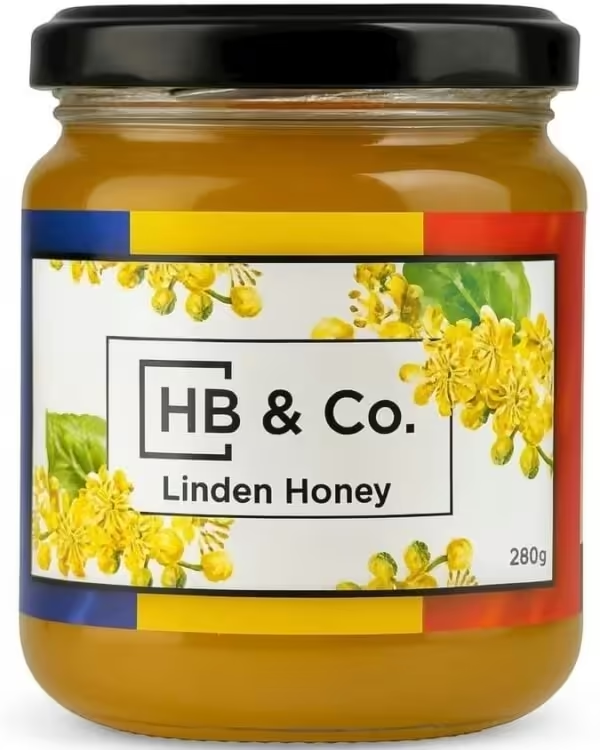
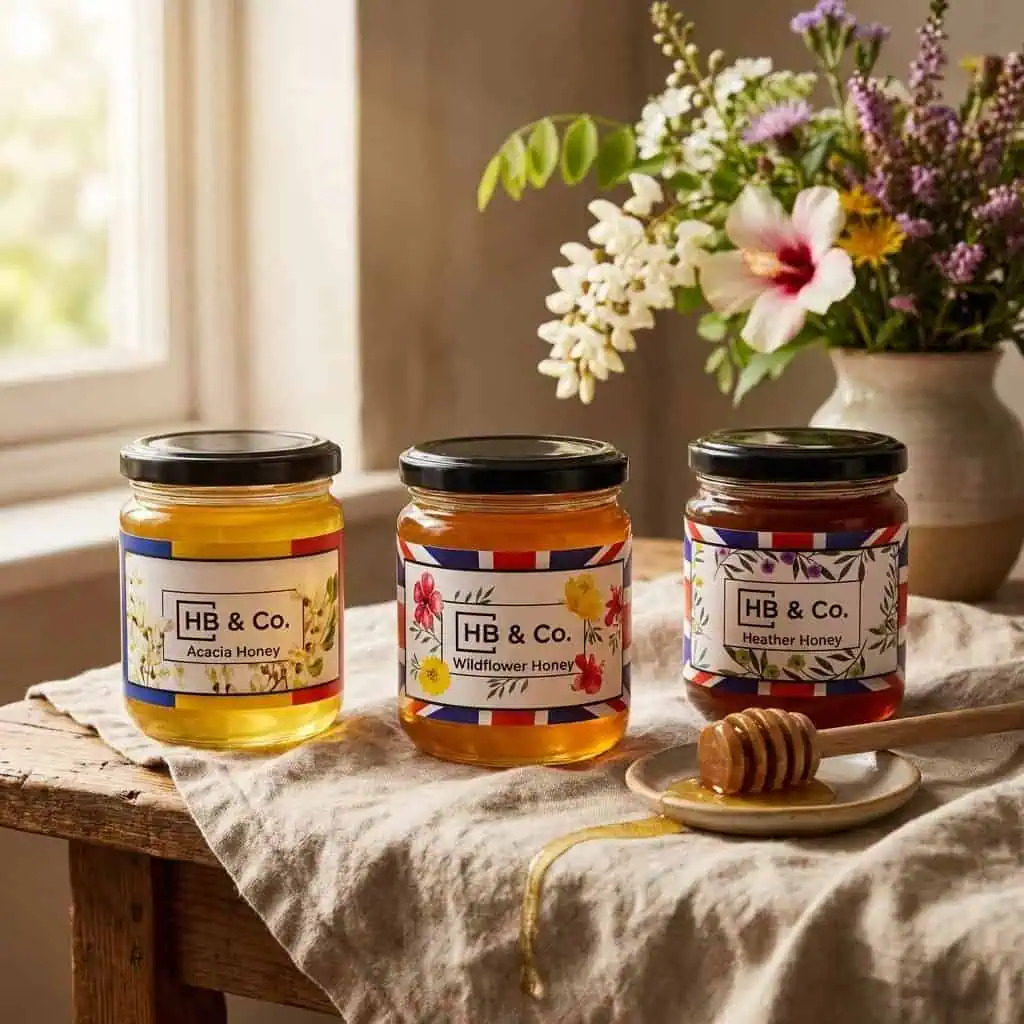
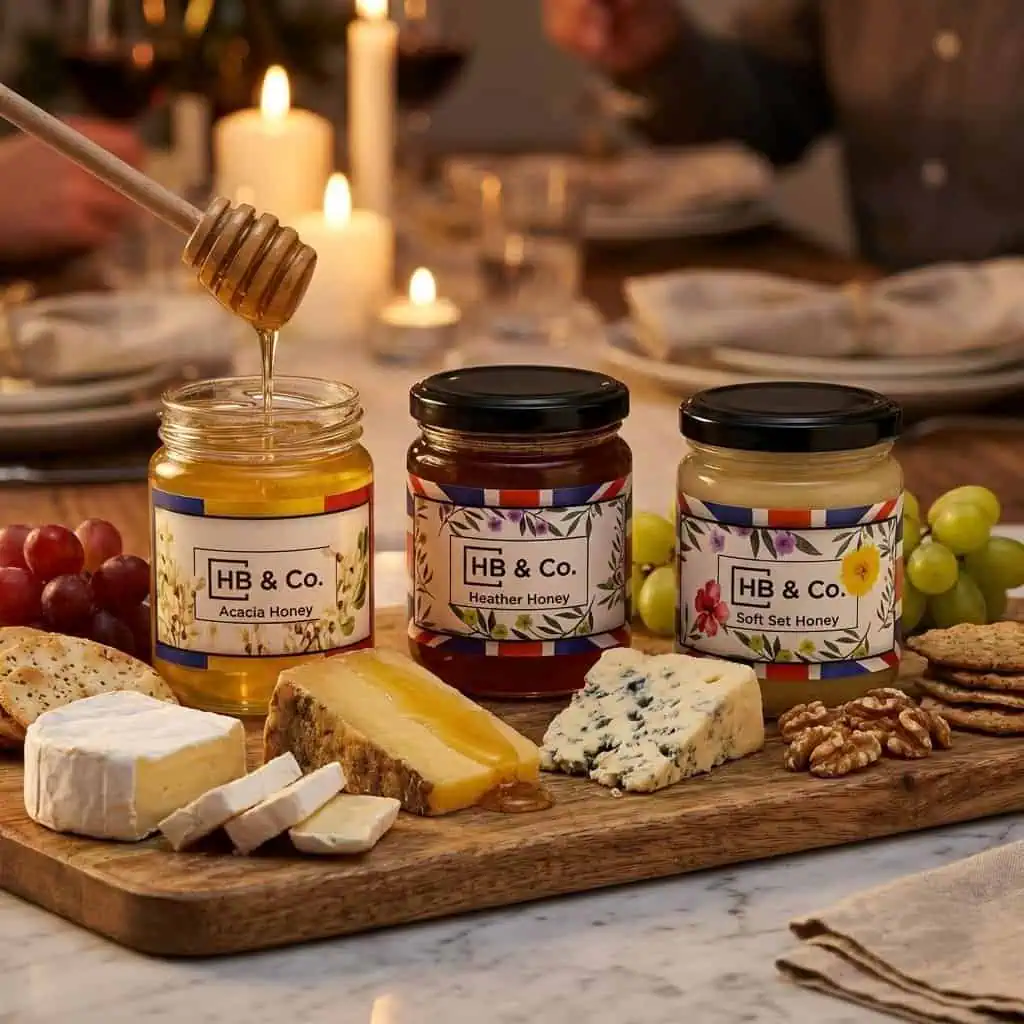
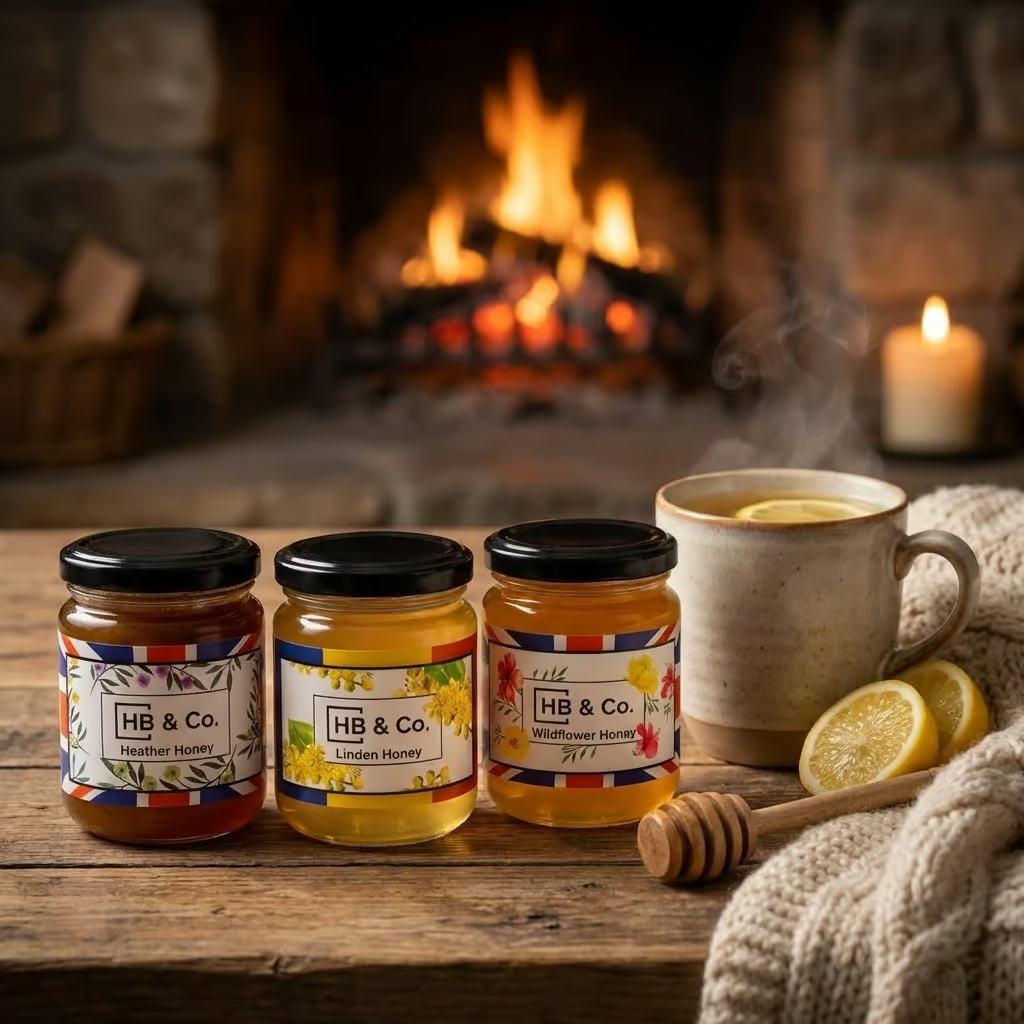
原蜜。购买 HoneyBee & Co.
来自 Transylvanian 家族养蜂场和 SALSA 认证英国供应商的原产地蜂蜜。六个品种,均为冷提取,完全可追溯。三罐或三罐以上可享受英国免费送货服务。.
常见问题
Which Portuguese foods disappear without bees?
Almonds, tomatoes, onions, lemon, coriander, cucumbers, strawberries, and honey are all significantly pollinator-dependent. Salt cod, potatoes, and olive oil are largely unaffected.
How many bee species live in Portugal?
Portugal has over 750 native bee species including the Iberian honeybee Apis mellifera iberiensis. Approximately 63% are at risk. Portugal's Atlantic and Mediterranean climate zones support diverse bee populations.
Does Portugal's almond production depend on bees?
Yes. Portugal's Algarve and Alentejo almond orchards carry a 65% pollinator dependency rating and require cross-pollination during the February flowering window. The February almond bloom is one of Europe's earliest and most visually dramatic agricultural pollination events.
伊比利亚蜜蜂是什么?
Apis mellifera iberiensis is the honeybee subspecies native to the Iberian Peninsula, adapted to both Atlantic and Mediterranean conditions. Portuguese beekeepers produce distinctive monofloral honeys from eucalyptus, rosemary, and orange blossom.
What percentage of Portuguese food requires pollinators?
Portuguese cuisine's defining fresh ingredients - almonds (65%), tomatoes (65%), onions (65%), and lemon (65%) - are all significantly pollinator-dependent under Klein et al. (2007). Salt cod, potatoes, and olive oil are unaffected.
How can I help protect bees in Portugal?
Support organisations protecting Mediterranean wildflower habitats. Choose food products from supply chains committed to pollinator health. Explore the World Bee Atlas to learn which species are native to Portugal.