

 한국어
한국어  English (UK)
  Italiano
  Français
  简体中文
简体中文 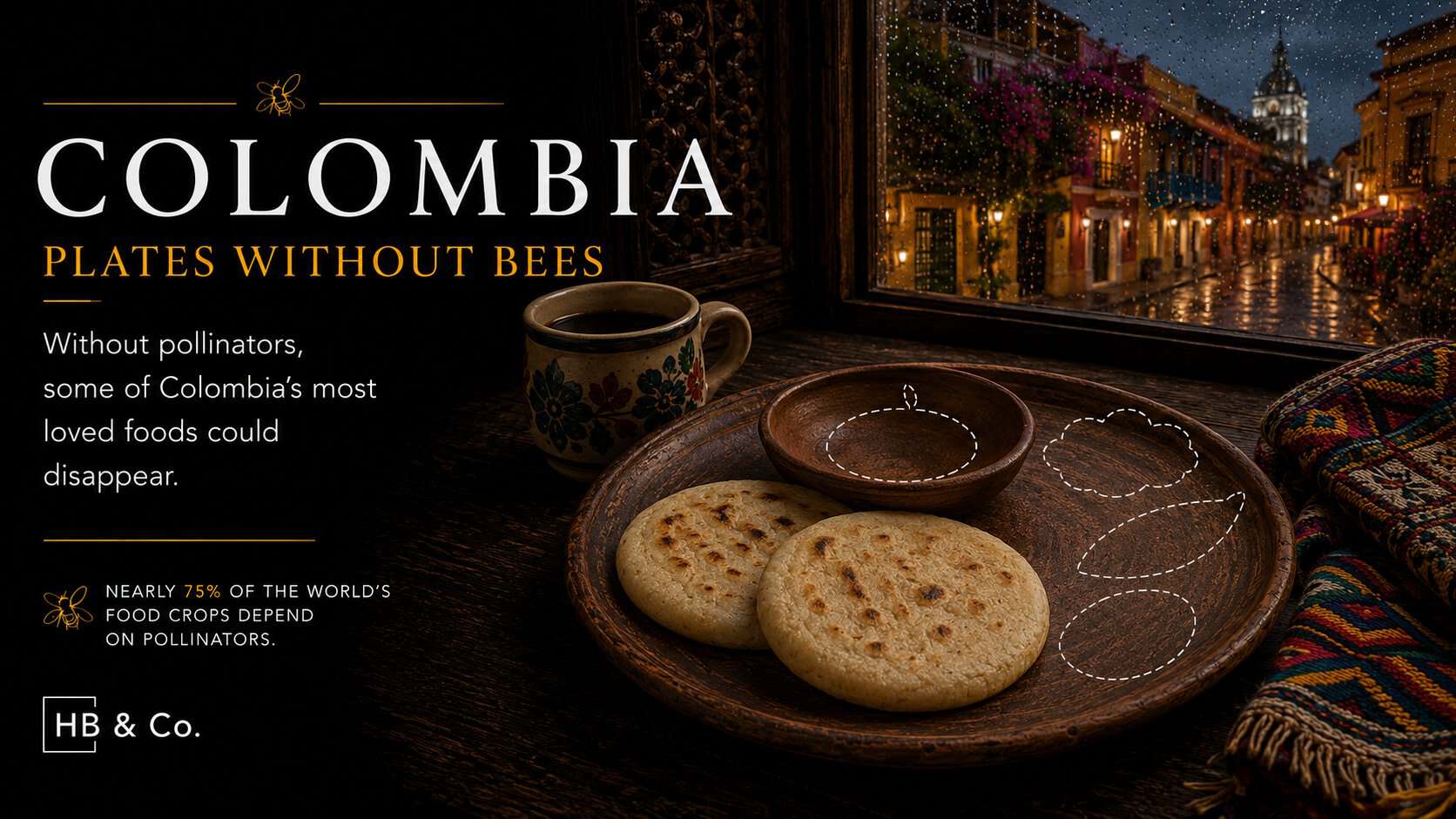
Colombia's Plate 꿀벌이 없다면
Six iconic Colombian dishes. Over 1,500 native bee species. What vanishes from the plate when the pollinators disappear.
 영국
영국
 이탈리아
이탈리아
 프랑스
프랑스
 스페인
스페인
 독일
독일
 그리스
그리스
 포르투갈
포르투갈
 루마니아
루마니아
 터키
터키
 미국
미국
 멕시코
멕시코
 브라질
브라질
 아르헨티나
아르헨티나
 페루
페루
 콜롬비아
콜롬비아
 중국
중국
 일본
일본
 대한민국
대한민국
 태국
태국
 베트남
베트남
 인도네시아
인도네시아
 필리핀
필리핀
 인도
인도
 파키스탄
파키스탄
 모로코
모로코
 이집트
이집트
 레바논
레바논
 사우디아라비아
 에티오피아
에티오피아
 나이지리아
나이지리아
- 세계 주요 식량 작물 중 87종은 어느 정도 동물에 의한 수분에 의존하고 있다(Klein 외, 2007).
- Without bees, Colombian Arepas con Hogao lose their tomato-onion sauce entirely - both primary hogao ingredients are pollinator-dependent
- Colombia has over 1,500 native bee species - the third-highest bee diversity in the Americas
- Colombia is the world's second-largest coffee producer; bee cross-pollination increases Colombian Arabica yields by 15-20% in field studies
- Colombian avocado Hass production in Antioquia and the Eje Cafetero depends on managed honeybee colonies during flowering
Why Colombian Cuisine Depends on Bees
Colombian food is the cuisine of hogao - the tomato and spring onion sauce accompanying everything from rice to eggs to Bandeja Paisa. Hogao contains tomatoes (65%) and spring onion (65%) as its two primary ingredients, both pollinator-dependent. Without bees, hogao cannot be made. Arepas, Colombia's most eaten food, are made from corn (wind-pollinated, unaffected). But the avocado (95%), tomato (65%), and hogao sauce that accompany them are all pollinator-dependent. Bandeja Paisa loses its avocado slice and tomato salsa. Cholado loses mango (25%), strawberries (95%), passion fruit (95%), lychee (95%), and pineapple (25%) - five fruit toppings, all pollinator-dependent. Without bees, Colombian tropical fruit culture disappears entirely.
Colombia is the world's second-largest coffee producer, and bee cross-pollination has been shown to increase Colombian Arabica yields by 15-20% in field studies. At the scale of Colombia's coffee industry - worth over 2 billion dollars in annual exports - a 20% yield benefit from bee pollination represents enormous economic value. Colombian coffee-growing regions from Huila to Nariño to Antioquia support native bee populations in the shade-grown forest margins that many traditional Colombian coffee farms maintain.
The Science Behind Colombian Crop Pollination
Key Colombian pollinator dependencies: tomatoes (65%), spring onions (65%), avocado (95%), passion fruit (95%), mango (25%), cucumber (95%), lemon (65%), coriander (65%), and coffee (25% modest). Our 아카시아 꿀 Transylvanian 카르파티아 산맥의 숲에서 유래했습니다. 자세한 내용은 ‘소개’ 페이지, 저희의 꿀 정기 구독 그리고 20%를 저장하거나, 다음을 살펴보세요. 세계 꿀벌 지도집. 꿀벌 개체 수 감소에 대해서는 다음 기사를 참고하세요. 꿀벌 개체수가 감소하는 이유.
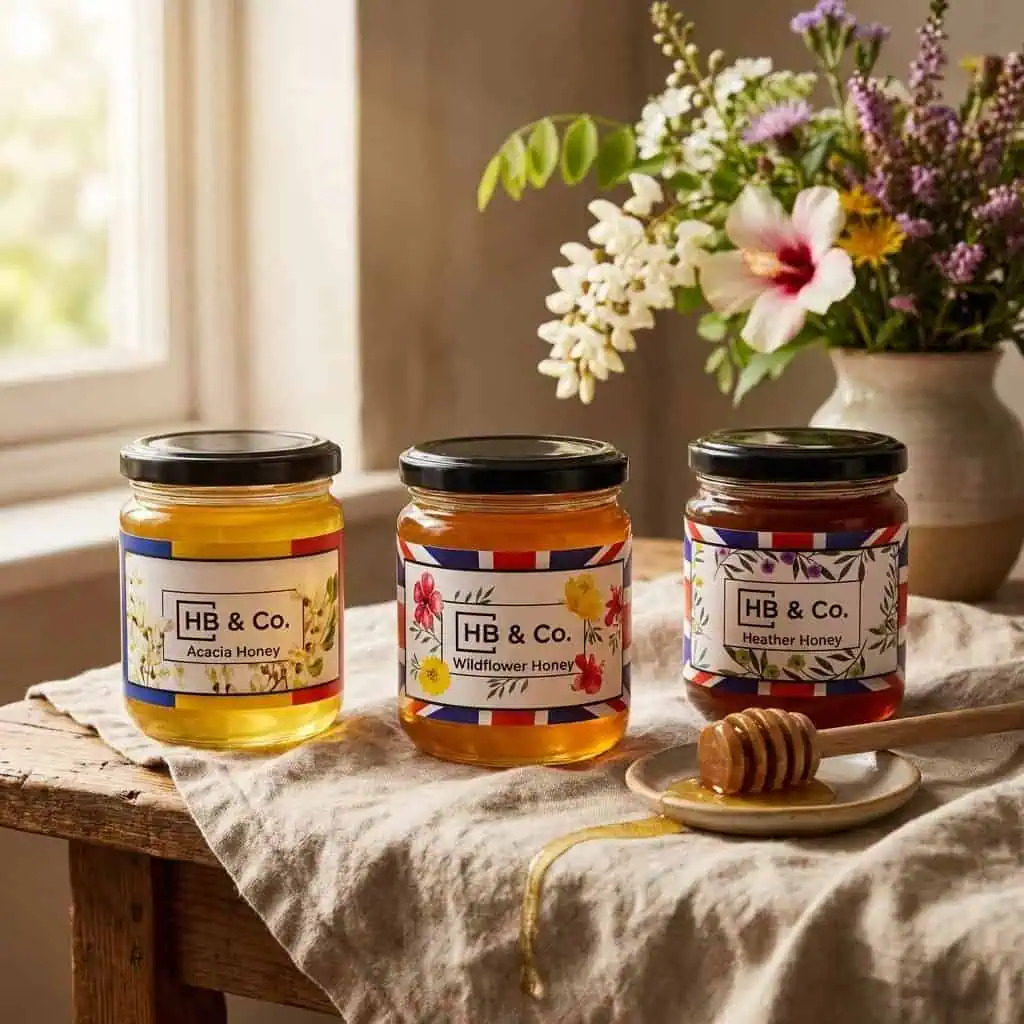
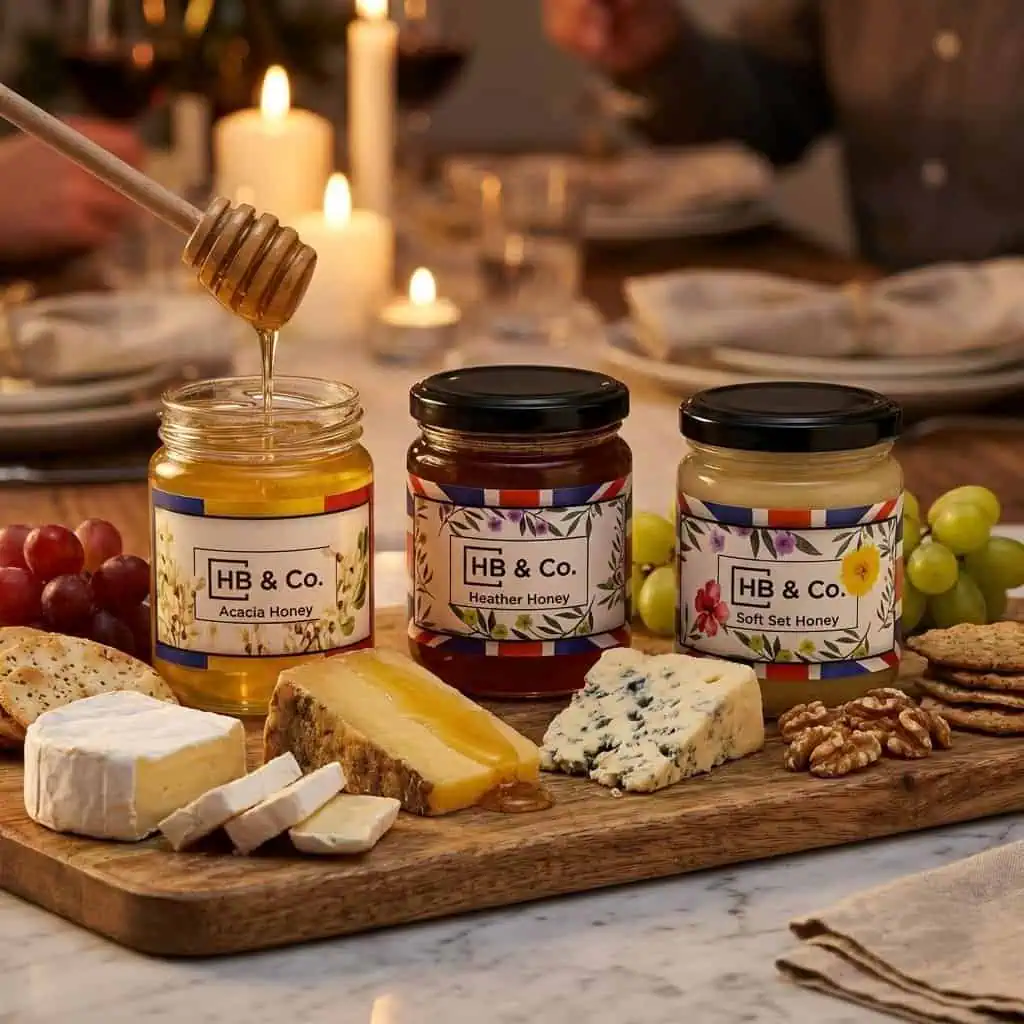
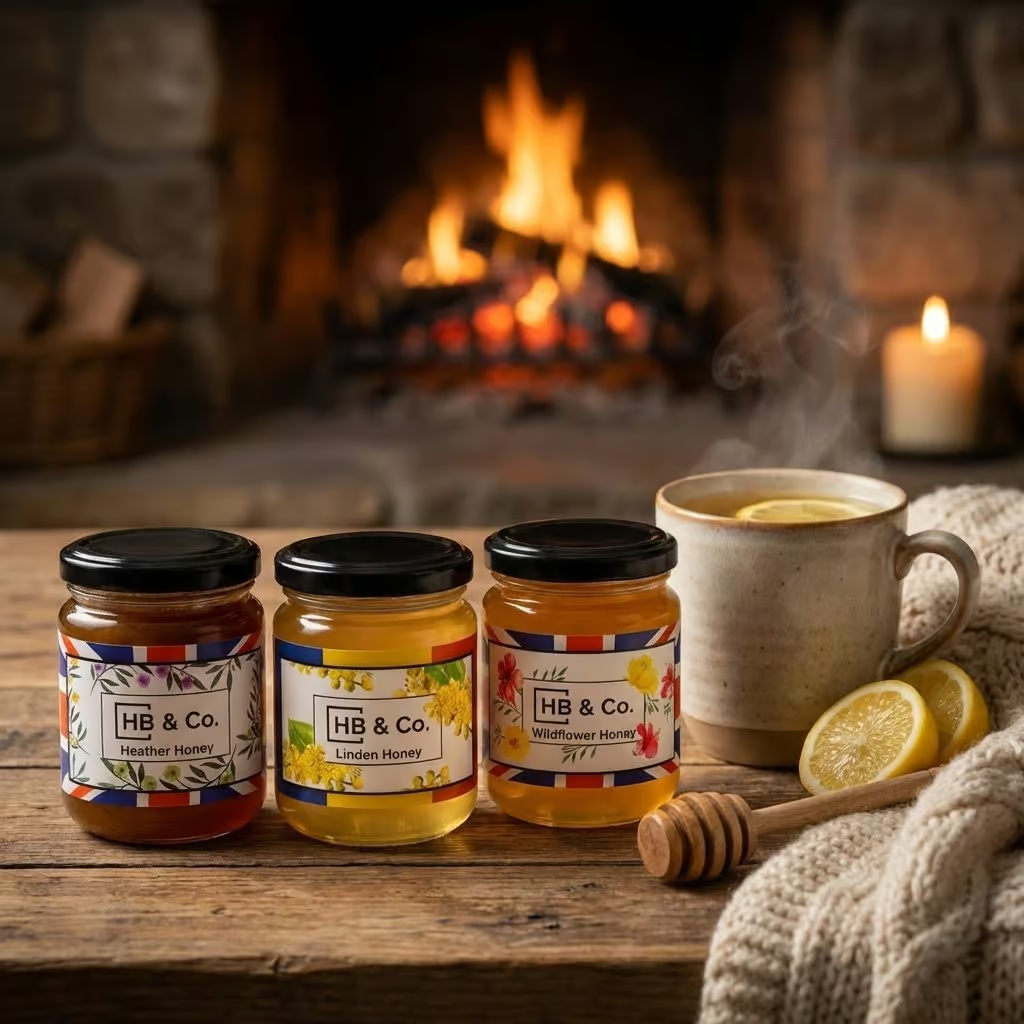
생꿀. 매장 HoneyBee & Co.
Transylvanian 계열 양봉장과 SALSA 인증을 받은 영국 공급업체에서 생산된 싱글 오리진 생꿀입니다. 총 6가지 품종으로, 모두 저온 추출 방식으로 제조되었으며 원산지 추적이 가능합니다. 3병 이상 구매 시 영국 내 무료 배송이 제공됩니다.
자주 묻는 질문
Which Colombian foods disappear without bees?
Tomatoes, spring onions, avocado, passion fruit, mango, cucumber, lemon, and coriander are all significantly pollinator-dependent. Rice, beans, corn, pork, and plantain are largely unaffected. Colombian hogao sauce and the tropical fruit tradition disappear without pollinators.
How many bee species live in Colombia?
Colombia has over 1,500 native bee species - the third-highest bee diversity in the Americas after Brazil and Mexico. The Colombian Andes cloud forests are particularly species-rich. Approximately 70% are at risk.
Does Colombian coffee depend on bees?
Yes, at 25% modest dependency. Bee cross-pollination increases Colombian Arabica yields by 15-20% in field studies. At over 2 billion dollars in annual exports, this represents enormous economic value. Colombian shade-grown coffee farms support native bee populations in forest margins.
What is hogao and why does it depend on bees?
Hogao is Colombia's defining cooked tomato and spring onion sauce served with almost every Colombian meal. Its two primary ingredients - tomatoes (65%) and spring onions (65%) - are both pollinator-dependent. Without bees, hogao cannot be made.
Is Colombia a major avocado producer?
Yes. Colombia is one of the fastest-growing avocado exporters globally, with Hass avocado production expanding in Antioquia and the Eje Cafetero. Avocado carries 95% essential pollinator dependency and the industry deploys managed honeybee colonies during flowering.
What percentage of Colombian food requires pollinators?
Colombian cuisine's defining condiments and fresh ingredients - tomatoes (65%), spring onion (65%), avocado (95%), passion fruit (95%), and coriander (65%) - are all significantly pollinator-dependent under Klein et al. (2007). Rice, beans, corn, pork, and plantain are largely unaffected.